

Huawei intends to expand its AI pharmaceutical collaborations, primarily with drug manufacturers in China.
Huawei plans to establish additional AI partnerships with pharmaceutical firms, as indicated by William Zhang, president of its healthcare division, during a conversation with Reuters. He mentioned that the current projects predominantly involve local Chinese pharmaceutical companies. The company provides compound screening tools in conjunction with its Ascend and Kunpeng chips, which form the domestic technological framework it has been developing since facing US sanctions that prompted it to seek alternatives.
Zhang stated, “As we deepen our research in medical AI, we anticipate more collaborations and outcomes with pharmaceutical companies, covering areas from drug production to clinical applications and final execution.” He also mentioned ongoing collaborations in hospitals related to clinical practice, although he did not specify which hospitals.
There are no specific targets or potential partners mentioned in this context; instead, it serves as a directional statement prior to any figures that may later surface. One project highlighted by Huawei is a partnership announced in May with Guangzhou Pharmaceutical Holdings, a state-owned entity. Huawei characterized this as the industry's first validation of AI drug research models developed independently, designed for compatibility with Ascend and Kunpeng.
It's important to clarify the term "independently developed" here, as it refers to models developed domestically rather than by Huawei itself; these models belong to StoneWise, a Beijing-based AI drug design firm involved in the agreement. Huawei's role was to provide the silicon and facilitate the adaptation of the software, which is significant considering the objective is to conduct drug discovery without American chips, although it is categorized as infrastructure rather than scientific innovation.
Huawei also possesses its own drug model, the Pangu molecule model, which was released in 2021. This model, created in collaboration with the Chinese Academy of Sciences, is trained on 1.7 billion compounds to forecast molecular binding to targets. Additionally, there is an earlier partnership with Yunnan Baiyao from 2022, where the pharmaceutical company provides botanical compound libraries while Huawei supplies the necessary cloud and AI resources. However, neither this collaboration nor the one with Guangzhou has produced any named drug candidates entering trials.
The gap in scale compared to its competitors offers a clearer context for Huawei's announcements. Nvidia has formed AI partnerships with Eli Lilly and Novo Nordisk, with Lilly's collaboration involving a co-innovation lab and a potential commitment of up to $1 billion over five years. In contrast, Huawei's disclosed pharmaceutical efforts consist of one three-party ecosystem agreement at the proof-of-concept stage and a cooperation deal from four years ago, highlighting a noticeable asymmetry that Zhang acknowledged.
On the other hand, Huawei benefits from favorable government policies. Biopharmaceuticals were identified as an emerging pillar industry in this year's government work report, AI in pharmaceuticals is included in the fifteenth five-year plan, and a state-supported organization inaugurated in June lists Huawei alongside Kingdee and XtalPi in the supply sector.
Zhang's emphasis on domestic initiatives is also tempered by limitations; US export regulations issued last year indicated that utilizing Huawei's Ascend accelerators could likely violate American controls, restricting the potential market for products based on that hardware, similar to the challenges Huawei faces with its data center proposals abroad.
The broader landscape is less promising than the announcements may suggest. Approximately $60 billion has been invested globally in AI drug discovery, with no AI-discovered drugs yet receiving approval; however, there were 179 candidates in development pipelines by June, compared to four in 2017, and nine have reached Phase III trials.
Reuters noted that industry predictions indicate machine learning could cut early-stage development time and costs in half within the next three to five years. This projection pertains to the industry as a whole rather than specifically to Huawei, underlining the importance of distinguishing between sector potential and Huawei's current position, especially considering China's ongoing efforts to leverage domestic silicon for significant AI workloads.
Other articles
 I tuned in to Gamescom 2026 so you don't have to — here are 6 games that are worth the wait.
Gamescom 2026 offered a plethora of trailers and announcements, but these six titles — ranging from Metro 2039 to Nodus Fall — are the ones that have stayed with me.
I tuned in to Gamescom 2026 so you don't have to — here are 6 games that are worth the wait.
Gamescom 2026 offered a plethora of trailers and announcements, but these six titles — ranging from Metro 2039 to Nodus Fall — are the ones that have stayed with me.
 Apple has announced its 'Surprise and Shine' event scheduled for September 9.
Apple has announced an event for September 9, during which a foldable iPhone is anticipated, while the regular iPhone 18 has been postponed to spring.
Apple has announced its 'Surprise and Shine' event scheduled for September 9.
Apple has announced an event for September 9, during which a foldable iPhone is anticipated, while the regular iPhone 18 has been postponed to spring.
 Huawei aims to establish additional AI partnerships in the pharmaceutical sector, primarily with Chinese pharmaceutical companies.
The president of Huawei's healthcare division has stated that additional collaborations with pharmaceutical companies are on the horizon, primarily involving local Chinese drug manufacturers.
Huawei aims to establish additional AI partnerships in the pharmaceutical sector, primarily with Chinese pharmaceutical companies.
The president of Huawei's healthcare division has stated that additional collaborations with pharmaceutical companies are on the horizon, primarily involving local Chinese drug manufacturers.
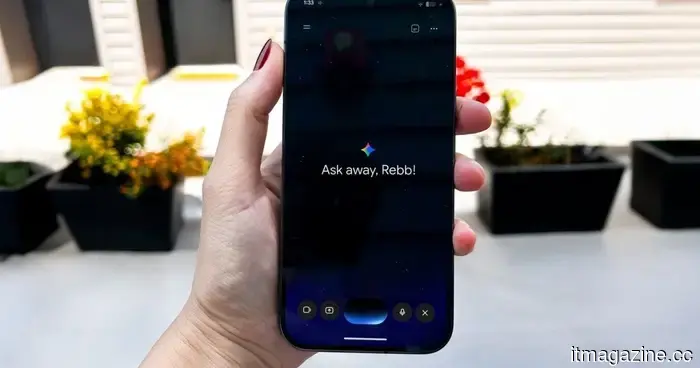 Gemini 3.5 Transcribe encourages you to let go of the pressure to be a flawless speaker.
Google's Gemini 3.5 Transcribe automatically eliminates filler words such as "um" and "ah" from your spoken content, converting disjointed speech into polished, organized text.
Gemini 3.5 Transcribe encourages you to let go of the pressure to be a flawless speaker.
Google's Gemini 3.5 Transcribe automatically eliminates filler words such as "um" and "ah" from your spoken content, converting disjointed speech into polished, organized text.
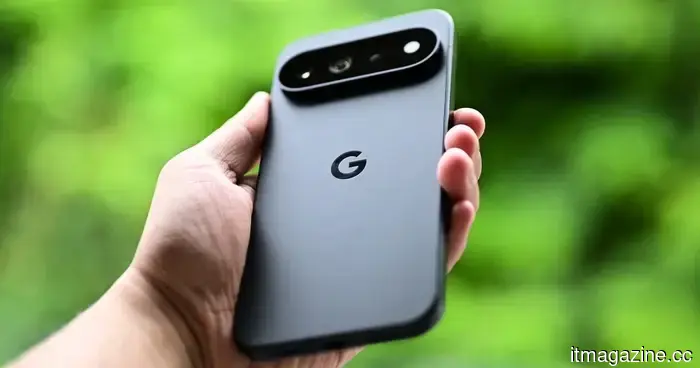 A few days in, the battery life of the Pixel 11 Pro XL hasn't been great for me so far.
After 72 hours of using the Pixel 11 Pro XL, I'm achieving less than 6 hours of screen-on time, which is significantly lower than the Galaxy S26 Ultra and iPhone 17 Pro Max.
A few days in, the battery life of the Pixel 11 Pro XL hasn't been great for me so far.
After 72 hours of using the Pixel 11 Pro XL, I'm achieving less than 6 hours of screen-on time, which is significantly lower than the Galaxy S26 Ultra and iPhone 17 Pro Max.
 Ridley Scott has confirmed that the upcoming Alien film will focus on Michael Fassbender's character, David.
Ridley Scott has confirmed that a new Alien film will focus exclusively on Michael Fassbender's character, David, picking up from the cliffhanger conclusion of Covenant after a lengthy period of ambiguity.
Ridley Scott has confirmed that the upcoming Alien film will focus on Michael Fassbender's character, David.
Ridley Scott has confirmed that a new Alien film will focus exclusively on Michael Fassbender's character, David, picking up from the cliffhanger conclusion of Covenant after a lengthy period of ambiguity.
Huawei intends to expand its AI pharmaceutical collaborations, primarily with drug manufacturers in China.
The president of Huawei's healthcare division mentioned that further collaborations with pharmaceutical companies are on the horizon, primarily focusing on partnerships with domestic Chinese drug manufacturers.