
Huawei aims to establish additional AI partnerships in the pharmaceutical sector, primarily with Chinese pharmaceutical companies.
Huawei plans to establish additional AI partnerships with pharmaceutical firms, as stated by William Zhang, president of its healthcare business unit, during an interview with Reuters. Currently, the projects primarily involve Chinese drugmakers. The company offers compound screening tools alongside its Ascend and Kunpeng chips, continuing its development of a domestic technology stack after US sanctions necessitated alternative approaches.
"As we continue to deepen our research into AI in healthcare, we will see increased collaboration and results with pharmaceutical companies spanning from drug manufacturing to clinical application to final implementation," Zhang noted. He mentioned existing partnerships in clinical practice within hospitals, though he did not specify which ones.
There is no specific target number linked to these initiatives, nor were any potential partners identified. This announcement serves more as a directional statement rather than a detailed plan, which is important to clarify before any associated figures begin to circulate.
One notable collaboration cited by Huawei is a deal announced in May with Guangzhou Pharmaceutical Holdings, a state-owned organization. Huawei characterized this as the industry’s first production validation of independently developed AI drug research models tailored for Ascend and Kunpeng chips.
This phrase merits clarification, as it could lead to misunderstandings. "Independently developed" in this context refers to domestic development rather than Huawei's own creation, and the models are attributed to StoneWise, a Beijing-based AI drug design firm involved in the agreement. Huawei's role involved providing the silicon and adapting existing software to operate on it. This is significant, as it enables drug discovery without American chips, but it is more focused on infrastructure than on scientific breakthroughs.
Huawei does have its own model, the Pangu drug molecule model, which was launched in 2021 in collaboration with the Chinese Academy of Sciences. Trained on 1.7 billion known compounds, it predicts how molecules interact with targets. Additionally, Huawei has an earlier collaboration with Yunnan Baiyao from 2022, where the drugmaker provides botanical compound libraries, and Huawei offers the cloud infrastructure and AI services. However, neither this partnership nor the one with Guangzhou has produced a named drug candidate that has entered clinical trials.
Comparatively, the scale of Huawei’s endeavors highlights the context of their announcement. Nvidia has formed AI partnerships with Eli Lilly and Novo Nordisk, with the Lilly agreement establishing a co-innovation lab with up to $1 billion jointly invested over five years. In contrast, Huawei's revealed pharmaceutical efforts include one proof-of-concept collaboration and an older cooperation agreement, indicating a notable disparity. Zhang did not obscure this difference.
However, Huawei benefits from supportive government policies. Biopharmaceuticals were acknowledged as an emerging pillar industry in this year's government work report, and AI in pharmaceuticals is included in the fifteenth five-year plan. Furthermore, a state-backed organization established in June lists Huawei among suppliers alongside Kingdee and XtalPi.
Zhang's emphasis on domestic focus also suggests an inherent limitation. Last year's US export guidance indicated that utilizing Huawei's Ascend accelerators could likely violate American controls, thus constricting the market potential for initiatives reliant on that hardware, similar to limitations Huawei faces in its overseas data center proposals.
The broader landscape appears less promising than recent announcements might imply. Approximately $60 billion has been invested in AI drug discovery globally, but no AI-discovered drug has yet received regulatory approval, despite 179 candidates being in development as of June, up from four in 2017, with nine reaching Phase III trials.
Reuters reported industry projections suggesting that machine learning could halve early-stage development timelines and costs within three to five years. This forecast pertains to the industry overall rather than to Huawei specifically, which is an important distinction, considering the current trend of promoting this sector predominantly based on the latter, as China's efforts to execute substantial AI workloads on domestic silicon continue to illustrate.
Other articles
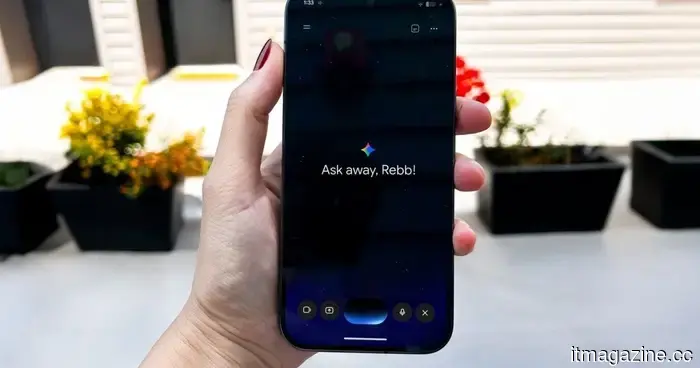 Gemini 3.5 Transcribe encourages you to let go of the pressure to be a flawless speaker.
Google's Gemini 3.5 Transcribe automatically eliminates filler words such as "um" and "ah" from your spoken content, converting disjointed speech into polished, organized text.
Gemini 3.5 Transcribe encourages you to let go of the pressure to be a flawless speaker.
Google's Gemini 3.5 Transcribe automatically eliminates filler words such as "um" and "ah" from your spoken content, converting disjointed speech into polished, organized text.
 The regulator in South Korea has stated that the restrictions imposed by Meta for teenagers should be enforced globally, rather than being limited to the United States.
South Korea's media regulator has contended that Meta's recently announced youth protections should be implemented globally, shortly after the company stated that these measures do not automatically apply everywhere.
The regulator in South Korea has stated that the restrictions imposed by Meta for teenagers should be enforced globally, rather than being limited to the United States.
South Korea's media regulator has contended that Meta's recently announced youth protections should be implemented globally, shortly after the company stated that these measures do not automatically apply everywhere.
 Brazil files a lawsuit against Discord seeking R$500M and requests the establishment of an office in the nation.
The federal government of Brazil is filing a lawsuit against Discord for R$500 million due to shortcomings in child safety, just three days after Discord challenged the regulator's authority.
Brazil files a lawsuit against Discord seeking R$500M and requests the establishment of an office in the nation.
The federal government of Brazil is filing a lawsuit against Discord for R$500 million due to shortcomings in child safety, just three days after Discord challenged the regulator's authority.
 LibreOffice 26.8 introduces many great features while avoiding any intrusive AI elements.
The Document Foundation has launched LibreOffice 26.8, which introduces enhanced paragraph typography, expanded spreadsheet functionalities, and no intrusive AI features to the open-source office suite.
LibreOffice 26.8 introduces many great features while avoiding any intrusive AI elements.
The Document Foundation has launched LibreOffice 26.8, which introduces enhanced paragraph typography, expanded spreadsheet functionalities, and no intrusive AI features to the open-source office suite.
 What the semiconductor tariff in the US currently encompasses and what it excludes.
A carve-out protects US data centers from the 25% tariffs on semiconductors. The review that might eliminate this exemption was expected on July 1, but it has yet to be released.
What the semiconductor tariff in the US currently encompasses and what it excludes.
A carve-out protects US data centers from the 25% tariffs on semiconductors. The review that might eliminate this exemption was expected on July 1, but it has yet to be released.
 Apple has announced its 'Surprise and Shine' event scheduled for September 9.
Apple has announced an event for September 9, during which a foldable iPhone is anticipated, while the regular iPhone 18 has been postponed to spring.
Apple has announced its 'Surprise and Shine' event scheduled for September 9.
Apple has announced an event for September 9, during which a foldable iPhone is anticipated, while the regular iPhone 18 has been postponed to spring.
Huawei aims to establish additional AI partnerships in the pharmaceutical sector, primarily with Chinese pharmaceutical companies.
The president of Huawei's healthcare division has stated that additional collaborations with pharmaceutical companies are on the horizon, primarily involving local Chinese drug manufacturers.