
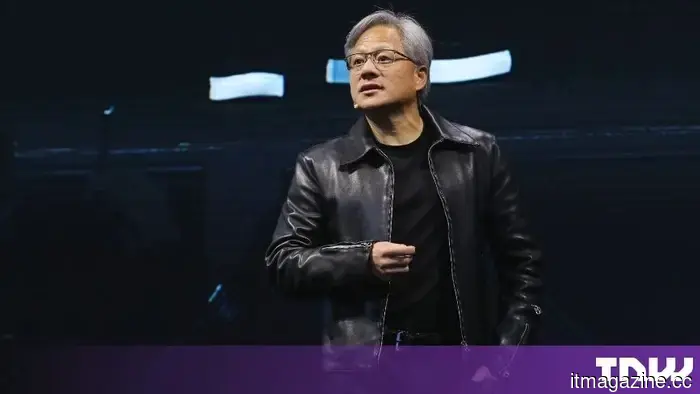
Nvidia is on the verge of announcing its quickest growth in seven quarters.
Nvidia is projected to announce quarterly revenue of $92.18 billion, nearly double that of the same period last year and marking its fastest growth in seven quarters, with analysts predicting an increase to $104.20 billion for the current quarter.
The focus has shifted from the numbers themselves to the extent of demand that the company is funding directly, having secured $500 billion in financing for clients this month.
The key commercial consideration for this quarter revolves around the transition to Rubin. Shipments of the new-generation processors will start this autumn, and the speed at which customers switch from Blackwell will determine if the guidance remains valid.
Morgan Stanley anticipates that Rubin will contribute almost $9 billion in the current quarter, positing that it significantly enhances what the bank describes as AI factory economics. Nvidia has confirmed that Vera Rubin is fully operational, with OpenAI utilizing it extensively.
Analysts are particularly focused on the financing arrangements. In addition to the $500 billion package, Nvidia has guaranteed up to $105 billion for OpenAI’s Ohio data center, positioning the chipmaker as a hybrid between supplier and lender to its clients.
“This creates a central banking-like role in the AI sector,” stated Brian Mulberry of Zacks Investment Management. “The primary risk lies in having total AI exposure with no diversification.”
Credit markets have already acknowledged this. Nvidia’s approximately $750 billion in announced AI commitments has driven its credit default swaps to unprecedented levels, indicating that the bond market prefers demand to be self-sustaining.
The structural concern is not so much whether customers can pay, but rather that a supplier financing its own product sales shows revenue that seems independent, making it difficult for outsiders to differentiate between the two in the income statement.
Customer concentration exacerbates the issue. A small number of hyperscalers and model labs account for a significant portion of Nvidia’s revenue, with several appearing on both sides of the ledger as buyers and recipients of its investments or financing.
Competition adds another layer of pressure, and this is no longer hypothetical. Companies like Amazon, Google, and Meta have custom silicon initiatives; AMD and Intel are advancing in inference, which is the workload that expands fastest once models are deployed rather than merely trained.
Inference also has distinct economic dynamics compared to training. It favors cost per token over raw throughput, which is the area where custom silicon excels and where Nvidia’s architectural lead is less pronounced.
Market sentiment surrounding Nvidia has been notably mixed for a company reporting such figures. Shares have risen 11.8% this year but have recently underperformed against major indices, and Nvidia briefly ceded its title as the world’s most valuable company to Apple.
Cost pressures are becoming apparent in Nvidia's pricing as well. The company has informed customers that AI server prices will increase by over 15% due to memory shortages, directly passing the DRAM constraints to the clients it is also assisting with financing.
The bullish outlook remains intact in the meantime. Demand for inference capacity continues to exceed supply, with years of announced projects supporting the buildout, and no competitor has yet matched the software stack that keeps customers committed to Nvidia hardware once they adopt it.
Future guidance will hold more significance than the reported quarter. An earnings beat accompanied by a weak outlook would validate what the credit market has been indicating, while a positive outlook raises the question of how much of it represents committed capacity that the company has financed.
Neither response resolves the fundamental debate. Nvidia can sustain this growth rate as long as the buildout continues, and the buildout will persist as long as capital keeps coming in, creating a circular dynamic that describes the ongoing arrangement.
Other articles
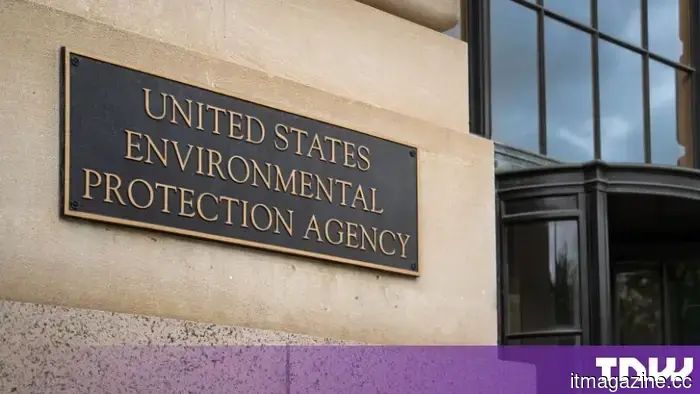 The EPA aims to make the disclosure of data center pollution voluntary.
A suggested rule from the EPA would allow for voluntary public disclosure of air pollution from minor sources, focusing on diesel generators located near data centers.
The EPA aims to make the disclosure of data center pollution voluntary.
A suggested rule from the EPA would allow for voluntary public disclosure of air pollution from minor sources, focusing on diesel generators located near data centers.
 SpaceX is investing $100 billion in establishing a second Starbase on a former Exxon site in Louisiana.
SpaceX plans to construct a $100 billion Starship spaceport in Vermilion Parish, Louisiana, starting construction in 2027, with a goal of its first launch in 2029.
SpaceX is investing $100 billion in establishing a second Starbase on a former Exxon site in Louisiana.
SpaceX plans to construct a $100 billion Starship spaceport in Vermilion Parish, Louisiana, starting construction in 2027, with a goal of its first launch in 2029.
 Deloitte will pay $21.5 million to resolve a Department of Justice investigation regarding its diversity goals.
Deloitte has consented to pay $21.5 million to resolve a DOJ investigation into its DEI practices, without acknowledging any wrongdoing, as part of the Civil Rights Fraud Initiative.
Deloitte will pay $21.5 million to resolve a Department of Justice investigation regarding its diversity goals.
Deloitte has consented to pay $21.5 million to resolve a DOJ investigation into its DEI practices, without acknowledging any wrongdoing, as part of the Civil Rights Fraud Initiative.
 Adam Mosseri stated that the Take a Break feature on Instagram was not as helpful as anticipated.
Adam Mosseri stated that Instagram’s Take a Break feature was less effective than expected, as documents revealed that only 1.8% of teenagers utilized it.
Adam Mosseri stated that the Take a Break feature on Instagram was not as helpful as anticipated.
Adam Mosseri stated that Instagram’s Take a Break feature was less effective than expected, as documents revealed that only 1.8% of teenagers utilized it.
 Eight months following Australia's ban, the percentage of teenagers using TikTok has decreased by one point.
Data from Qustodio reveals that 26% of Australian teens aged 13 to 15 continue to use TikTok, just one point below the levels observed before the ban, eight months after the implementation of the under-16 ban.
Eight months following Australia's ban, the percentage of teenagers using TikTok has decreased by one point.
Data from Qustodio reveals that 26% of Australian teens aged 13 to 15 continue to use TikTok, just one point below the levels observed before the ban, eight months after the implementation of the under-16 ban.
 SpaceX is investing $100 billion in a new Starbase located on a former Exxon site in Louisiana.
SpaceX plans to construct a $100 billion Starship spaceport in Vermilion Parish, Louisiana, with construction beginning in 2027 and the first launch aimed for 2029.
SpaceX is investing $100 billion in a new Starbase located on a former Exxon site in Louisiana.
SpaceX plans to construct a $100 billion Starship spaceport in Vermilion Parish, Louisiana, with construction beginning in 2027 and the first launch aimed for 2029.
Nvidia is on the verge of announcing its quickest growth in seven quarters.
Analysts anticipate that Nvidia's revenue will almost double to $92 billion, with a focus on the Rubin ramp and $500 billion in customer financing.