
Spain requires data centres to source 80% of their energy from renewable sources on an hourly basis, or they will not be granted a grid connection.
Spain has prepared a decree mandating that new data centres obtain at least 80% of their electricity from renewable sources during each hour of operation, with the consequence of losing grid access for non-compliance. This stance is significantly stricter than that of Brussels, which had previously encouraged Big Tech to align data centres with climate goals without providing a robust mechanism. This initiative arrives in a continent where Denmark has already halted grid connections altogether.
The challenge lies in the hourly requirement. Meeting an annual offset, where an operator purchases enough renewable energy over a year to compensate for consumption, is relatively straightforward. In contrast, hourly offsets require that power be available when the servers need it.
New installations come with extra responsibilities; for every new megawatt, corresponding renewable energy projects must be operational within 18 months, achieved through contracts or local construction. This essentially makes each data centre accountable for the generation it consumes, similar to the "polluter pays" principle that Australia has been attempting to legislate, though Spain has a more straightforward constitutional pathway to enforce it.
The capacity of the grid to manage this is a different concern than the capability of operators. Meeting hourly requirements relies on energy storage, interconnections, and generation patterns that differ by region, and a nationally written regulation must be applicable where daylight hours vary.
Operators must be located within the EU, ensuring that all data and metadata remain within European jurisdiction, with access from outside countries regulated, and enhanced protections for data pertaining to public entities or national security matters. This requirement serves as a sovereignty measure disguised as an environmental regulation. By mandating EU establishment and European data residency, it directly impacts the American hyperscalers who have recently expanded much of Spain's capacity.
This move is also notable as it represents a case where a member state is enacting stricter data residency rules than those stipulated by EU law. The GDPR focuses on transfer limitations rather than storage, and imposing a blanket requirement for data and metadata to remain in Europe exceeds what the EU has previously accepted.
Water usage and efficiency standards would align with the highest sustainability criteria currently being developed by the EU for this sector. Given the recent droughts affecting significant portions of Spain, this position is politically unavoidable.
The decree pertains to facilities over one megawatt that have not yet connected to the grid. Projects already in the permitting phase would have six months to comply or lose their connection rights, without compensation. Six months is insufficient for a project that has been planned based on expected power costs. Developers that based their financial models on annual renewable matching would need to reassess or relinquish their previously secured queue position, which can take years to achieve.
Spain is among Europe’s rapidly expanding data centre markets due to its cheap renewable energy and available land, a combination that developers have been seeking as capacity shifts from the traditional major markets. Government officials present the decree as a means of selecting the most efficient and beneficial projects rather than accepting any that apply.
However, the risk in this approach is that developers have other alternatives. Capacity that cannot meet Spain’s criteria may be redirected to Portugal, Italy, or the Nordics, and studies have already indicated that Europe’s ambitions in AI might be hindered by data centre limitations rather than by the quality of models.
Madrid is optimistic that projects will still materialize. Spain possesses the essential resources that the sector demands—abundant sunshine, wind, land, and interconnection capability—and a government confident in its valuable assets is willing to impose conditions on their use.
The decree is set for public consultation this week; however, the information available is based on sources rather than official statements, so the final text may change before its implementation. Consultation will be the avenue for the industry to voice its concerns, particularly regarding the hourly matching requirement, which is likely to be a contentious point.
Other articles
 AI will not revolutionize healthcare until we address the issue of information overload.
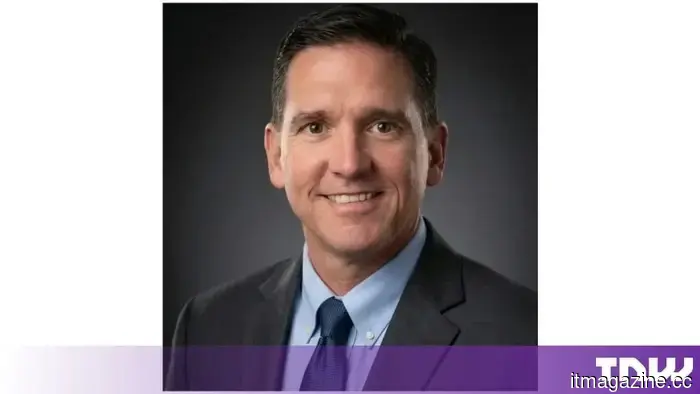
Seventy percent of healthcare professionals believe that AI is being implemented more quickly than organizations can effectively utilize it. Doug Benoit, CEO of FacialDx, argues that the primary limitation in healthcare is now attention, rather than information.
AI will not revolutionize healthcare until we address the issue of information overload.
Seventy percent of healthcare professionals believe that AI is being implemented more quickly than organizations can effectively utilize it. Doug Benoit, CEO of FacialDx, argues that the primary limitation in healthcare is now attention, rather than information.
 SpaceX is investing $100 billion in a new Starbase located on a former Exxon site in Louisiana.
SpaceX plans to construct a $100 billion Starship spaceport in Vermilion Parish, Louisiana, with construction beginning in 2027 and the first launch aimed for 2029.
SpaceX is investing $100 billion in a new Starbase located on a former Exxon site in Louisiana.
SpaceX plans to construct a $100 billion Starship spaceport in Vermilion Parish, Louisiana, with construction beginning in 2027 and the first launch aimed for 2029.
 Adam Mosseri stated that Instagram's Take a Break feature was not as effective as anticipated.
Adam Mosseri stated that Instagram's Take a Break feature was less effective than anticipated, as documents revealed that only 1.8% of teenagers utilized it.
Adam Mosseri stated that Instagram's Take a Break feature was not as effective as anticipated.
Adam Mosseri stated that Instagram's Take a Break feature was less effective than anticipated, as documents revealed that only 1.8% of teenagers utilized it.
 The EPA aims to make the disclosure of data center pollution voluntary.
A suggested rule from the EPA would allow for voluntary public disclosure of air pollution from minor sources, focusing on diesel generators located near data centers.
The EPA aims to make the disclosure of data center pollution voluntary.
A suggested rule from the EPA would allow for voluntary public disclosure of air pollution from minor sources, focusing on diesel generators located near data centers.
 Meta is in discussions for a settlement with the states while the jury is still in session.
According to Bloomberg, Meta and state attorneys general have been in discussions about potentially settling the youth social media harm case while the trial is ongoing.
Meta is in discussions for a settlement with the states while the jury is still in session.
According to Bloomberg, Meta and state attorneys general have been in discussions about potentially settling the youth social media harm case while the trial is ongoing.
 Meta and the states are in discussions for a settlement while the jury is still deliberating.
According to Bloomberg, Meta and state attorneys general have talked about the possibility of settling the youth social media harm case while the trial is ongoing.
Meta and the states are in discussions for a settlement while the jury is still deliberating.
According to Bloomberg, Meta and state attorneys general have talked about the possibility of settling the youth social media harm case while the trial is ongoing.
Spain requires data centres to source 80% of their energy from renewable sources on an hourly basis, or they will not be granted a grid connection.
A proposed Spanish decree would mandate that data centers with a capacity over 1MW obtain 80% of their energy from renewable sources on an hourly basis and store data within the EU.