
Meta and the states are in discussions for a settlement while the jury is still deliberating.
Meta and state attorneys general are currently engaged in settlement discussions amidst the youth social media harm trial taking place in federal court in California, as reported by Bloomberg. This case is the largest of its kind, with 29 states suing the company, and four of these states—California, Colorado, Kentucky, and New Jersey—are involved in the trial that commenced this month in Oakland.
Mid-trial settlement discussions are not uncommon and usually indicate that at least one party has reassessed how the evidence is being perceived. This trial has revealed many internal documents that Meta likely prefers to keep out of public view. Additionally, Nevada's Attorney General Aaron Ford announced a press conference about a significant consumer protection settlement involving a major tech company, which he did not identify. Nevada is one of the states suing Meta, and the timing suggests a possible link, although no affirmations have been made concerning the relationship between the two matters.
In a jury trial, timing can play a crucial role. Meta could benefit from mitigating the risk of an unfavorable verdict, while the states gain leverage the longer the evidence is presented to the jury; hence mid-trial discussions often revolve around which side will concede first.
The allegations against Meta fall into two categories: violations of consumer protection laws and breaches of the federal Children’s Online Privacy Protection Act for collecting minors’ personal data without parental consent and utilizing it for AI training. The latter aspect could have broader implications beyond this case; a ruling on the legality of using children’s data collected without consent for training models could impact numerous companies that gather data from consumer platforms.
Jury selection commenced on August 12, and a federal appeals court recently declined to delay the trial despite Meta's request for intervention, which is important to consider in light of its interest in negotiating a settlement. Meta has not commented on the settlement discussions, maintaining that social media addiction is not a recognized psychiatric condition and asserting its commitment to protecting children on its platforms.
Reaching a settlement would also prevent internal documents from becoming part of the public record, which is valuable for a company facing further litigation related to the same issues. Evidence introduced in one trial can often resurface in future cases.
The potential damages involved highlight why a settlement might be desirable; the four states participating in the trial are pursuing around $200 billion, and Meta has suggested that states are seeking as much as $1.4 trillion in penalties, a figure aimed at negotiation rather than actual payment.
Any settlement would also need to gain the approval of a broad and diverse group. With 29 attorneys general involved, the political considerations of each state vary, meaning that a deal satisfactory to one state may not be acceptable to another, a challenge typical in multi-state actions.
Historically, multi-state settlements in tobacco and opioid cases have typically included both financial payments and commitments to change conduct, with negotiations often focusing on the latter. The changes Meta agrees to implement concerning teen accounts may hold more significance than the financial settlement itself.
Moreover, Meta is facing parallel legal challenges, including a separate jury trial in Tennessee addressing Instagram’s addictive design. Thus, settling the case in Oakland would not resolve all of Meta's legal issues.
For now, the trial proceeds, with Instagram head Adam Mosseri scheduled to testify this week. Mid-trial discussions frequently result in no agreement, and the only certain indicator of success in this instance would be if the case concludes sooner than the anticipated duration of approximately five weeks.
Other articles
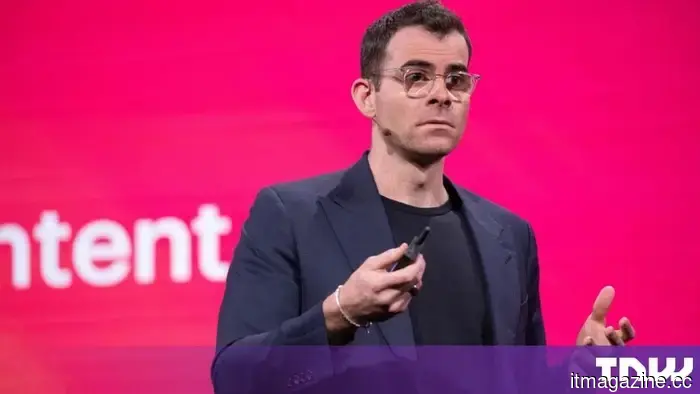 Adam Mosseri stated that Instagram's Take a Break feature was not as effective as anticipated.
Adam Mosseri stated that Instagram's Take a Break feature was less effective than anticipated, as documents revealed that only 1.8% of teenagers utilized it.
Spain requires data centres to operate on 80% renewable energy every hour, or they will not be granted a grid connection.
Un borrador de decreto español exigiría a los centros de datos con una capacidad superior a 1 MW que obtengan un 80% de energía renovable de forma horaria y que mantengan los datos dentro de la UE.
Adam Mosseri stated that Instagram's Take a Break feature was not as effective as anticipated.
Adam Mosseri stated that Instagram's Take a Break feature was less effective than anticipated, as documents revealed that only 1.8% of teenagers utilized it.
Spain requires data centres to operate on 80% renewable energy every hour, or they will not be granted a grid connection.
Un borrador de decreto español exigiría a los centros de datos con una capacidad superior a 1 MW que obtengan un 80% de energía renovable de forma horaria y que mantengan los datos dentro de la UE.
 SpaceX is investing $100 billion in establishing a second Starbase on a former Exxon site in Louisiana.
SpaceX plans to construct a $100 billion Starship spaceport in Vermilion Parish, Louisiana, starting construction in 2027, with a goal of its first launch in 2029.
SpaceX is investing $100 billion in establishing a second Starbase on a former Exxon site in Louisiana.
SpaceX plans to construct a $100 billion Starship spaceport in Vermilion Parish, Louisiana, starting construction in 2027, with a goal of its first launch in 2029.
 Adam Mosseri stated that the Take a Break feature on Instagram was not as helpful as anticipated.
Adam Mosseri stated that Instagram’s Take a Break feature was less effective than expected, as documents revealed that only 1.8% of teenagers utilized it.
Adam Mosseri stated that the Take a Break feature on Instagram was not as helpful as anticipated.
Adam Mosseri stated that Instagram’s Take a Break feature was less effective than expected, as documents revealed that only 1.8% of teenagers utilized it.
 Deloitte will pay $21.5 million to resolve a Department of Justice investigation regarding its diversity goals.
Deloitte has consented to pay $21.5 million to resolve a DOJ investigation into its DEI practices, without acknowledging any wrongdoing, as part of the Civil Rights Fraud Initiative.
Deloitte will pay $21.5 million to resolve a Department of Justice investigation regarding its diversity goals.
Deloitte has consented to pay $21.5 million to resolve a DOJ investigation into its DEI practices, without acknowledging any wrongdoing, as part of the Civil Rights Fraud Initiative.
 Spain requires data centres to source 80% of their energy from renewable sources on an hourly basis, or they will not be granted a grid connection.
A proposed Spanish decree would mandate that data centers with a capacity over 1MW obtain 80% of their energy from renewable sources on an hourly basis and store data within the EU.
Spain requires data centres to source 80% of their energy from renewable sources on an hourly basis, or they will not be granted a grid connection.
A proposed Spanish decree would mandate that data centers with a capacity over 1MW obtain 80% of their energy from renewable sources on an hourly basis and store data within the EU.
Meta and the states are in discussions for a settlement while the jury is still deliberating.
According to Bloomberg, Meta and state attorneys general have talked about the possibility of settling the youth social media harm case while the trial is ongoing.