
Moonshot AI aims to receive 30% of the revenue generated by US clouds from Kimi K3.
Moonshot AI is currently in preliminary discussions with Microsoft, Amazon, and Google regarding the possibility of hosting Kimi K3 on their cloud platforms, aiming to secure up to 30% of the revenue generated by those services, as reported by Reuters. This would mark a groundbreaking arrangement between a Chinese AI firm and major American cloud providers, involving a model released by Moonshot that is recognized as the world's largest open model and caused significant market reactions upon its release.
The K3 model comprises 2.8 trillion parameters, making it open-source but impractical for most organizations to host due to the extensive computing resources needed, which only a select few companies can provide. Consequently, while the open weights of the model reduce dependency on a particular cloud provider, they shift the competitive landscape among providers. Moonshot gains access to distribution channels it could not achieve alone, while hyperscalers acquire a model that has performed strongly against American standards, with Arena.ai ranking K3 as the top performer for web interface tasks.
However, many aspects of the deal remain unresolved, including the revenue sharing arrangement, data access stipulations, and the auditing process for token usage, which is essential for usage-based billing. The auditing issue is particularly complex, as both parties must agree on a method for counting the text units processed by the model, especially since the counting party will also be the one compensating for the revenue share.
Data access is likely to be the key deciding factor in this deal. A Chinese company hosting a model on platforms like Azure or AWS raises immediate concerns about the visibility of prompts and outputs, and enterprise clients will demand clarity before handling any sensitive information.
The geopolitical implications complicate matters further than the financial details. US Treasury Secretary Scott Bessent has hinted at placing Moonshot on trade blacklists, and American officials have accused the company of improperly obtaining chips and replicating other companies' models, claims that Moonshot disputes. The involvement of three US cloud providers with a company that may be blacklisted by the Treasury Secretary presents a challenging scenario. The outcome of these negotiations may rely more on whether Washington deems the arrangement acceptable rather than the specific terms.
For Moonshot, this timing holds considerable commercial importance. The company is preparing for a Hong Kong stock listing at a valuation of $30 billion, and access to the largest global cloud platforms would significantly alter the revenue narrative presented to investors.
Moonshot's valuation trajectory is noteworthy in itself, as it achieved a $30 billion target after a sevenfold increase in six months, prompting the need for urgent distribution agreements. The valuation has escalated rapidly, transitioning from approximately $20 billion to a $30 billion target in about six months. A business model focused solely on selling access to Chinese customers has a limitation compared to one that could leverage Azure, AWS, and Google Cloud.
There are also sovereignty considerations that complicate the deal in Europe, where customers have been encouraged to lessen their reliance on foreign models over the past two years. Utilizing a Chinese model via an American cloud does not align neatly with these concerns, even if it may be the most cost-effective option.
The hyperscalers have their own calculations to make; customers continue to request affordable, capable models, and K3 fits that demand. The alternative to hosting K3 is that enterprises may seek access through other channels, which has historically led to providers agreeing to carry competing models.
The proposed 30% revenue share could be seen as aggressive, although it reportedly aligns with what Moonshot has been requesting from large customers. This arrangement also flips the typical structure, wherein the platform typically retains a larger portion and the developer receives the remainder.
No agreements have been finalized, and the four companies have declined to comment further beyond acknowledging the lack of additional information. Early discussions, as reported by sources, are often the most likely to conclude without a deal, especially when they hinge on a policy question from the US that needs resolution first.
Другие статьи
 The SEC has issued subpoenas to four banks regarding Situational Awareness.
According to the New York Times, the SEC has issued subpoenas to Goldman Sachs, JPMorgan, Citigroup, and Bank of America concerning Situational Awareness.
The SEC has issued subpoenas to four banks regarding Situational Awareness.
According to the New York Times, the SEC has issued subpoenas to Goldman Sachs, JPMorgan, Citigroup, and Bank of America concerning Situational Awareness.
 1001 Threads of Mizan is transforming Arabian Nights into a vibrant reality, and it appears breathtaking.
1001 Threads of Mizan is an ambitious action RPG drawing inspiration from Arabic folklore, showcasing breathtaking deserts, magical carpet navigation, and a uniquely Middle Eastern fantasy universe.
1001 Threads of Mizan is transforming Arabian Nights into a vibrant reality, and it appears breathtaking.
1001 Threads of Mizan is an ambitious action RPG drawing inspiration from Arabic folklore, showcasing breathtaking deserts, magical carpet navigation, and a uniquely Middle Eastern fantasy universe.
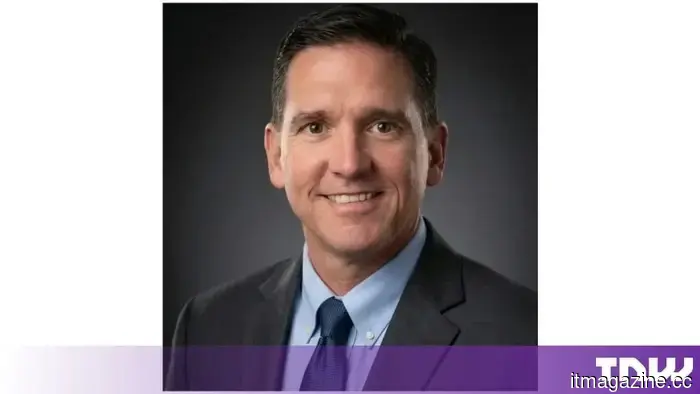 AI will not revolutionize healthcare until we address the issue of information overload.
Seventy percent of healthcare professionals believe that AI is being implemented more quickly than organizations can effectively utilize it. Doug Benoit, CEO of FacialDx, argues that the primary limitation in healthcare is now attention, rather than information.
AI will not revolutionize healthcare until we address the issue of information overload.
Seventy percent of healthcare professionals believe that AI is being implemented more quickly than organizations can effectively utilize it. Doug Benoit, CEO of FacialDx, argues that the primary limitation in healthcare is now attention, rather than information.
 Game of Thrones: War for Westeros places the destiny of the Iron Throne in your control.
PlaySide Studios unveiled the initial gameplay trailer for Game of Thrones: War for Westeros at Gamescom 2026. This officially licensed real-time strategy game is set to launch on PC through Steam in early 2027.
Game of Thrones: War for Westeros places the destiny of the Iron Throne in your control.
PlaySide Studios unveiled the initial gameplay trailer for Game of Thrones: War for Westeros at Gamescom 2026. This officially licensed real-time strategy game is set to launch on PC through Steam in early 2027.
 The stealth model that surpassed DeepSeek is from Zhipu.
According to Bloomberg, Zhipu has verified that Ox Alpha is a new GLM model, after researchers analyzed its fingerprints and discovered that censorship is focused on seven specific topics.
The stealth model that surpassed DeepSeek is from Zhipu.
According to Bloomberg, Zhipu has verified that Ox Alpha is a new GLM model, after researchers analyzed its fingerprints and discovered that censorship is focused on seven specific topics.
 SpaceX is investing $100 billion in establishing a second Starbase on a former Exxon site in Louisiana.
SpaceX plans to construct a $100 billion Starship spaceport in Vermilion Parish, Louisiana, starting construction in 2027, with a goal of its first launch in 2029.
SpaceX is investing $100 billion in establishing a second Starbase on a former Exxon site in Louisiana.
SpaceX plans to construct a $100 billion Starship spaceport in Vermilion Parish, Louisiana, starting construction in 2027, with a goal of its first launch in 2029.
Moonshot AI aims to receive 30% of the revenue generated by US clouds from Kimi K3.
China's Moonshot AI is engaged in preliminary discussions with Microsoft, Amazon, and Google to host Kimi K3 through revenue-sharing agreements that could be as high as 30%.