

SpaceX is investing $100 billion in a new Starbase located on a former Exxon site in Louisiana.
SpaceX plans to establish a second Starbase in Vermilion Parish, Louisiana, on a previously owned Exxon property along the Gulf Coast, with an estimated cost of $100 billion. The company characterizes this facility as a self-sustaining spaceport featuring its own propellant production, power generation, deep-water shipping, vehicle processing, and an airport, which helps explain its hiring of natural gas traders.
This $100 billion investment is comparable to the market capitalization of a large industrial corporation dedicated to a single location, by a company that just recently went public. The recent public listing is likely the source of its funding. In June, SpaceX raised $75 billion through the largest IPO in history, and a project of this scale clarifies the need for such substantial capital.
Construction is planned to commence in 2027, with SpaceX aiming for its first Starship launch from this location in 2029. However, Louisiana Economic Development has taken a more cautious approach, suggesting that initial operations might not start until 2030. A Gulf Coast location enables launches over water, which are essential for Starship's desired trajectories, and provides the deep-water access necessary for moving vehicles via barge. Louisiana also possesses the industrial workforce and governmental support advantageous for this project.
State agencies assess these projects primarily based on their employment potential. SpaceX anticipates creating 3,000 direct jobs over a decade with an average salary of $92,600, in addition to over 30,000 construction jobs at peak times. These figures are significant for coastal Louisiana, an area whose economy has relied heavily on oil and gas and is experiencing land loss. Developing on a former Exxon site represents a literal succession in this industry.
However, the job projections need to be viewed with the usual skepticism towards economic development announcements, as such ten-year estimates are forecasts rather than solid commitments. These figures will also serve as the basis for any state incentives that may be justified.
Another crucial aspect is the environmental implications of coastal erosion that the project must address. SpaceX claims it is partnering with state and federal agencies to enhance Louisiana's Coastal Master Plan and will collaborate with wildlife agencies on the project's ecological effects, using the right terminology but lacking a firm commitment attached to specific numbers.
The Texas Starbase serves as a relevant precedent, though it presents a mixed record. Launches there have been associated with debris issues, wildlife impacts, and ongoing regulatory scrutiny, and Vermilion Parish occupies wetlands that are significantly more sensitive than those in southern Texas.
Local responses have varied as well. Coastal parishes are accustomed to large industrial projects promising employment, but fishing and wetland stakeholders have their perspectives on what a launch complex may entail for their interests.
The primary advantage of this second site is obtaining an increased launch cadence. Starship's economic viability hinges on frequent flights, and having a single pad in Texas limits the launch frequency, regardless of the vehicle's performance.
The vehicle's capabilities remain unproven. SpaceX has invested over $8 billion in Starship and conducted 13 test flights since 2023, but full reusability—the cornerstone of its business model—has yet to be demonstrated in practice. Committing $100 billion to launch infrastructure prior to achieving that milestone signals either strong belief or a costly expression of optimism.
Musk has consistently stated that Starship's purpose extends beyond launching satellites, envisioning capabilities that include transporting factories to the Moon and providing orbital computation.
Additionally, there is an unspoken national security aspect related to the announcements. Having a second launch complex mitigates the risk of a single point of failure in a system that the Pentagon and NASA increasingly rely upon, which could facilitate federal permitting processes.
Regulatory approvals are still pending, and establishing a spaceport in Louisiana's wetlands will necessitate a federal environmental review that could take years, rather than months. The anticipated 2027 construction timeline is based on a process that has yet to commence publicly.
Other articles
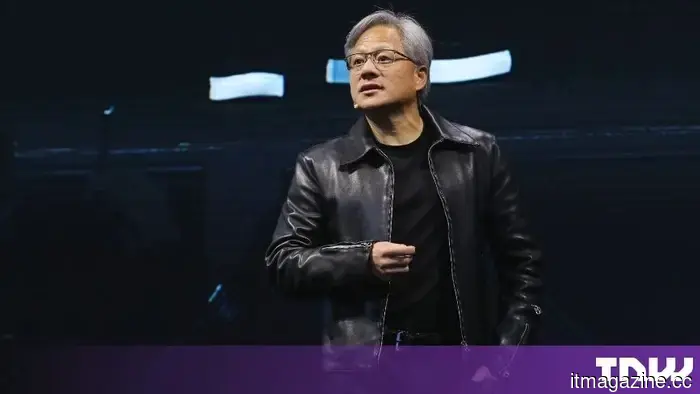 Nvidia is on the verge of announcing its quickest growth in seven quarters.
Analysts anticipate that Nvidia's revenue will almost double to $92 billion, with a focus on the Rubin ramp and $500 billion in customer financing.
Nvidia is on the verge of announcing its quickest growth in seven quarters.
Analysts anticipate that Nvidia's revenue will almost double to $92 billion, with a focus on the Rubin ramp and $500 billion in customer financing.
 Deloitte will pay $21.5 million to resolve a Department of Justice investigation regarding its diversity goals.
Deloitte has consented to pay $21.5 million to resolve a DOJ investigation into its DEI practices, without acknowledging any wrongdoing, as part of the Civil Rights Fraud Initiative.
Deloitte will pay $21.5 million to resolve a Department of Justice investigation regarding its diversity goals.
Deloitte has consented to pay $21.5 million to resolve a DOJ investigation into its DEI practices, without acknowledging any wrongdoing, as part of the Civil Rights Fraud Initiative.
 Japan aims for stock and bond settlements to occur instantly using blockchain technology.
Japan's Financial Services Agency, the finance ministry, and the central bank are examining blockchain technology for the immediate settlement of stocks and government bonds.
Japan aims for stock and bond settlements to occur instantly using blockchain technology.
Japan's Financial Services Agency, the finance ministry, and the central bank are examining blockchain technology for the immediate settlement of stocks and government bonds.
 A law enacted in 1634 is the reason Europeans are unable to collectively sue Big Tech companies.
According to Politico, Ireland prohibits third-party litigation funding as per a statute from 1634, and to date, only a single collective action against Big Tech has been initiated in the country.
A law enacted in 1634 is the reason Europeans are unable to collectively sue Big Tech companies.
According to Politico, Ireland prohibits third-party litigation funding as per a statute from 1634, and to date, only a single collective action against Big Tech has been initiated in the country.
 Game of Thrones: War for Westeros places the destiny of the Iron Throne in your control.
PlaySide Studios unveiled the initial gameplay trailer for Game of Thrones: War for Westeros at Gamescom 2026. This officially licensed real-time strategy game is set to launch on PC through Steam in early 2027.
Spain requires data centres to operate on 80% renewable energy every hour, or they will not be granted a grid connection.
Un borrador de decreto español exigiría a los centros de datos con una capacidad superior a 1 MW que obtengan un 80% de energía renovable de forma horaria y que mantengan los datos dentro de la UE.
Game of Thrones: War for Westeros places the destiny of the Iron Throne in your control.
PlaySide Studios unveiled the initial gameplay trailer for Game of Thrones: War for Westeros at Gamescom 2026. This officially licensed real-time strategy game is set to launch on PC through Steam in early 2027.
Spain requires data centres to operate on 80% renewable energy every hour, or they will not be granted a grid connection.
Un borrador de decreto español exigiría a los centros de datos con una capacidad superior a 1 MW que obtengan un 80% de energía renovable de forma horaria y que mantengan los datos dentro de la UE.
SpaceX is investing $100 billion in a new Starbase located on a former Exxon site in Louisiana.
SpaceX plans to construct a $100 billion Starship spaceport in Vermilion Parish, Louisiana, with construction beginning in 2027 and the first launch aimed for 2029.