
AI will not revolutionize healthcare until we address the issue of information overload.
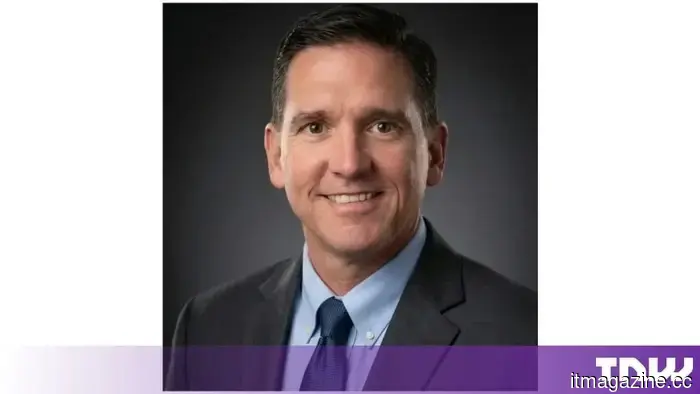
TL;DR: The healthcare sector produces more data than clinicians can effectively manage, and the addition of AI tools may exacerbate the issue. Over 70% of healthcare workers believe technology is advancing faster than it can be effectively implemented. Doug Benoit posits that AI should streamline information rather than inundate clinicians, protect their focus rather than compete for it, and ensure that decision-making remains a human responsibility while organizing data at machine scale.
Healthcare doesn't require more information; it needs improved methods to help clinicians discern what is truly significant. The industry has long chased after an increased volume of data in hopes of achieving better outcomes, but the real challenge lies in transforming an overwhelming amount of information into prompt, meaningful actions. Artificial intelligence will enhance healthcare only if it safeguards clinicians' attention rather than complicating their workload.
Currently, the healthcare setting generates more information than any clinician can reasonably analyze. Electronic health records, wearables, imaging systems, lab results, patient portals, remote monitoring tools, and AI applications continuously produce new data streams. However, more information does not guarantee better decision-making. When clinicians need to sift through numerous alerts, reports, and dashboards to find crucial details, technology can become a distraction rather than a means of improving care.
The effects of this information overload are evident. Healthcare professionals face critical decisions while navigating numerous notifications, competing priorities, and disjointed data sources. A recent survey by Inlightened indicated that over 70% of healthcare professionals feel that the integration of technology and AI is outpacing organizations' ability to operationalize it effectively. This discrepancy is significant, as even cutting-edge technology holds limited value if its implementation heightens the cognitive load on clinicians.
Working with healthcare organizations adopting AI has highlighted a crucial lesson: the main challenge isn't access to information anymore; it's identifying what requires the most immediate attention.
A physician examining a patient’s chart doesn’t need excess information; they need the one lab result, imaging result, or notable change in condition that could affect clinical decisions to be unmistakable. This clarity is becoming harder to achieve as each new platform, alert, and dashboard vies for the same precious resource: human attention.
This situation is often referred to as alert fatigue, but the issue runs deeper—it's a matter of cognitive saturation. Humans have limits when processing competing information while maintaining focus, judgment, and decision-making throughout a demanding workday. Medicine has always necessitated intense concentration, and simply adding complexity won’t guarantee improved outcomes.
Yet, the industry's response has often been to increase the amount of data. More monitoring devices, more analytics platforms, more dashboards, and more AI-generated insights have been introduced. Each innovation may offer individual benefits, but collectively they risk creating an environment in which clinicians spend more time managing information than applying it.
Artificial intelligence has the potential to alter this trend, but only if we understand its true purpose. The primary benefit of AI in healthcare should be enhancing the usefulness of existing information.
The most effective AI systems will recognize patterns in fragmented data, minimize unnecessary noise, emphasize significant changes, and prioritize matters that require human attention. The aim should be to provide clinicians with clearer visibility, allowing them to spend less time searching and more time making informed decisions.
This distinction is vital because discussions surrounding healthcare AI often revolve around whether machines will replace professionals. This misses the mark; medicine encompasses far more than data. Clinical decisions rely on experience, empathy, communication, ethics, and accountability. Each patient’s situation involves aspects that numbers alone cannot reflect.
AI should be an intelligence layer that enhances clinical awareness while keeping the responsibility for decision-making with healthcare professionals. Technology can organize information at a scale beyond human capability, but clinicians must remain accountable for diagnosis, treatment, and patient care. The future of healthcare hinges on achieving this balance.
However, the responsible integration of AI requires more than advanced algorithms. Trust hinges on transparency, explainability, governance, validation, and clear accountability. Healthcare organizations must ensure clinicians comprehend how AI systems generate recommendations and understand when to question those recommendations.
Signs of concern are already surfacing. The State of Healthcare IT 2026 Report by SolvEdge reveals that healthcare organizations are deploying clinical AI tools faster than they are developing governance frameworks for management. Organizations achieving the best outcomes are not necessarily those hastily implementing solutions, but those investing in oversight, validation processes, and clinician involvement from the outset.
This issue is not limited to hospitals. Telehealth providers, population health initiatives, insurers, employer wellness programs, sports medicine organizations, and remote care companies are all experiencing the same challenge: health data is proliferating faster than human capacity to analyze it. Each organization collecting more data will ultimately face the same question: how do we discern the signal before it gets lost in the noise?
The future leaders in healthcare will be defined by their ability to safeguard attention. They will devise technology that filters rather than inundates, clarifies instead of complicating, and enables clinicians to concentrate on critical moments where human judgment has the most substantial
Other articles
 Deloitte will pay $21.5 million to resolve a Department of Justice investigation regarding its diversity goals.
Deloitte has consented to pay $21.5 million to resolve a DOJ investigation into its DEI practices, without acknowledging any wrongdoing, as part of the Civil Rights Fraud Initiative.
Deloitte will pay $21.5 million to resolve a Department of Justice investigation regarding its diversity goals.
Deloitte has consented to pay $21.5 million to resolve a DOJ investigation into its DEI practices, without acknowledging any wrongdoing, as part of the Civil Rights Fraud Initiative.
 SpaceX is investing $100 billion in a new Starbase located on a former Exxon site in Louisiana.
SpaceX plans to construct a $100 billion Starship spaceport in Vermilion Parish, Louisiana, with construction beginning in 2027 and the first launch aimed for 2029.
SpaceX is investing $100 billion in a new Starbase located on a former Exxon site in Louisiana.
SpaceX plans to construct a $100 billion Starship spaceport in Vermilion Parish, Louisiana, with construction beginning in 2027 and the first launch aimed for 2029.
 Bill Gates suggests the creation of 'Human Reserved' positions and the implementation of a tax on AI tokens.
Bill Gates has suggested the creation of 'Human Reserved' jobs that would be safeguarded from AI, specifically mentioning roles such as childcare and jury duty, in addition to implementing taxes on AI tokens and robots.
Bill Gates suggests the creation of 'Human Reserved' positions and the implementation of a tax on AI tokens.
Bill Gates has suggested the creation of 'Human Reserved' jobs that would be safeguarded from AI, specifically mentioning roles such as childcare and jury duty, in addition to implementing taxes on AI tokens and robots.
 The EPA aims to make the disclosure of data center pollution voluntary.
A suggested rule from the EPA would allow for voluntary public disclosure of air pollution from minor sources, focusing on diesel generators located near data centers.
The EPA aims to make the disclosure of data center pollution voluntary.
A suggested rule from the EPA would allow for voluntary public disclosure of air pollution from minor sources, focusing on diesel generators located near data centers.
 SpaceX is investing $100 billion in establishing a second Starbase on a former Exxon site in Louisiana.
SpaceX plans to construct a $100 billion Starship spaceport in Vermilion Parish, Louisiana, starting construction in 2027, with a goal of its first launch in 2029.
SpaceX is investing $100 billion in establishing a second Starbase on a former Exxon site in Louisiana.
SpaceX plans to construct a $100 billion Starship spaceport in Vermilion Parish, Louisiana, starting construction in 2027, with a goal of its first launch in 2029.
 Japan aims for stock and bond settlements to occur instantly using blockchain technology.
Japan's Financial Services Agency, the finance ministry, and the central bank are examining blockchain technology for the immediate settlement of stocks and government bonds.
Japan aims for stock and bond settlements to occur instantly using blockchain technology.
Japan's Financial Services Agency, the finance ministry, and the central bank are examining blockchain technology for the immediate settlement of stocks and government bonds.
AI will not revolutionize healthcare until we address the issue of information overload.
Seventy percent of healthcare professionals believe that AI is being implemented more quickly than organizations can effectively utilize it. Doug Benoit, CEO of FacialDx, argues that the primary limitation in healthcare is now attention, rather than information.