

The charts in Australia now necessitate that a person performs the lead vocals.
Starting Monday, Australia will exclude entirely AI-generated songs from its official music charts. The track that led to this decision was still at number four on Tuesday. The Australian Recording Industry Association (ARIA) outlined the criteria, stating that a song qualifies only if "humans wrote the song and performed the lead vocal and the primary instruments," along with other stipulations.
Rod McGuirk reported the update for the Associated Press. Additionally, AI-generated music will not be eligible for the ARIA awards. The controversial track is a cover of Madonna's "Like a Prayer," produced by an Australian who utilized AI-generated vocals and drums. It has remained in the Australian top 20 for 16 weeks, peaking at number two on ARIA’s top 20 Australian singles chart in May and sitting at number four when the ban was announced.
Digital Trends identified the producer as DJ Josh Fawaz, noting that the track has accumulated over 48 million streams on Spotify. According to that source, Fawaz added generative AI credits only after listeners raised the issue, while the AP did not disclose his name.
The specifications of the ban indicate that while AI use is restricted, it does not extend to all AI applications. Producers may still employ AI for mastering, drum machines, and auto-tune, according to Digital Trends. The requirement is for a human to write the song and perform the lead vocal and primary instruments, emphasizing performance rather than the tools used.
Moreover, ARIA insists that music must also be created with legally licensed AI services, as some songs have reached streaming platforms through tools allegedly trained on artists' work without authorization. Chief Executive Annabelle Herd emphasized that the ARIA Charts must authentically reflect the music consumed in Australia and that rewarding unlicensed AI outputs would undermine the core values of the recorded music industry.
The term "unlicensed" is significant; a German court ruled in July that Suno violated copyright law, marking the first such verdict in Europe. Herd described these changes as a means to adapt and uphold the human essence of artistry in a swiftly evolving landscape.
It's important to note that ARIA does not have the authority to prevent anyone from releasing an AI track, streaming it, or selling it; it governs the chart and the awards. The regulations align with the principles issued by the International Federation of the Phonographic Industry in July, which state that a track must be "substantially human made" to qualify for official charts globally. Thus, Australia is adhering to an industry standard rather than establishing its own.
Accounts differ regarding the status of songs already on the charts. The AP reports that the ban is effective from Monday with no indication of retroactive application. In contrast, Digital Trends alleges that a chart position could be amended later if a song is determined to be predominantly AI-generated, and ARIA may seek to revoke awards. It also notes that artists can challenge exclusions. Reconciling these perspectives is complicated, especially with the Madonna cover currently at number four. The song's chart position after Monday will serve as the first practical test of the new regulation.
Before charts addressed this issue, streaming platforms had already begun implementing measures regarding AI. Apple Music has introduced tagging for AI songs and made crediting mandatory; Spotify has developed badges for AI artist profiles while excluding them from recommendations; and TIDAL removes royalties from AI tracks it identifies.
The industry is divided on the matter. Dr. Dre recently stated that he incorporates AI in his studio work without seeing it as a threat and argued that those who find it challenging to create are the ones who feel endangered. Conversely, Alexis Weaver, a composer and lecturer at the Sydney Conservatorium of Music, views the ARIA decision as a positive step, highlighting the complex and emotional debate surrounding AI tools among musicians. She mentioned that while AI tools are hard to avoid, there are ways to utilize them while maintaining creative control.
Not all Australian musicians take the situation gravely. The duo Peking Duk re-recorded their 2014 hit "High" using AI to ensure it would be played on Australian radio, sharing about it on Instagram. Band member Adam Hyde remarked that AI-generated music diminishes the human experience of life, according to Digital Trends.
Both viewpoints align with ARIA’s regulations, likely an intentional aspect of the rule's design. In Europe, similar challenges exist, but there is no corresponding rule in place. AI music surfaced on the charts earlier this month, with artists openly acknowledging its use. No European charting body has released a comparable eligibility criterion. The IFPI, headquartered in London, has globally applicable principles, but they have yet to be adopted by charting organizations in Europe. The UK’s Official Charts Company, as well as the national organizations for German, French, and Dutch charts, all adhere to the same guidance from the federation.
Looking ahead, the first major event to monitor will be Monday, particularly whether the Madonna cover drops out of the chart. Secondly, it will be interesting
Other articles
 The jury was informed that Meta declined to activate a teen safety feature by default.
A former data scientist from Meta informed an Oakland jury that a suggestion to set Instagram's break reminder as the default option was dismissed due to essential metrics.
The jury was informed that Meta declined to activate a teen safety feature by default.
A former data scientist from Meta informed an Oakland jury that a suggestion to set Instagram's break reminder as the default option was dismissed due to essential metrics.
 Ananta has finally received its release date, and this anime version of GTA is set to be released in 2027.
Ananta has been officially assigned a release date of January 15, 2027, along with a new story trailer that highlights its open-world urban action RPG features.
Ananta has finally received its release date, and this anime version of GTA is set to be released in 2027.
Ananta has been officially assigned a release date of January 15, 2027, along with a new story trailer that highlights its open-world urban action RPG features.
 WhatsApp is implementing a significant alteration in the methods used to secure your account.
WhatsApp is introducing three security enhancements aimed at simplifying the prevention of account takeovers and suspicious calls.
WhatsApp is implementing a significant alteration in the methods used to secure your account.
WhatsApp is introducing three security enhancements aimed at simplifying the prevention of account takeovers and suspicious calls.
 Stability AI secures $76 million in funding from Universal, Warner, Sony Music, and EA.
According to the company, Universal, Warner, and Sony Music have participated in Stability AI's $76 million Series B funding round, along with Electronic Arts and AMD Ventures.
Stability AI secures $76 million in funding from Universal, Warner, Sony Music, and EA.
According to the company, Universal, Warner, and Sony Music have participated in Stability AI's $76 million Series B funding round, along with Electronic Arts and AMD Ventures.
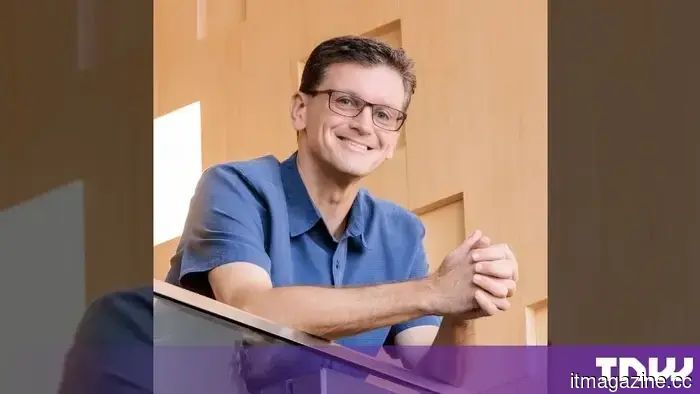 OpenAI has confirmed that its head of data centers has departed as the company shifts its focus to leasing.
OpenAI has confirmed the departure of Chris Malone, its director of data centres. As reported by the WSJ, others are now taking charge of an enhanced leasing initiative.
OpenAI has confirmed that its head of data centers has departed as the company shifts its focus to leasing.
OpenAI has confirmed the departure of Chris Malone, its director of data centres. As reported by the WSJ, others are now taking charge of an enhanced leasing initiative.
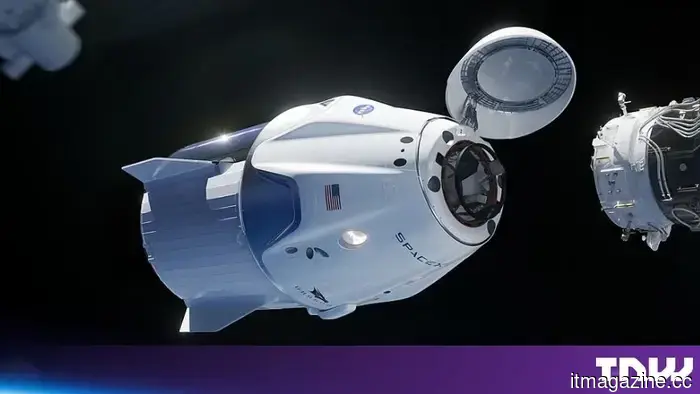 SpaceX aims to construct a $100 billion spaceport designed for thousands of launches annually.
SpaceX plans to invest as much as $100 billion in a Louisiana spaceport designed to handle thousands of launches each year, compared to the Ariane 6, which has a maximum capacity of nine to ten launches annually.
SpaceX aims to construct a $100 billion spaceport designed for thousands of launches annually.
SpaceX plans to invest as much as $100 billion in a Louisiana spaceport designed to handle thousands of launches each year, compared to the Ariane 6, which has a maximum capacity of nine to ten launches annually.
The charts in Australia now necessitate that a person performs the lead vocals.
According to the AP, starting Monday, ARIA will prohibit entirely AI-generated tracks from appearing on Australia's charts, mandating that humans must write and perform the lead vocals.