

WhatsApp is implementing a significant alteration in the methods used to secure your account.
Unsplash
WhatsApp is introducing additional measures to prevent unwanted access to your account, with significant updates to a feature you might already be using. The messaging platform has revealed three enhancements to account security, which include improvements in two-step verification and handling calls from unknown numbers. WhatsApp is also expanding its support for passkeys, a feature that already has over a billion users activated. The most notable change is that WhatsApp is strengthening its two-step verification system significantly.
The six-digit PIN is receiving a major enhancement.
Previously, activating two-step verification on WhatsApp involved setting up a six-digit PIN. This PIN provided an extra level of security for anyone attempting to take over your account, even if they managed to obtain your one-time verification code. WhatsApp is now replacing that PIN with a full password, allowing you to create a longer and more complex password using letters, numbers, and special characters. This simple modification offers greater flexibility for creating a robust credential than a six-digit number could provide.
WhatsApp
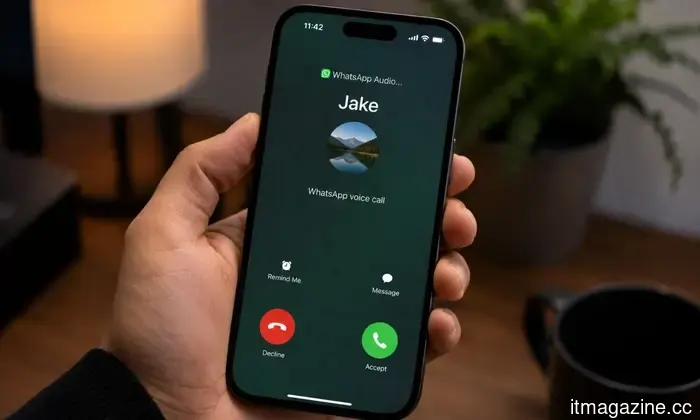
WhatsApp is also providing more clarity on unfamiliar calls, at least for Android users. When someone not in your contacts calls, WhatsApp will display additional information that may help you decide whether to answer. For instance, you might see that the call originates from a different country or that you share WhatsApp groups with the caller. While neither detail guarantees the legitimacy of the call, this added context could help you identify suspicious calls before responding.
Passkeys are becoming increasingly useful.
WhatsApp is broadening its support for a more user-friendly security option: passkeys. Unlike traditional methods such as passwords, PINs, or verification codes, a passkey uses the security features already built into your device, like fingerprints or Face ID, for identity verification. It seems this option is gaining traction, with WhatsApp noting that over one billion users have set up a passkey for their accounts.
Shimul Sood / Digital Trends
A beneficial update is also on the way for those who frequently switch between platforms. WhatsApp will now allow you to add multiple passkeys for the same account, including different ones for Android and iOS devices. This option can be found under Settings > Account > Passkeys within WhatsApp. While these updates do not entirely overhaul WhatsApp, they offer practical solutions to common security issues. A more robust two-step verification password makes account takeovers more difficult, increased caller information aids in assessing suspicious calls, and multiple passkeys simplify secure logins across devices.
Shimul is a contributor at Digital Trends with over five years of experience in the tech industry.
Threads aims to enhance the podcast experience with transcripts.
Meta is testing automatic transcripts that overlay spoken words on audio clips.
Podcasts face a minor issue on social media: they aren’t particularly user-friendly when scrolling with the sound off. Fortunately, Threads may have a solution. The platform is experimenting with a feature that automatically displays transcripts over podcast audio clips, enabling users to read along without needing to turn up the volume.
Your podcast, now with subtitles.
Read more
U.S. users can now vibe-code and share mini-games with Meta's Pocket app.
Pocket allows nearly anyone to transform a game concept into a playable format to share with friends.
Vibe-coded games and apps have already overwhelmed Android and iOS app stores, leading to user frustration in sorting through them. Meta is taking an alternative approach with Pocket, its experimental app designed for converting simple ideas into small, playable experiences to be shared like social media posts.
Pocket itself is not entirely new. We first discussed the app when Meta quietly began testing it in Brazil in July. It’s now being rolled out across the U.S., providing a much wider audience the chance to experience it.
Read more
Meta's smart glasses have become a new tool for school bullies.
Teens are misusing the camera-equipped glasses to harass classmates and share the footage on Instagram and TikTok, where it remained until Futurism intervened.
Instagram has been working to remove harassment videos recorded using Ray-Ban Meta smart glasses in recent weeks. The platform disabled two pickup-artist accounts, each boasting over a million followers, after they were identified for sharing videos of women filmed without consent. However, a recent investigation by Business Insider revealed that efforts to eliminate such content have not been effective, with numerous similar videos still being circulated on the platform.
This failure to monitor problematic videos goes beyond public harassment. A report from Futurism indicates that teenage boys are using Meta's smart glasses to film classmates and teachers at school, often without their consent, sharing the recordings on TikTok and Instagram. Many of these videos remained online until the publication directly contacted the platforms.
Read more






Other articles
 The jury was informed that Meta declined to activate a teen safety feature by default.
A former data scientist from Meta informed an Oakland jury that a suggestion to set Instagram's break reminder as the default option was dismissed due to essential metrics.
The jury was informed that Meta declined to activate a teen safety feature by default.
A former data scientist from Meta informed an Oakland jury that a suggestion to set Instagram's break reminder as the default option was dismissed due to essential metrics.
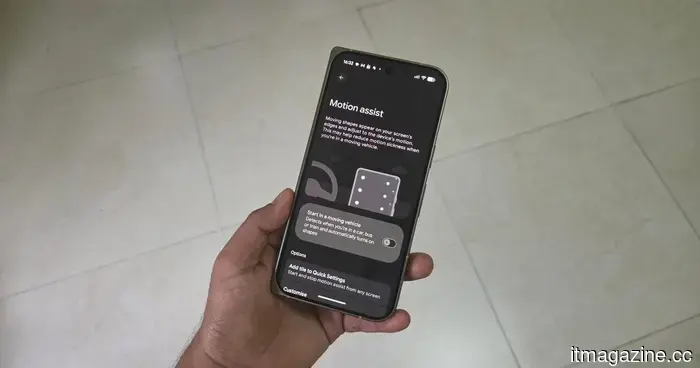 Android 17 has finally introduced the Pixel feature that my motion-sensitive self has been anticipating.
The new Motion Assist feature from Android 17 is being rolled out to Pixel 11 phones, incorporating animated screen cues aimed at alleviating the sensory mismatch that leads to motion sickness.
Android 17 has finally introduced the Pixel feature that my motion-sensitive self has been anticipating.
The new Motion Assist feature from Android 17 is being rolled out to Pixel 11 phones, incorporating animated screen cues aimed at alleviating the sensory mismatch that leads to motion sickness.
 Sony BRAVIA 9 II Review: Among the top HDR TVs I've evaluated
The Sony BRAVIA 9 II features remarkable 4,000-nit HDR brightness, impressive color accuracy, and Sony's advanced image processing, making it one of the most impressive LCD TVs I have evaluated. While OLED technology still excels in black levels and performance in dark environments, Sony's new Mini LED presents a strong argument for bright living spaces.
Sony BRAVIA 9 II Review: Among the top HDR TVs I've evaluated
The Sony BRAVIA 9 II features remarkable 4,000-nit HDR brightness, impressive color accuracy, and Sony's advanced image processing, making it one of the most impressive LCD TVs I have evaluated. While OLED technology still excels in black levels and performance in dark environments, Sony's new Mini LED presents a strong argument for bright living spaces.
 Nothing OS 5.0 encourages you to stop alternating between applications and begin fully engaging with your phone.
Fresh fonts, new widgets, and updated clock faces. Nothing OS 5.0 is poised to be the most significant software enhancement from the brand to date.
Nothing OS 5.0 encourages you to stop alternating between applications and begin fully engaging with your phone.
Fresh fonts, new widgets, and updated clock faces. Nothing OS 5.0 is poised to be the most significant software enhancement from the brand to date.
 ASUS's $600 ROG soundbar allows you to communicate during games without needing a headset, and it's now available in the US.
The initial ROG gaming soundbar from ASUS features 2.1.2 Dolby Atmos, a wireless subwoofer, and integrated noise-canceling microphones intended for multiplayer gaming without a headset.
ASUS's $600 ROG soundbar allows you to communicate during games without needing a headset, and it's now available in the US.
The initial ROG gaming soundbar from ASUS features 2.1.2 Dolby Atmos, a wireless subwoofer, and integrated noise-canceling microphones intended for multiplayer gaming without a headset.
 ASUS's ROG soundbar, priced at $600, allows you to engage in trash-talk without needing a headset, and it's now available in the US.
ASUS' inaugural ROG gaming soundbar features 2.1.2 Dolby Atmos, a wireless subwoofer, and integrated noise-canceling microphones intended for multiplayer gaming without the need for headsets.
ASUS's ROG soundbar, priced at $600, allows you to engage in trash-talk without needing a headset, and it's now available in the US.
ASUS' inaugural ROG gaming soundbar features 2.1.2 Dolby Atmos, a wireless subwoofer, and integrated noise-canceling microphones intended for multiplayer gaming without the need for headsets.
WhatsApp is implementing a significant alteration in the methods used to secure your account.
WhatsApp is introducing three security enhancements aimed at simplifying the prevention of account takeovers and suspicious calls.