
Stability AI secures $76 million in funding from Universal, Warner, Sony Music, and EA.
The three biggest record labels in the world have invested in a generative AI firm.
Universal Music Group, Warner Music Group, and Sony Music Group are now among the investors in Stability AI's latest $76 million Series B funding round, which was announced on Tuesday. Joining them are Electronic Arts, AMD Ventures, and Pacific Alliance Ventures. Coatue, Greycroft, Kadmos Capital, Sean Parker, and Eric Schmidt participated as well, marking their second consecutive investment in the company.
This latest round of investors adds to an existing roster that includes Lightspeed Venture Partners, Mantis Capital, Sound Ventures, and the marketing firm WPP. Notable individual investors are James Cameron, Kevin Mayer, Mark Burnett, Patrick Whitesell, and Robert Nelsen.
Stability did not reveal its valuation. This funding round raises its total funding to $232 million under CEO Prem Akkaraju, covering two equity rounds and convertible notes since he took over in June 2024.
Purpose of the funding
The capital is intended to enhance the product suite for creative production. It is also meant to strengthen applied research initiatives and expand the professional services division. This focus represents a more limited scope than Stability's previous aims. The company now describes itself as a creator of specialized AI tools for professionals in music, gaming, and entertainment.
Partnerships with two of the labels
Universal formed a strategic partnership with Stability in October 2025 to co-develop AI music tools, as reported by Tim Ingham for Music Business Worldwide. Warner announced a similar partnership the following month. Sony Music does not have a publicly disclosed partnership with Stability, although it is listed among the new investors in the funding announcement.
Electronic Arts is also a prior partner, having signed an agreement with Stability to develop models based on its catalog and intellectual property before making this investment.
The licensing strategy
This funding round follows the release of Stable Audio 3.0 by Stability in May. The company claims to have trained its suite of open-weight music models on fully licensed data, enabling them to create professional-quality tracks longer than six minutes. Musicians can access these models through a digital audio workstation plugin or via the web. The plugin is particularly significant as it integrates seamlessly into existing production software.
Stability articulated its commercial rationale in the announcement. While responsibly trained models are essential, they alone are insufficient, emphasizing that artist-centric AI will succeed only if the experience on licensed platforms surpasses that of unlicensed ones. This assertion relates more to product quality than ethics, underscoring the objectives funded by this investment round. It also acknowledges that unlicensed tools currently perform adequately for users.
Ongoing legal issues
Stability is still facing copyright litigation in other areas of its business, as noted by Ingham. The focus on licensed training data coincides with these legal challenges rather than resolving them. The record labels have their own history of litigation, with a recent German court ruling against Suno in July regarding music copyright, marking the first such decision in Europe. Universal settled a lawsuit against Udio prior to its partnership with Stability.
The broader industry is shifting towards transparency instead of outright bans. For instance, Apple Music has begun labeling AI-generated songs with mandatory tags as of this month.
Artists’ involvement
Earlier this year, AI-assisted tracks made it onto the charts, and the artists using these tools have become more open about it. Dr. Dre and Jimmy Iovine expressed their views last week, asserting that only those who struggle with creation fear AI, comparing the technology to the introduction of the drum machine. In contrast, Australia’s main charts recently decided to exclude songs predominantly or entirely created by AI.
An investor with recent changes
Electronic Arts stands out as an unusual name among the investors. Just three weeks ago, a Saudi-led consortium took EA private in the largest leveraged buyout in history. The publisher is currently managing significant debt from that transaction, yet it continues to invest in AI tools it aims to utilize in game development.
The shift away from London
Stability was established in London in 2019 and launched Stable Diffusion from there in August 2022, with the model downloaded over 350 million times, leading to the development of an entire ecosystem of related tools. However, the company has since closed its London office and shifted its focus to the United States, now operating out of Los Angeles, as reported by John Reynolds for tech.eu. The recent announcement carries a Los Angeles date.
The board removed founder Emad Mostaque in 2024 amid internal issues and lawsuits, as reported by Reynolds. Prem Akkaraju, who was previously CEO of Weta Digital, took over in June 2024.
The UK has not produced many AI companies of this scale, and Stability now operates, raises funds, and makes announcements from California, with WPP being one of the few British names still associated with it.
Board member additions
As part of this funding round, Thomas Laffont,
Other articles
 Apple raised the prices of Macs, but the new Polishing Cloth will help you save a nice $10.
Apple has reduced the price of its widely recognized polishing cloth to $9, despite the fact that the new Mac mini and Mac Studio have seen a significant price increase. How does this add up?
Apple raised the prices of Macs, but the new Polishing Cloth will help you save a nice $10.
Apple has reduced the price of its widely recognized polishing cloth to $9, despite the fact that the new Mac mini and Mac Studio have seen a significant price increase. How does this add up?
 Apple has significantly enhanced the Mac mini's performance with the M6 chip, along with a substantial increase in pricing.
Apple updated the Mac mini with the brand-new M6 chip and an upgraded M5 Pro variant, claiming up to 4 times faster AI performance within the same compact design.
Apple has significantly enhanced the Mac mini's performance with the M6 chip, along with a substantial increase in pricing.
Apple updated the Mac mini with the brand-new M6 chip and an upgraded M5 Pro variant, claiming up to 4 times faster AI performance within the same compact design.
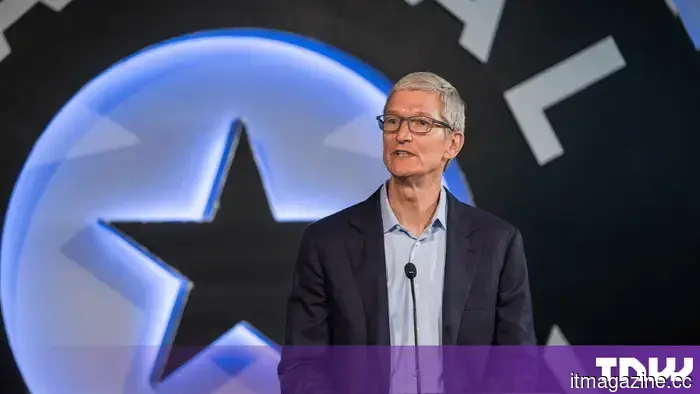 Apple hosted a farewell party for Tim Cook a week before Ternus assumes leadership.
Apple organized a farewell gathering for Tim Cook prior to his transition to John Ternus. As reported by The Information, he spoke about a partner named Mike.
Apple hosted a farewell party for Tim Cook a week before Ternus assumes leadership.
Apple organized a farewell gathering for Tim Cook prior to his transition to John Ternus. As reported by The Information, he spoke about a partner named Mike.
 Android 17 has finally introduced the Pixel feature that my motion-sensitive self has been anticipating.
The new Motion Assist feature from Android 17 is being rolled out to Pixel 11 phones, incorporating animated screen cues aimed at alleviating the sensory mismatch that leads to motion sickness.
Android 17 has finally introduced the Pixel feature that my motion-sensitive self has been anticipating.
The new Motion Assist feature from Android 17 is being rolled out to Pixel 11 phones, incorporating animated screen cues aimed at alleviating the sensory mismatch that leads to motion sickness.
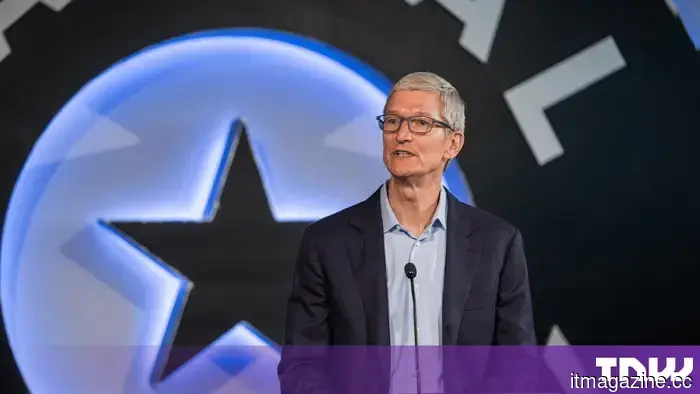 Apple held a farewell party for Tim Cook a week prior to Ternus assuming control.
Apple organized a farewell party for Tim Cook ahead of his transition to John Ternus. As reported by The Information, he spoke about a partner named Mike.
Apple held a farewell party for Tim Cook a week prior to Ternus assuming control.
Apple organized a farewell party for Tim Cook ahead of his transition to John Ternus. As reported by The Information, he spoke about a partner named Mike.
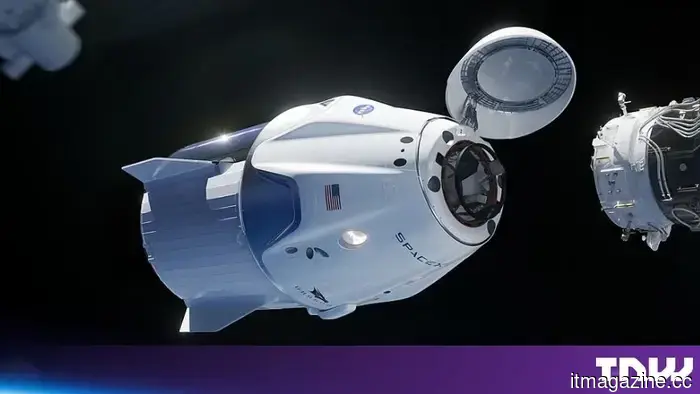 SpaceX aims to construct a $100 billion spaceport designed for thousands of launches annually.
SpaceX plans to invest as much as $100 billion in a Louisiana spaceport designed to handle thousands of launches each year, compared to the Ariane 6, which has a maximum capacity of nine to ten launches annually.
SpaceX aims to construct a $100 billion spaceport designed for thousands of launches annually.
SpaceX plans to invest as much as $100 billion in a Louisiana spaceport designed to handle thousands of launches each year, compared to the Ariane 6, which has a maximum capacity of nine to ten launches annually.
Stability AI secures $76 million in funding from Universal, Warner, Sony Music, and EA.
According to the company, Universal, Warner, and Sony Music have participated in Stability AI's $76 million Series B funding round, along with Electronic Arts and AMD Ventures.