
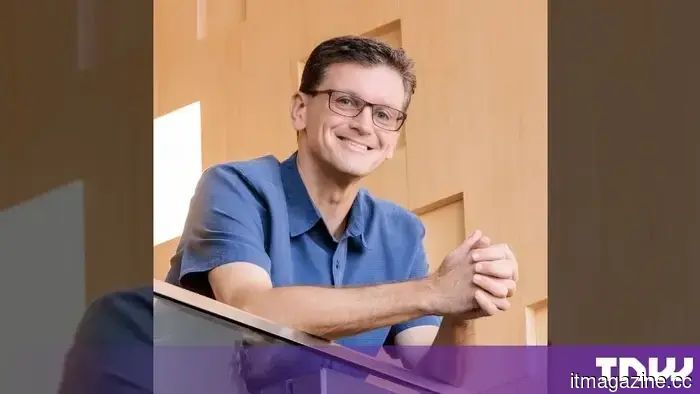
OpenAI has confirmed that its head of data centers has departed as the company shifts its focus to leasing.
OpenAI has confirmed that the executive overseeing its data center expansion has departed, and the role has been divided into several positions. Chris Malone, the head of data centers, is no longer with the organization, an OpenAI spokesperson informed Dina Bass at Bloomberg on Monday. Anissa Gardizy initially reported the news earlier that day in The Wall Street Journal.
Malone joined OpenAI in March 2025, shortly after the announcement of the Stargate initiative, a partnership with Oracle and SoftBank aimed at enhancing the computing capacity required for its models. The main site for this project is still under construction in Abilene, Texas.
The role has now been fragmented. OpenAI has executed leadership changes within its infrastructure team and appointed a chief technology officer to oversee computing capacity, as reported by the Journal. The company is also revitalizing some data center initiatives, particularly those involving the leasing of entire facilities. Others are now taking the lead in this area in Malone’s absence.
This transition highlights that there is no vacancy to be filled; the responsibilities have been redistributed, with the most rapidly growing segment now under new oversight.
Leasing represents a different strategy than construction. Stargate focuses on building, while leasing entire facilities is a procurement strategy that shifts risks, timelines, and responsibilities. Constructing involves securing land, obtaining permits, establishing grid connections, and making long-term commitments. In contrast, leasing allows access to pre-financed capacity more rapidly and at a certain cost. The decision to pursue leasing now, amidst the departure of the construction head, suggests a strategic shift in preference.
The wave of departures began in April, with Kevin Weil, former product chief, leaving that month, followed by Fidji Simo, who managed much of the core business, stepping down last month after taking medical leave. In a recent announcement, COO Brad Lightcap declared his exit for a new project after eight years. Additionally, the head of safety departed in July when the company reintegrated safety into research.
Two weeks ago, OpenAI appointed its second chief revenue officer in less than a year, bringing on Dali Rajic, the president and COO of the Alphabet-owned security company Wiz, to succeed Denise Dresser, former CEO of Slack, who assumed her role only last December. Including Malone, that marks seven senior executives who have left or been replaced since April.
The context for these changes is connected to OpenAI's plans to go public in 2027 or sooner, as shared by CFO Sarah Friar with staff last week. Companies often restructure leadership in preparation for a public offering, as public companies need executives that meet Wall Street's expectations and must have them in place long enough to fulfill signing responsibilities.
Additionally, individuals who endure a build-out of this scale often leave once equity vests, especially when the subsequent phase appears to be focused on procurement rather than construction.
The nature of overseeing data centers for an AI lab has evolved into a power-related function, as OpenAI has indicated through its recent hiring practices. The company sought a lead in power trading in August, signifying that electricity is now treated as a key financial item rather than just another utility cost. This marks a significant shift from what Malone's role entailed when he joined in March 2025, highlighting transformations within just 18 months.
OpenAI has ambitious plans, including a $30 billion data center in Georgia and initiatives in Ohio, where Nvidia has mentioned potential financing of $250 billion for buildings housing its chips. Oracle has indicated that a single AI data center might engage it in a $7 billion power guarantee. SoftBank has raised a $60 billion bond partly to support its investment in OpenAI. Each of these projects involves different partners with unique terms, necessitating coordination of all these elements into a cohesive plan.
As for the specifics surrounding Malone's departure, OpenAI confirmed it but did not disclose the reasons behind it or where he might go next. Bloomberg reached out to him via LinkedIn, but there was no immediate response. The company has not publicly named the chief technology officer for computing capacity in either report.
High-level departures rarely come with explicit explanations, and the lack of one doesn't imply anything definitive either way.
Replacing a head of revenue is a relatively straightforward process, as evidenced by OpenAI doing it twice within a year. However, running a data center program depends on long-term relationships with utilities, planning authorities, construction firms, and grid operators. These relationships are often personal, and interconnection queues can span years along with the associated contracts. Mistakes in this area can be costly, as a site unable to secure timely power can immobilize already committed capital.
In Europe, the context differs. Everything mentioned earlier pertains to the U.S.: Stargate, Abilene, Georgia, Ohio. OpenAI has largely developed its compute program within the U.S., where land is more affordable, and permitting processes are quicker than in much of Europe. The constraints in Europe stem not from executive turnover but from availability
Other articles
 Alice has secured $140 million to evaluate the models developed by Anthropic and Google.
Noam Schwartz's company conducts red-team testing on models for Anthropic, Google, and Cohere. Alice has secured $140 million in funding, led by Apax Digital, although the valuation has been contested.
Alice has secured $140 million to evaluate the models developed by Anthropic and Google.
Noam Schwartz's company conducts red-team testing on models for Anthropic, Google, and Cohere. Alice has secured $140 million in funding, led by Apax Digital, although the valuation has been contested.
 The charts in Australia now necessitate that a person performs the lead vocals.
According to the AP, starting Monday, ARIA will prohibit entirely AI-generated tracks from appearing on Australia's charts, mandating that humans must write and perform the lead vocals.
The charts in Australia now necessitate that a person performs the lead vocals.
According to the AP, starting Monday, ARIA will prohibit entirely AI-generated tracks from appearing on Australia's charts, mandating that humans must write and perform the lead vocals.
 Gears of War: E-Day appears to be grimmer and more ruthless than before.
Marcus Fenix has encountered some frightening adversaries, but E-Day seems poised to complicate his life once more.
Gears of War: E-Day appears to be grimmer and more ruthless than before.
Marcus Fenix has encountered some frightening adversaries, but E-Day seems poised to complicate his life once more.
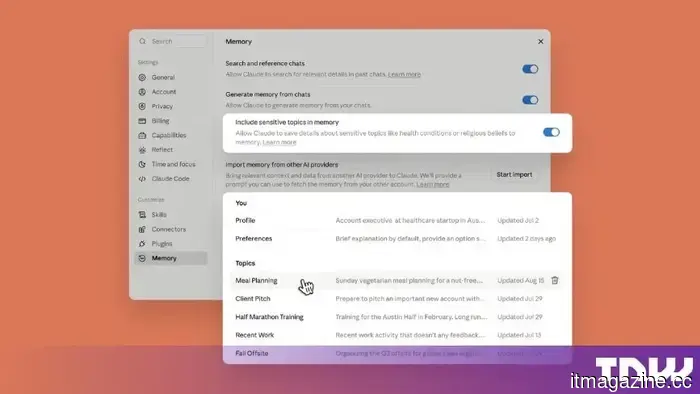 Anthropic integrates Claude chat with Cowork memory, which is enabled by default.
Anthropic has combined Claude chat with Cowork memory. The company states that this feature is enabled by default, while sensitive topics require user opt-in.
Anthropic integrates Claude chat with Cowork memory, which is enabled by default.
Anthropic has combined Claude chat with Cowork memory. The company states that this feature is enabled by default, while sensitive topics require user opt-in.
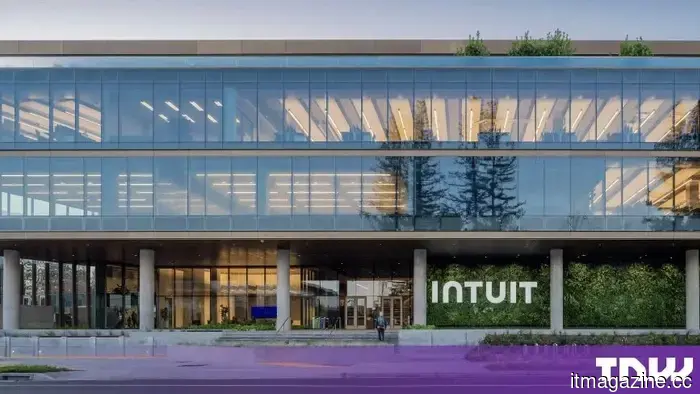 Intuit is spinning off Mailchimp and steering it towards zero growth.
Intuit announced a revenue of $21.4 billion for fiscal 2026, based on its results, and projected Mailchimp's growth to be between a decline of 1% and no growth as a new segment.
Intuit is spinning off Mailchimp and steering it towards zero growth.
Intuit announced a revenue of $21.4 billion for fiscal 2026, based on its results, and projected Mailchimp's growth to be between a decline of 1% and no growth as a new segment.
 Ananta has finally received its release date, and this anime version of GTA is set to be released in 2027.
Ananta has been officially assigned a release date of January 15, 2027, along with a new story trailer that highlights its open-world urban action RPG features.
Ananta has finally received its release date, and this anime version of GTA is set to be released in 2027.
Ananta has been officially assigned a release date of January 15, 2027, along with a new story trailer that highlights its open-world urban action RPG features.
OpenAI has confirmed that its head of data centers has departed as the company shifts its focus to leasing.
OpenAI has confirmed the departure of Chris Malone, its director of data centres. As reported by the WSJ, others are now taking charge of an enhanced leasing initiative.