
The jury was informed that Meta declined to activate a teen safety feature by default.
A proposal to enable Instagram's break reminder feature by default was turned down due to concerns about its negative impact on the app's core metrics. George Volichenko, a former data scientist at Meta, shared this information with a jury in Oakland this week, with coverage provided by Mike Swift for MLex. Volichenko was part of Instagram's mental wellbeing team from April 2022 until February 2023, and his initial assignment involved assessing how many teenagers engaged with the "Take a Break" feature, which prompts a 10-minute pause after a set duration of use. The result showed almost no adoption.
According to Volichenko's testimony, approximately two out of every 1,000 weekly teenage users utilized the excessive-use features, a figure he deemed very low and nearly insignificant. His team discovered that less than 0.165% of teenage users activated the tool and subsequently took a break, as reported by Madlin Mekelburg for Bloomberg. A further review later adjusted this figure to 0.2%, which he described as a drop in the ocean. At the time, users had to opt in to use the tool, and it wasn't included in the app's default settings.
The consideration of changing the feature to an opt-out option was rejected due to the anticipated adverse effects on core metrics. Instagram anticipated that it would likely lose users. Volichenko explained this perspective to the jury, emphasizing the fear among leadership that an opt-out safety feature could lead to significant declines in metrics. Such a decline would necessitate reporting up the chain of leadership to justify the drop in numbers.
Meta's public stance was notably different. Adam Mosseri, Instagram's head, claimed in 2021 that early findings were encouraging, stating that over 90% of teens who activated the reminders chose to keep them on. Both statements are accurate: while almost everyone who activated the feature maintained it, very few actually turned it on.
Volichenko also informed the jury about an internal practice at Instagram where attorney-client privilege labels were applied to nearly everything the company wished to keep from public view. This testimony comes from a former employee rather than an official determination, and Meta has not publicly commented on it. Swift highlighted this as a critical moment in the evidence presented.
Internally, Volichenko raised concerns about the low adoption rates, but was reassured by his manager not to be alarmed, as the team existed in part to shield the company from impending lawsuits. His manager instructed him to present the findings as improvements to the tool, as reported by Carly Nairn for Courthouse News. Volichenko departed from Meta in 2023.
During cross-examination, Meta's lawyer Brian Stekloff framed the statistics differently, suggesting that, mathematically, it still represented hundreds of thousands of teenagers. Volichenko concurred. Stekloff established that the tool may not suit every teenager; a user who frequently opens the app for short periods may still be problematic and never activate the reminder. When asked if this constituted misleading communication, Volichenko affirmed the information was accurate, though he felt the target was not ambitious enough, as reported by Swift.
This testimony is significant, as the state's witness did not claim Meta had lied about the tool, but instead criticized the scope of the goals set. Volichenko is testifying under subpoena from the states without compensation and has not participated in previous trials regarding addictive design where Meta was a defendant.
Meta has since modified its settings. This fact is strong and uncontested. The company has implemented teen accounts for users under 18, with features like "Take a Break" and others enabled by default, including one aimed at limiting late-night use. Users under 16 require parental consent to disable these features. According to Meta, 97% of teenagers aged 13 to 15 retain the default restrictions as of 2025. The current debate centers not on the app's present functionality, but on Meta's previous statements while it operated differently.
The central argument revolves around the default settings. Arturo Bejar, a former Meta engineer, was the first witness for the states and claimed that "Take a Break" was "designed to fail," as many users typically do not modify their settings and the reminder could be easily dismissed. He compared this design flaw to requiring individuals to activate an airbag every time they enter a vehicle.
Chief US District Judge Yvonne Gonzalez Rogers clarified the trial's scope, explaining that it doesn't address content on the platforms, which is protected by Section 230. She stated that the case revolves around allegations that Meta misrepresented the features as addictive. If Meta had remained silent, there would be no case.
The states involved in the case are California, Colorado, Kentucky, and New Jersey, asserting that Meta violated the Children’s Online Privacy Protection Act and issued misleading statements to the public. An eight-member jury will deliver an advisory verdict, with Judge Rogers determining the case and any potential penalties,
Other articles
 The Role of AEO Partners in Contemporary Digital Growth Strategies
Artificial intelligence (AI) assistants are transforming how individuals find information on the internet. Previously, search engine optimization (SEO) was the only method for optimization, but now answer engine optimization (AEO) has surfaced as a new digital indicator. Regardless of the market's readiness, agents have become an integral component of the visibility layer and, as a result, the most […]
The Role of AEO Partners in Contemporary Digital Growth Strategies
Artificial intelligence (AI) assistants are transforming how individuals find information on the internet. Previously, search engine optimization (SEO) was the only method for optimization, but now answer engine optimization (AEO) has surfaced as a new digital indicator. Regardless of the market's readiness, agents have become an integral component of the visibility layer and, as a result, the most […]
 Anthropic is anticipated to present investors with a $30 trillion market opportunity.
According to the WSJ, Anthropic is expected to inform IPO investors that its market value exceeds $30 trillion, surpassing the $28.5 trillion that SpaceX asserted.
Anthropic is anticipated to present investors with a $30 trillion market opportunity.
According to the WSJ, Anthropic is expected to inform IPO investors that its market value exceeds $30 trillion, surpassing the $28.5 trillion that SpaceX asserted.
 SpaceX aims to construct a $100 billion spaceport designed for thousands of launches annually.
SpaceX plans to invest as much as $100 billion in a Louisiana spaceport designed to handle thousands of launches each year, compared to the Ariane 6, which has a maximum capacity of nine to ten launches annually.
SpaceX aims to construct a $100 billion spaceport designed for thousands of launches annually.
SpaceX plans to invest as much as $100 billion in a Louisiana spaceport designed to handle thousands of launches each year, compared to the Ariane 6, which has a maximum capacity of nine to ten launches annually.
 The new ROG Xbox Ally X20 Anniversary Bundle makes the PS5 Pro appear inexpensive.
Xbox and Asus are elevating handheld gaming to a premium level with the $2,499 ROG Ally X20 Anniversary Bundle, which includes an OLED screen and AR glasses.
The new ROG Xbox Ally X20 Anniversary Bundle makes the PS5 Pro appear inexpensive.
Xbox and Asus are elevating handheld gaming to a premium level with the $2,499 ROG Ally X20 Anniversary Bundle, which includes an OLED screen and AR glasses.
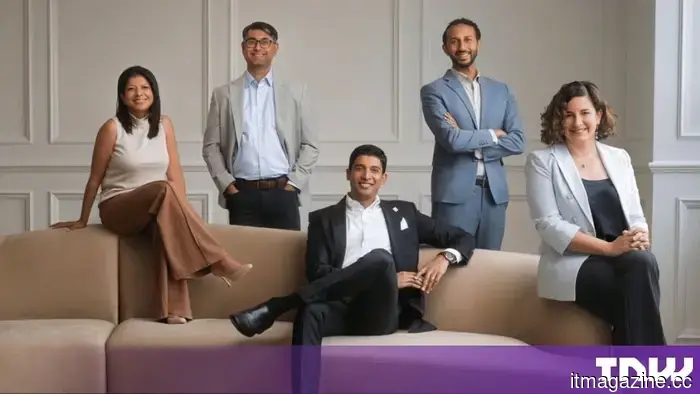 Emerald AI has secured $150 million at a valuation of $1.05 billion to enhance its data center capabilities.
Emerald AI secured $150 million, achieving a valuation of $1.05 billion for its software that reduces data center power usage during times of grid stress, as stated by the company.
Emerald AI has secured $150 million at a valuation of $1.05 billion to enhance its data center capabilities.
Emerald AI secured $150 million, achieving a valuation of $1.05 billion for its software that reduces data center power usage during times of grid stress, as stated by the company.
 Stability AI secures $76 million in funding from Universal, Warner, Sony Music, and EA.
According to the company, Universal, Warner, and Sony Music have participated in Stability AI's $76 million Series B funding round, along with Electronic Arts and AMD Ventures.
Stability AI secures $76 million in funding from Universal, Warner, Sony Music, and EA.
According to the company, Universal, Warner, and Sony Music have participated in Stability AI's $76 million Series B funding round, along with Electronic Arts and AMD Ventures.
The jury was informed that Meta declined to activate a teen safety feature by default.
A former data scientist from Meta informed an Oakland jury that a suggestion to set Instagram's break reminder as the default option was dismissed due to essential metrics.