
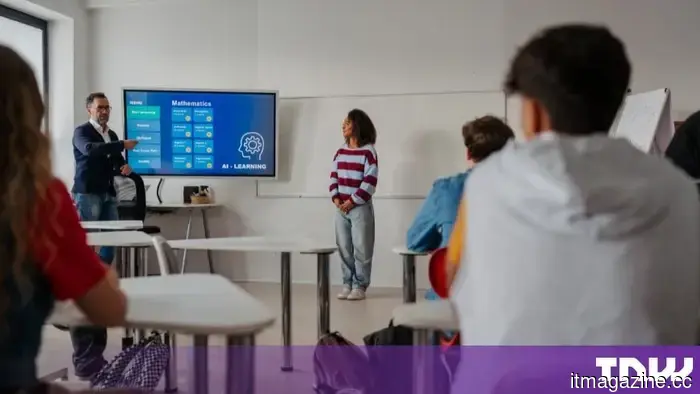
How Google, Microsoft, and OpenAI have influenced the educational content for children in the US.
On a humid summer afternoon in 2025, Microsoft representatives stood by as around 200 teachers entered a conference hall in downtown Manhattan for a session focused on AI chatbots. The team introduced Copilot and instructed the teachers on how to utilize it for crafting emails to parents and tailoring lesson plans. They showcased an explainer video from Microsoft’s Minecraft Education division, featuring a lively narrator and an adorable Minecraft duck.
Natasha Singer was present at the event. She shared her findings in an article for the New York Times on Sunday.
What the article discusses
Singer has been reporting on educational technology for over a decade. The piece is an excerpt adapted from her book Coding Kids. She conducted interviews with more than 100 educators and tech professionals and examined countless documents from schools, government, and businesses. She concluded that a few major players have significantly impacted the entire education supply chain.
The analogy she makes
The workshop reminded Singer of earlier seminars she had attended, which were held by pharmaceutical companies for physicians. Adriane Fugh-Berman, a pharmacology professor at Georgetown, noted, “Industry funds what helps industry.”
Singer remarks that many parents would raise concerns if Exxon Mobil were to create their children's environmental science curriculum or if Purdue Pharma were to train their biology teachers. However, she observes, schools have welcomed the technology sector in similar manners without much scrutiny.
The $23 million union agreement
The day following the workshop, the American Federation of Teachers announced a national initiative to train educators on AI, funded with $23 million from Microsoft, OpenAI, and Anthropic. The union has 1.8 million members, and its president, Randi Weingarten, stated that this partnership aims to help teachers learn to use chatbots “safely, wisely, and ethically,” while ensuring they have a voice in the development of these products. When Singer raised concerns about potential conflicts of interest, Weingarten acknowledged the problem. “Some of the companies we are collaborating with are profit-driven,” she admitted, highlighting the disparity in objectives.
One member had a different perspective
A number of educators expressed their worries that chatbots may jeopardize their professions by automating essential tasks such as grading student assignments. Lois Weiner, a professor emerita at New Jersey City University and a retired member of the United Federation of Teachers, criticized the national union on Bluesky, suggesting they were compromising their integrity. “This isn’t an alliance,” she told Singer, “We’re not participants in the discussion. We’re the meal.”
The companies create the curricula
Apple offers a complimentary Advanced Placement (AP) computer science curriculum that teaches high school students to code in Swift, its programming language for iPhone applications. Microsoft provides a competing program, AP Computer Science Principles featuring Minecraft Education. Singer notes the absence of corporate-branded AP courses in physics or biology, such as those from Raytheon or Pfizer.
The corporate narrative
Brad Smith, Microsoft’s vice chair and president, claimed that this shift occurred because public schools appeared unprepared to address modern topics. “Philanthropy from the private sector is filling this gap due to the public sector's failure,” said Smith, acknowledging that this was not an ideal situation, stating, “It’s not how we envision public education functioning.”
Maggie Johnson, who heads Google’s philanthropic efforts, echoed similar sentiments, asserting that the company has provided free coding resources to millions of underprivileged students.
How Google dominated education
According to data from Futuresource Consulting, Chromebooks accounted for 59% of mobile devices shipped to US schools last year. An initial campaign called Gone Google contributed to this success, leading schools in nine states to publish nearly identical statements on how Chromebooks empowered students to achieve their potential.
In 2019, Google agreed to pay $170 million in response to regulatory allegations that YouTube had illegally collected children’s data. Since then, millions of students have participated in its Be Internet Awesome lessons focused on privacy.
Teaching coding until coders were no longer needed
Eric Schmidt, then Google’s executive chairman, remarked in 2011 that British educational institutions were not adequately teaching computer science. A year later, Microsoft conveyed a similar message to the United States, highlighting a shortage of engineers.
The movement gained traction in 2013 when the nonprofit Code.org released a video featuring Bill Gates and Mark Zuckerberg. In the video, Zuckerberg pointed out the lack of trained professionals within the system. Funded by Microsoft and Google, Code.org played a pivotal role in persuading numerous states to enact laws supporting computer science education. Today, software engineers utilize AI to generate code, and these same corporations are encouraging schools to adopt it, leading Code.org to rebrand itself as CodeAI this year.
The educators' association feels apprehensive
Bryan Twarek, a vice president at the Computer Science Teachers Association, expressed concern, stating, “In other fields, we don’t see industry driving K-12 curricular and policy choices
Other articles
 CD Projekt Red is gearing up for an accelerated development of The Witcher 4, targeting a release in 2028.
CD Projekt Red has announced that The Witcher 4 is set to release in a 2028 timeframe, while The Witcher 3 will make a return next year with the upcoming Songs of the Past expansion.
CD Projekt Red is gearing up for an accelerated development of The Witcher 4, targeting a release in 2028.
CD Projekt Red has announced that The Witcher 4 is set to release in a 2028 timeframe, while The Witcher 3 will make a return next year with the upcoming Songs of the Past expansion.
 The UK and Ukraine have entered into a declaration regarding military capabilities enhanced by AI.
Volodymyr Zelenskyy and Andy Burnham signed a joint statement in Kyiv regarding a partnership on AI, which includes aspects of AI-enhanced military capabilities.
The UK and Ukraine have entered into a declaration regarding military capabilities enhanced by AI.
Volodymyr Zelenskyy and Andy Burnham signed a joint statement in Kyiv regarding a partnership on AI, which includes aspects of AI-enhanced military capabilities.
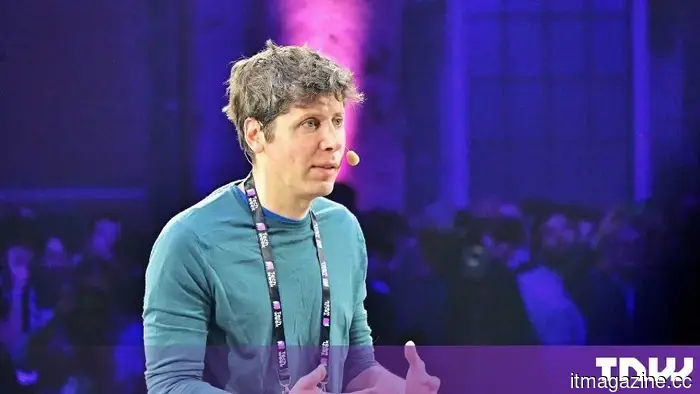 Sam Altman indicates that AI has yet to experience its transformative moment akin to that of the iPhone.
Sam Altman states that the industry has been overly optimistic regarding AI timelines, as the economy has much more inertia than he had anticipated.
Sam Altman indicates that AI has yet to experience its transformative moment akin to that of the iPhone.
Sam Altman states that the industry has been overly optimistic regarding AI timelines, as the economy has much more inertia than he had anticipated.
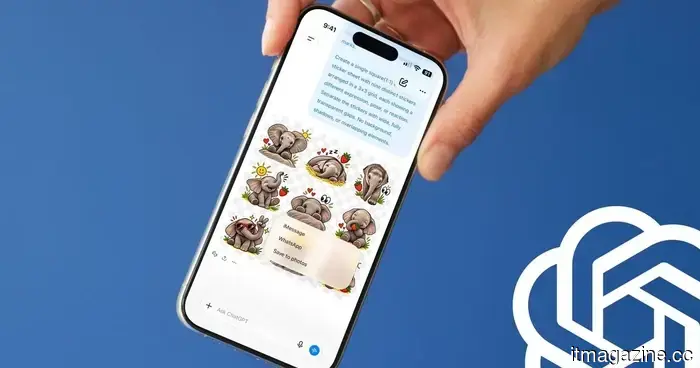 ChatGPT is now capable of transforming your photos into personalized stickers for iMessage and WhatsApp.
ChatGPT is now able to convert your photos into personalized stickers with transparent backgrounds, which can be directly sent to iMessage or WhatsApp.
ChatGPT is now capable of transforming your photos into personalized stickers for iMessage and WhatsApp.
ChatGPT is now able to convert your photos into personalized stickers with transparent backgrounds, which can be directly sent to iMessage or WhatsApp.
 Developers at Harvard have created an AI application designed to assist visually impaired individuals in navigating their surroundings.
An AI application developed by Harvard assisted visually impaired users in navigating an outdoor route more quickly while minimizing contact with obstacles during initial trials.
Developers at Harvard have created an AI application designed to assist visually impaired individuals in navigating their surroundings.
An AI application developed by Harvard assisted visually impaired users in navigating an outdoor route more quickly while minimizing contact with obstacles during initial trials.
 Shokz OpenFit Air 2 replaces touch controls with pressure buttons to avoid unintentional taps.
Shokz introduces the OpenFit Air 2 featuring a more compact case, enhanced Bassphere audio, and pressure-sensitive controls designed to prevent unintentional taps during intense workouts.
Shokz OpenFit Air 2 replaces touch controls with pressure buttons to avoid unintentional taps.
Shokz introduces the OpenFit Air 2 featuring a more compact case, enhanced Bassphere audio, and pressure-sensitive controls designed to prevent unintentional taps during intense workouts.
How Google, Microsoft, and OpenAI have influenced the educational content for children in the US.
An investigation by Natasha Singer for the New York Times reveals that Big Tech's presence in schools extends beyond just devices, as discussed in her new book.