
Alibaba's stock dropped by 8.4%. Following that, Joe Tsai and Eddie Wu went out to shop.
On Monday, Alibaba's top two executives purchased approximately $15.3 million worth of their own company's shares after the stock had dropped more than it had in over a year. Chairman Joe Tsai and CEO Eddie Wu invested a total of HK$120 million, according to filings with the Hong Kong Stock Exchange.
Details of their purchases show that Tsai acquired around 720,000 shares for about HK$80 million, while Wu purchased 350,000 shares for roughly HK$40 million. Xinmei Shen and Coco Feng reported these transactions for the South China Morning Post, characterizing them as a sign of confidence in the company. Both executives filed their disclosures separately on Monday afternoon, just a few hours after the market had opened lower.
According to Luz Ding from Bloomberg, together they own less than 2% of Alibaba, and these purchases do not significantly alter that percentage. The HK$120 million they invested represents about 0.15% of the total raised from the offering.
Initially, Alibaba's stock fell by as much as 10% in Hong Kong on Monday, settling at 8.4% lower at HK$112.70, as reported by Jenny Lee for CNBC. Bloomberg noted an 8.5% drop, calling it the largest decline since early 2025, while Semafor described it as the most significant single-day decrease in over a year. Shares listed in the US dropped by 3.4% in premarket trading.
The recent decline followed Alibaba's decision to issue 710 million new shares at HK$112.70 each, compared to a closing price of HK$123 the previous Friday. This placement aims to raise HK$80 billion, or approximately $10.2 billion, all of which will be directed towards AI investments. Bloomberg identified the share pricing as a 3.6% discount to the US listing's closing price. This is Alibaba's first share placement since its 2019 Hong Kong listing, targeting investors outside the United States. The company claims this is the largest primary follow-on offering by a Hong Kong-listed firm and the biggest Regulation S equity offering on record, with only Alphabet and Intel having conducted larger offerings this year.
During the week, Alibaba released its earnings for the June quarter on Thursday, priced the share placement on Sunday, and the Hong Kong market reacted on Monday morning. As the shares declined throughout the day, Tsai and Wu reported their share purchases that afternoon, with settlement expected on Wednesday.
There was notable demand from institutional investors, who requested nearly three times the number of shares available, according to sources cited by both Bloomberg and the Post. Analysts attribute this demand to improved growth prospects for the company, resulting in a book that was filled three times over, despite the 8% drop in stock price.
The market's reaction stemmed from Alibaba's recent announcement that its quarterly net profit plummeted by 75%, coupled with a 75% increase in capital expenditure for the same quarter, totaling 67.7 billion yuan. The company committed to investing a minimum of 380 billion yuan in cloud and AI infrastructure over three years, with reports indicating that approximately half of this amount has already been allocated.
Wu has articulated that these expenditures are necessary for future growth, emphasizing that significant capital investments are required to enhance compute capacity. He also mentioned that Alibaba's proprietary chips could significantly improve profit margins as they scale.
Competitors like Tencent have also increased their capital spending, with a 65% rise from the previous quarter, totaling 52.8 billion yuan. Tencent's AI compute expenses have already exceeded its cash flow, prompting a strategy to lease additional capacity.
Investor anxiety is not limited to China. Jeronimo Gonzalez from Semafor noted that Alibaba raised capital to remain competitive in the global AI landscape, but some traders remain skeptical about the plan. Concerns persist among investors worldwide that revenue generation in tech firms is not aligning with their rising AI expenditures, leading some companies to opt for equity sales instead of relying solely on debt financing. In June, Alphabet raised $85 billion in the largest equity offering on record.
One analyst suggested that Alibaba's dual strengths in cloud services and robust models position it well for AI growth, according to Vey-Sern Ling of UBP. Though profits may decline temporarily and capital expenses could increase further, the investment is seen as critical.
Alibaba operates Qwen, which Bloomberg describes as the leading AI model family globally, having surpassed 3 billion downloads this month, outpacing competitors like Meta and Google. Despite this, the company's numbers indicate that margins may be tighter than stated. The firm also supports the Qwen App, a chatbot designed for tasks such as shopping, navigation, and payments, representing the consumer-facing aspect of the technology that the new funding aims to enhance.
The company has not detailed how the $10.2 billion will be allocated between chips, data centers, and model training. It remains unclear whether the commitment of 380 billion
Другие статьи
 Scalable Capital links €60 billion of client assets to external AI assistants.
Scalable Capital has made its platform accessible to ChatGPT and Claude, allowing clients to analyze and trade portfolios using AI assistants.
Scalable Capital links €60 billion of client assets to external AI assistants.
Scalable Capital has made its platform accessible to ChatGPT and Claude, allowing clients to analyze and trade portfolios using AI assistants.
 LYNOOK transforms AI companions from individual conversations into collective, memory-filled experiences.
While many AI companion products continue to focus on keeping users engaged through basic one-on-one chat interactions, LYNOOK Technology is adopting a completely different approach.
LYNOOK transforms AI companions from individual conversations into collective, memory-filled experiences.
While many AI companion products continue to focus on keeping users engaged through basic one-on-one chat interactions, LYNOOK Technology is adopting a completely different approach.
 Netflix may allow you to stream Peacock and Fox One through its app.
Netflix is allegedly discussing the integration of Peacock and Fox One into its app, marking a significant shift for a company that previously hesitated to collaborate with direct competitors.
Netflix may allow you to stream Peacock and Fox One through its app.
Netflix is allegedly discussing the integration of Peacock and Fox One into its app, marking a significant shift for a company that previously hesitated to collaborate with direct competitors.
 Sam Altman indicates that AI has yet to experience its transformative moment akin to that of the iPhone.
Sam Altman states that the industry has been overly optimistic regarding AI timelines, as the economy has much more inertia than he had anticipated.
Sam Altman indicates that AI has yet to experience its transformative moment akin to that of the iPhone.
Sam Altman states that the industry has been overly optimistic regarding AI timelines, as the economy has much more inertia than he had anticipated.
 Alibaba's stock dropped by 8.4%. Following that, Joe Tsai and Eddie Wu went on a shopping spree.
The chairman and CEO of Alibaba purchased $15.3 million worth of shares after the Alibaba share placement caused the stock to experience its largest decline in over a year.
Alibaba's stock dropped by 8.4%. Following that, Joe Tsai and Eddie Wu went on a shopping spree.
The chairman and CEO of Alibaba purchased $15.3 million worth of shares after the Alibaba share placement caused the stock to experience its largest decline in over a year.
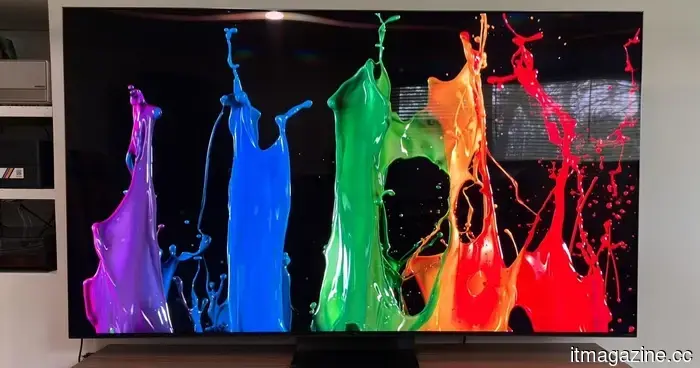 TCL QM7L Review: The mid-range segment consistently offers outstanding value.
TCL’s QM7L makes its flagship Super Quantum Dot color display more accessible and enhances brightness while making some minor compromises.
TCL QM7L Review: The mid-range segment consistently offers outstanding value.
TCL’s QM7L makes its flagship Super Quantum Dot color display more accessible and enhances brightness while making some minor compromises.
Alibaba's stock dropped by 8.4%. Following that, Joe Tsai and Eddie Wu went out to shop.
Alibaba's chairman and CEO purchased $15.3 million worth of shares following a share placement that caused the stock to experience its most significant decline in more than a year.