
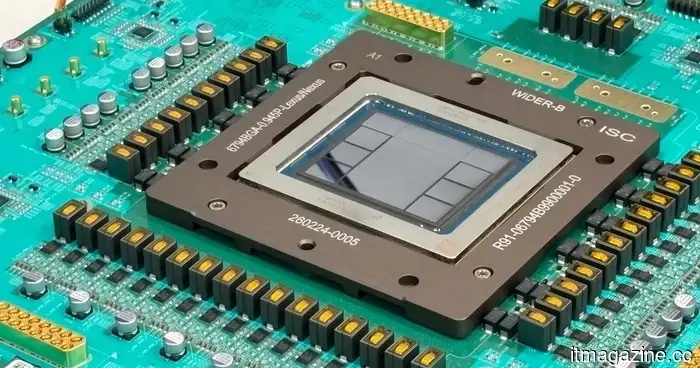
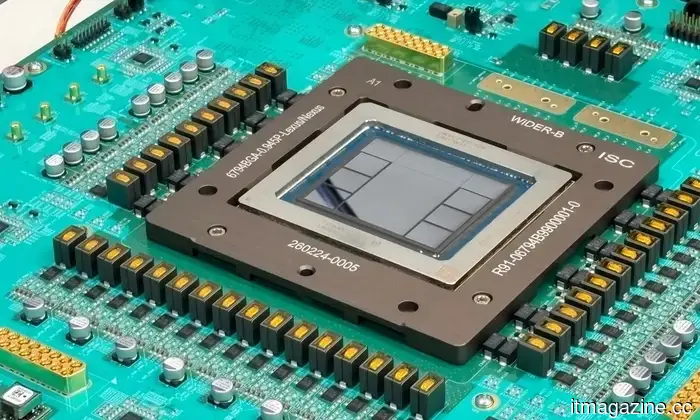
OpenAI claims that its Jalapeno AI chip provides quicker responses compared to competitors such as Nvidia.
OpenAI's inaugural AI chip prioritizes speed, efficiency, and scaling AI services
Whenever you pose a question to ChatGPT, a chip somewhere is swiftly working to provide an answer. OpenAI has recently released new benchmark results asserting that its custom Jalapeño chip, developed in collaboration with Broadcom, significantly outperforms competing chips currently available in the market.
We have designed and constructed our first AI chip: Jalapeño. Developed entirely by OpenAI and brought to market with @Broadcom, Jalapeño is specifically tailored for the LLM tasks that power ChatGPT, Codex, the API, and future agentic products. Chips are essential to AI… pic.twitter.com/mHU7DaMMTi— OpenAI (@OpenAI) June 24, 2026
How much more efficient is Jalapeño?
OpenAI evaluated Jalapeño using InferenceX, an independent benchmark from SemiAnalysis that assesses a chip's inference capability—the process of executing a trained AI model to produce outputs.
Across three different AI models, Jalapeño achieved 1.5 to 1.9 times greater AI output per watt of power, and exhibited latency reductions of 1.7 to 3.6 times, resulting in noticeably faster response times. For highly interactive tasks like AI agents, this advantage increased even further, reaching up to 4.1 times improved performance.
While most chips require a compromise between speed and efficiency, OpenAI claims Jalapeño excels in both areas simultaneously by reducing the amount of data that must be transferred between different system components during processing.
Why did OpenAI choose to create its own chip?
Since its inception, OpenAI has relied significantly on Nvidia GPUs, and Jalapeño represents its first significant move towards in-house hardware design. Notably, OpenAI's own AI models contributed to the design of certain chip elements, enabling a small team to elevate three additional AI models to peak performance in just two months.
Despite these impressive results, OpenAI does not plan to abandon Nvidia in the near future, as Jalapeño is exclusively designed for inference and does not handle the computationally intensive training of new models. The company intends to roll out the Jalapeño chip in limited quantities by the end of 2026, with plans for significant scaling in 2027, and a second and third generation chip already in development.
OpenAI joins an expanding array of AI firms that are developing their own chips. Google has its TPU series, Amazon is venturing into custom silicon, and Anthropic recently announced similar initiatives. Interestingly, reports suggest that Samsung has leveraged Anthropic's Claude to enhance its own chip design efforts, indicating that AI-assisted hardware development is increasingly becoming a standard practice in the industry, rather than merely an experiment by OpenAI.
Manisha Priyadarshini is a technology and entertainment writer with over nine years of editorial experience.
Apple's new Magic Keyboard trades text for symbols, but misses the upgrade you really wanted
A subtle update to the keyboard that still leaves you straining to see in low light.
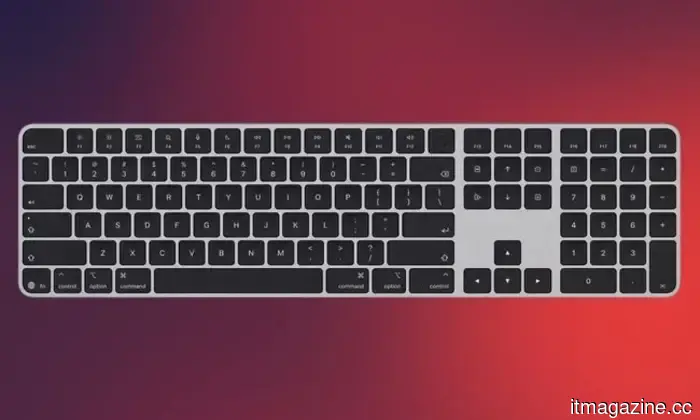
Apple has subtly updated its Magic Keyboard line, and a close inspection reveals something different about the keys. No, it's not a redesign. It's simply new labeling.
What has changed on the new Magic Keyboard?
Apple raised Mac prices, but the new Polishing Cloth will save you a nice $10
The one Apple product getting a price cut in 2026!
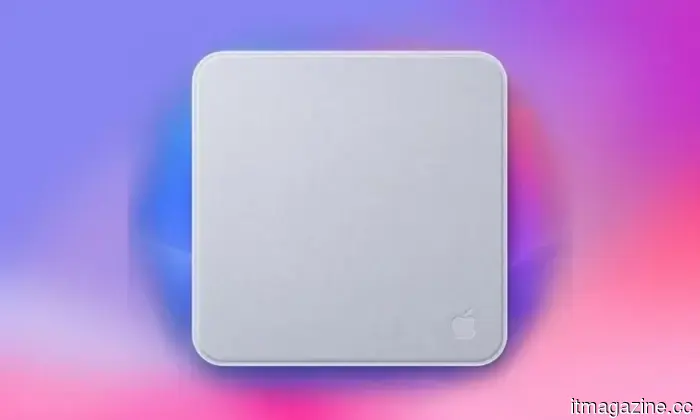
Apple unveiled several new hardware items today, including the Mac mini equipped with M6 and M5 Pro chips, and the Mac Studio featuring M5 Max and M5 Ultra chips. Big specs, major figures, and a high-energy press release. Yet, the product that’s generating the most social media buzz is a piece of cloth. Indeed, Apple has introduced a new polishing cloth.
So, what has actually changed with the cloth?
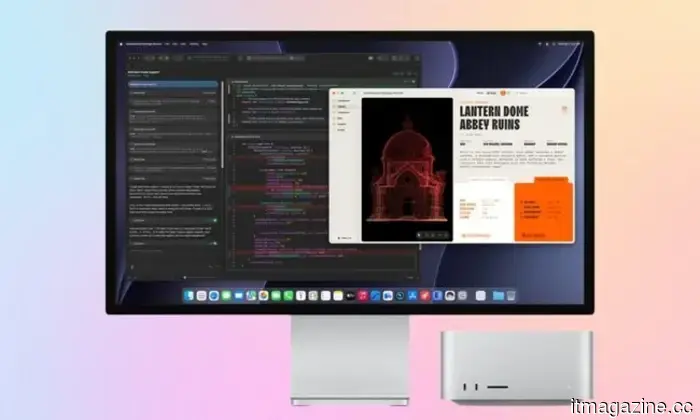
Apple’s M5 Ultra Mac Studio receives a substantial AI upgrade, Thunderbolt 5, and a new networking chip
Apple has created a desktop capable of clustering four units into a single shared AI brain.
Apple's most powerful desktop has just received a significant performance enhancement, along with an increased price tag. The company has updated its Mac Studio with M5 Max and M5 Ultra chip options, beginning at $2,499. Both models are centered around a genuine leap in on-device AI capability, rather than the typical incremental improvements.


Other articles
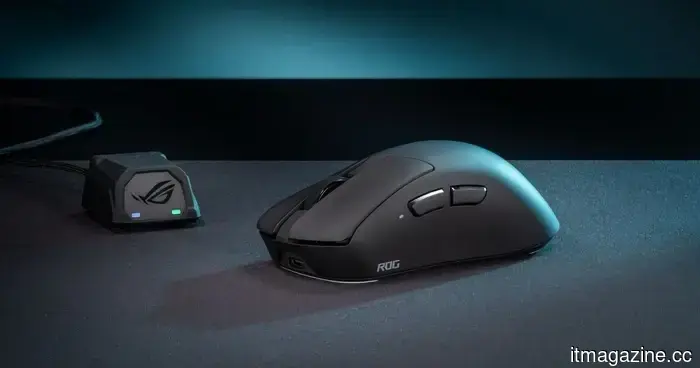 ROG’s latest gaming mice are designed for esports, yet they will also be a great asset for your spreadsheets.
At Gamescom 2026, ASUS ROG unveiled the Gladius IV Ace and Spatha X 65K gaming mice, in addition to announcing new esports collaborations and a new Instagram channel for its fans.
ROG’s latest gaming mice are designed for esports, yet they will also be a great asset for your spreadsheets.
At Gamescom 2026, ASUS ROG unveiled the Gladius IV Ace and Spatha X 65K gaming mice, in addition to announcing new esports collaborations and a new Instagram channel for its fans.
 ChatGPT Plus is experiencing throttling once more, and it's supposedly for your own benefit.
OpenAI is reinstating five-hour usage limits for ChatGPT Work and Codex on Plus accounts, concluding a period of about six weeks during which only weekly limits were in effect.
ChatGPT Plus is experiencing throttling once more, and it's supposedly for your own benefit.
OpenAI is reinstating five-hour usage limits for ChatGPT Work and Codex on Plus accounts, concluding a period of about six weeks during which only weekly limits were in effect.
 Sony BRAVIA 9 II Review: Among the top HDR TVs I've evaluated
The Sony BRAVIA 9 II features remarkable 4,000-nit HDR brightness, impressive color accuracy, and Sony's advanced image processing, making it one of the most impressive LCD TVs I have evaluated. While OLED technology still excels in black levels and performance in dark environments, Sony's new Mini LED presents a strong argument for bright living spaces.
Sony BRAVIA 9 II Review: Among the top HDR TVs I've evaluated
The Sony BRAVIA 9 II features remarkable 4,000-nit HDR brightness, impressive color accuracy, and Sony's advanced image processing, making it one of the most impressive LCD TVs I have evaluated. While OLED technology still excels in black levels and performance in dark environments, Sony's new Mini LED presents a strong argument for bright living spaces.
 Ananta has finally received its release date, and this anime version of GTA is set to be released in 2027.
Ananta has been officially assigned a release date of January 15, 2027, along with a new story trailer that highlights its open-world urban action RPG features.
Ananta has finally received its release date, and this anime version of GTA is set to be released in 2027.
Ananta has been officially assigned a release date of January 15, 2027, along with a new story trailer that highlights its open-world urban action RPG features.
 Anthropic integrates Claude chat and Cowork memory, which is enabled by default.
Anthropic has integrated Claude chat with Cowork memory. The company states that this feature is enabled by default, while discussions on sensitive topics require opting in.
Anthropic integrates Claude chat and Cowork memory, which is enabled by default.
Anthropic has integrated Claude chat with Cowork memory. The company states that this feature is enabled by default, while discussions on sensitive topics require opting in.
 Gears of War: E-Day appears to be more intense and harsher than before.
Marcus Fenix has encountered some frightening foes, but E-Day seems poised to bring chaos to his life once more.
Gears of War: E-Day appears to be more intense and harsher than before.
Marcus Fenix has encountered some frightening foes, but E-Day seems poised to bring chaos to his life once more.
OpenAI claims that its Jalapeno AI chip provides quicker responses compared to competitors such as Nvidia.
OpenAI published benchmark results indicating that its Jalapeno chip, developed in partnership with Broadcom, provides up to 1.9 times more AI performance per watt and has a latency that is 3.6 times lower than that of Nvidia's leading chips.