
Lambda is seeking to raise as much as $3 billion ahead of its IPO, just a few months after securing $917 million for chips.
Lambda is reportedly in discussions to secure up to $3 billion in pre-IPO funding at a valuation exceeding $12 billion, as indicated by Bloomberg, as the Nvidia-supported cloud provider gears up for a listing anticipated next year.
This fundraising follows an earlier financing approach where Lambda borrowed $917 million against its GPUs to purchase additional chips from its investor. The company's operations are simple to describe yet costly to maintain. Lambda provides Nvidia accelerators and the necessary infrastructure to businesses training and deploying AI models, competing on price with hyperscalers and availability with an emerging group of specialist neoclouds.
Securing equity prior to an IPO offers advantages that the leveraged loan could not. Debt secured against assets that depreciate can be unforgiving, and a public market launch is easier to evaluate when the balance sheet is not heavily burdened by loans tied to chips with uncertain resale values.
Specific terms are not finalized, and the discussions remain private, meaning that details about the investor list and final size have not been disclosed. Lambda has not issued any public comments.
It’s worth noting the complexity of Lambda's relationship with Nvidia. Nvidia serves as an investor, supplier, and an indirect source of demand, a model it has replicated across the industry, leading to over $40 billion in equity commitments this year.
Most companies that receive these funds allocate a significant portion to Nvidia hardware, which enhances demand in a way that debt markets have begun to recognize. Lambda exemplifies this structure rather than being an exception.
Investors have not viewed this cyclical relationship as disqualifying, reasonably believing that a supplier investing in its customers is problematic only if the underlying demand is insubstantial. The debate centers on the extent of that demand.
Customer traction is evident; Lambda has entered a cloud agreement with Hudson River Trading for access to Nvidia chips, a partnership with a counterpart that conducts its own assessments of uptime and costs.
A broader concern for any neocloud is what will happen once the capacity shortage subsides. These businesses generate their profits from scarcity, and today’s GPU rental customers may soon be developing their own silicon or directly negotiating with hyperscalers for future needs.
Timing an IPO amidst these conditions is sensitive. Lambda would be entering a market that has previously adjusted valuations for AI infrastructure and where lenders are becoming increasingly discerning about who is financing the expansion.
The structure of contracts is critical for these businesses' survival. Long-term agreements with financially stable clients lower debt costs and simplify the equity narrative, while short-term rentals to startups expose expensive hardware to the unpredictability of the next year’s funding landscape.
Increasing input costs are also complicating matters. Nvidia has informed clients of more than 15% price hikes for AI servers due to memory shortages, impacting the cost structure for a company whose business involves renting out those servers.
Public markets impose a level of scrutiny that private funding rounds do not, particularly with depreciation practices. The speed at which a company depreciates its GPUs affects its reported profitability, and there is no agreed-upon standard across the industry for how long an accelerator is expected to generate revenue.
A $12 billion valuation would position Lambda below the largest neoclouds, but still among firms expected to go public. The listing has been anticipated since at least last year when initial reports suggested the company was preparing for it.
The competitive landscape has also evolved, with CoreWeave already public and several competitors in line behind it. What once seemed like an unusual listing is now one of many, with comparable trading multiples available for investors to consider.
Nothing is yet finalized. The round is still under negotiation, the valuation is aspirational rather than definitive, and the planned IPO for next year may easily shift to one scheduled for the following year.
Other articles
 A disclosure reveals that Trump purchased shares in SpaceX two weeks following the IPO.
A financial disclosure reveals that Trump purchased up to $50,000 worth of SpaceX stock on June 23, just two weeks following the record IPO.
A disclosure reveals that Trump purchased shares in SpaceX two weeks following the IPO.
A financial disclosure reveals that Trump purchased up to $50,000 worth of SpaceX stock on June 23, just two weeks following the record IPO.
 Australia is set to enforce its data centre energy regulations despite Queensland's resistance.
Canberra intends to implement national energy standards for AI data centres through legislation, even though Queensland has refused, which brings up constitutional issues.
Australia is set to enforce its data centre energy regulations despite Queensland's resistance.
Canberra intends to implement national energy standards for AI data centres through legislation, even though Queensland has refused, which brings up constitutional issues.
 China canceled its ice-hunting lunar mission just one day prior to the scheduled launch.
China has postponed the Chang'e 7 lunar launch, stating that it does not satisfy launch conditions. The next opportunity for launch might not arise until February.
China canceled its ice-hunting lunar mission just one day prior to the scheduled launch.
China has postponed the Chang'e 7 lunar launch, stating that it does not satisfy launch conditions. The next opportunity for launch might not arise until February.
 TCL QM7L Review: The mid-range segment consistently offers outstanding value.
TCL’s QM7L makes its flagship Super Quantum Dot color display more accessible and enhances brightness while making some minor compromises.
TCL QM7L Review: The mid-range segment consistently offers outstanding value.
TCL’s QM7L makes its flagship Super Quantum Dot color display more accessible and enhances brightness while making some minor compromises.
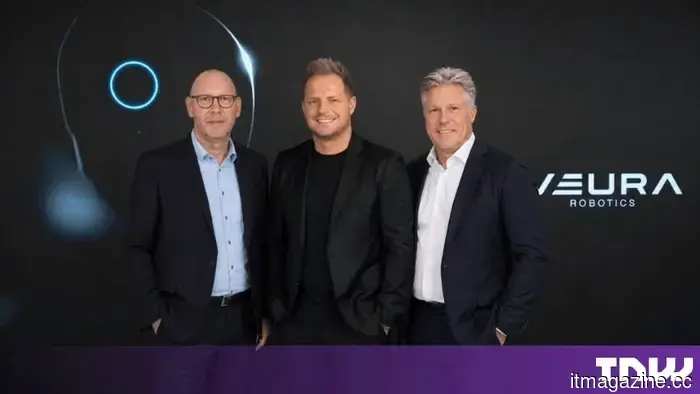 Following a €1.2 billion funding, NEURA has acquired its second company within eleven days.
NEURA Robotics is purchasing Adlatus Robotics to integrate its Neuraverse platform into autonomous cleaning machines, according to the German company.
Following a €1.2 billion funding, NEURA has acquired its second company within eleven days.
NEURA Robotics is purchasing Adlatus Robotics to integrate its Neuraverse platform into autonomous cleaning machines, according to the German company.
 Oura is looking to raise as much as $3 billion in an IPO that would give it a valuation exceeding $16 billion.
Oura is said to be aiming for an IPO in September, seeking to raise up to $3 billion at a valuation exceeding $16 billion, an increase from $10.9 billion last September.
Oura is looking to raise as much as $3 billion in an IPO that would give it a valuation exceeding $16 billion.
Oura is said to be aiming for an IPO in September, seeking to raise up to $3 billion at a valuation exceeding $16 billion, an increase from $10.9 billion last September.
Lambda is seeking to raise as much as $3 billion ahead of its IPO, just a few months after securing $917 million for chips.
Lambda, supported by Nvidia, is negotiating pre-IPO financing of up to $3 billion at a valuation of $12 billion or more, in preparation for a public offering next year.