
-for-hybrid-rocket-engines-the-law-does-not-call-explosive.jpg)
Letara secures ¥2.6 billion (approximately $16 million) for hybrid rocket engines that are not classified as explosive by law.
Letara, a spinout from Hokkaido University, has secured approximately ¥2.6 billion, equivalent to around $16 million, to develop hybrid rocket engines that utilize plastic as fuel and are not categorized as explosives under the law. In a similar venture, Germany's HyImpulse obtained €45 million for the same technology last October.
This Japanese startup has successfully raised about $16 million to create rocket engines that utilize burning plastic. The funding round, co-led by Headline Asia, JIC Venture Growth Investments, and Incubate Fund, resulted in the closure of roughly ¥2.6 billion.
The list of investors for this rocket company is notably institutional. It includes Japanese banks, insurance firms, and Toyoda Gosei, a car parts manufacturer, as well as venture arms from SMBC and Mitsubishi UFJ.
The engineering proposal focuses on what the propellant does not include. Hybrid engines maintain a separation between solid fuel and liquid oxidizer, meaning the propellant does not meet the definition of an explosive, thereby altering its storage, shipping, and handling requirements.
This concept has been around for decades but has consistently faced the same challenge: achieving stable ignition and thrust levels comparable to conventional engines has proven difficult. However, Letara claims that its fuel design and patented ignition system now rival solid motors and liquid bipropellant systems.
The commercial advantage lies in size. The company has miniaturized its engines into palm-sized units suitable for small satellites, while the same design can be scaled up for launch vehicles.
There appears to be existing demand. Letara has secured orders from rocket and satellite manufacturers as well as the Japanese government, and it is registered as a JAXA partner startup, although no specific contract values have been made public.
The next goal for Letara is to conduct a firing test in orbit in collaboration with an overseas partner. This step is crucial for establishing credibility as a propulsion company rather than just one based on theoretical plans.
Europe has made more progress with this technology. Last October, Germany’s HyImpulse raised €45 million for hybrid orbital launches and is among the competitors in the European Launcher Challenge.
The competitive landscape extends beyond just these two. Other companies like Interstellar Technologies in Japan, Galactic Energy in China, InnoSpace in South Korea, Equatorial Space in Singapore, and Gilmour Space in Australia are also developing hybrid propulsion systems.
The market they are targeting remains relatively small. In 2024, hybrid propulsion was valued at approximately $848 million and is expected to grow to $2.6 billion by 2032, which translates to roughly one large satellite contract per year across six different countries.
What has shifted is that this concept is now backed by funding rather than being solely a subject of study. This financial support is emerging at a time when European private space investment has, for the first time, overtaken that of the United States.
Other articles
 Apollo discovers that AI is impacting individual salaries rather than overall payrolls.
Apollo reports that wages in jobs with high exposure to AI increased by 6.7% at a slower rate after 2023, without any significant impact on employment, with the consequences affecting the lowest paid workers.
Apollo discovers that AI is impacting individual salaries rather than overall payrolls.
Apollo reports that wages in jobs with high exposure to AI increased by 6.7% at a slower rate after 2023, without any significant impact on employment, with the consequences affecting the lowest paid workers.
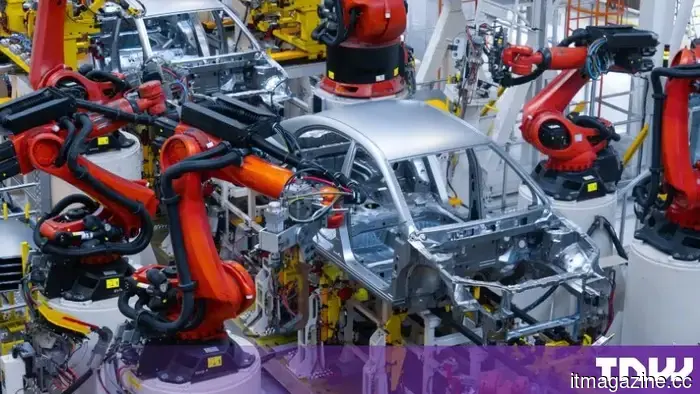 AI data centers are acquiring the capacitors that automakers require.
Chinese automakers report that there is a 20-30% shortage of circuit boards and capacitors, with prices more than tripling due to demand from AI data centers.
AI data centers are acquiring the capacitors that automakers require.
Chinese automakers report that there is a 20-30% shortage of circuit boards and capacitors, with prices more than tripling due to demand from AI data centers.
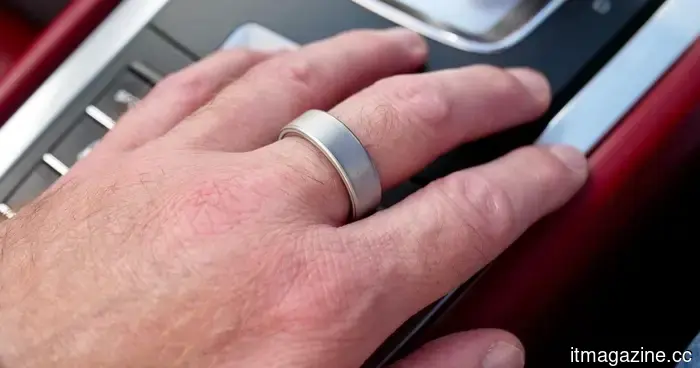 Oura faced a lawsuit regarding claims that its sleep-tracking features are misleading.
Oura is confronting a proposed class-action lawsuit that alleges the company exaggerated the accuracy of its smart rings in tracking sleep stages.
Oura faced a lawsuit regarding claims that its sleep-tracking features are misleading.
Oura is confronting a proposed class-action lawsuit that alleges the company exaggerated the accuracy of its smart rings in tracking sleep stages.
 Apple is reducing its Vision Pro workforce as the focus shifts towards smart glasses.
Apple is eliminating over 200 positions within its Vision Pro, Siri, and AI teams, with approximately 100 jobs impacted specifically in the Vision Pro division.
Apple is reducing its Vision Pro workforce as the focus shifts towards smart glasses.
Apple is eliminating over 200 positions within its Vision Pro, Siri, and AI teams, with approximately 100 jobs impacted specifically in the Vision Pro division.
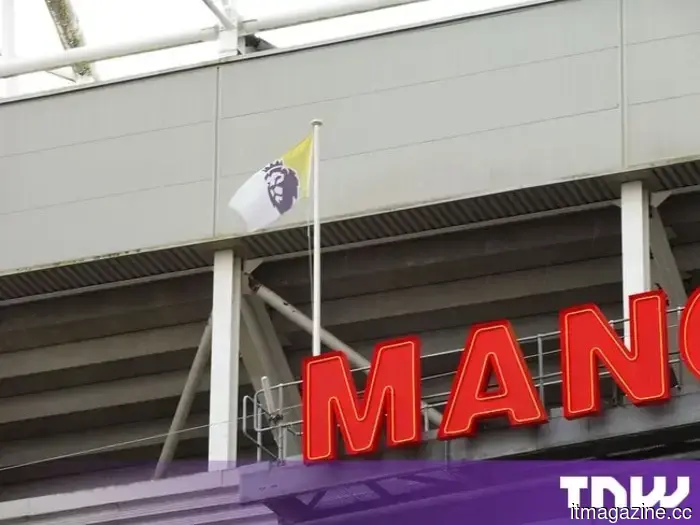 Betting companies have been removed from Premier League jerseys. Enterprise software has taken their place.
Premier League teams have removed betting brands from the front of their jerseys, and ClickHouse has replaced Fulham’s sponsorship. Eight clubs required new sponsors simultaneously.
Betting companies have been removed from Premier League jerseys. Enterprise software has taken their place.
Premier League teams have removed betting brands from the front of their jerseys, and ClickHouse has replaced Fulham’s sponsorship. Eight clubs required new sponsors simultaneously.
 This startup is developing an AI model using living skin that remains viable for a month.
Outer Biosciences has emerged from stealth mode with $23 million raised, successfully maintaining donated human skin for several weeks and utilizing the outcomes to train an AI model.
This startup is developing an AI model using living skin that remains viable for a month.
Outer Biosciences has emerged from stealth mode with $23 million raised, successfully maintaining donated human skin for several weeks and utilizing the outcomes to train an AI model.
Letara secures ¥2.6 billion (approximately $16 million) for hybrid rocket engines that are not classified as explosive by law.
Letara has secured approximately $16 million for hybrid rocket engines powered by plastic, in an area where Germany's HyImpulse raised €45 million the previous year.