
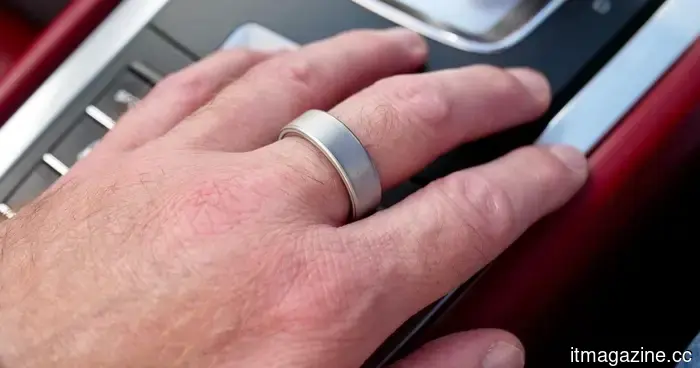
Oura faced a lawsuit regarding claims that its sleep-tracking features are misleading.
Lawsuit questions Oura's claim of 95% sleep-staging accuracy
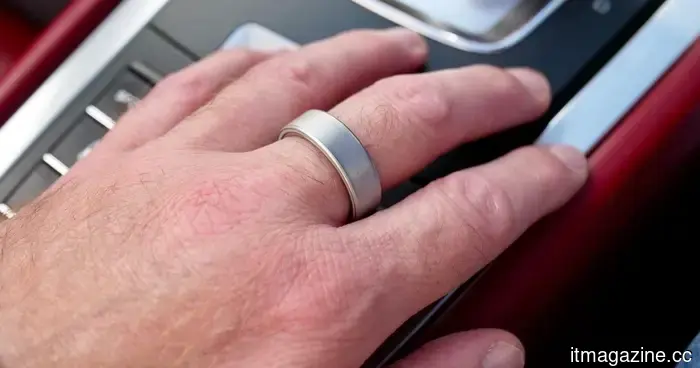
Oura has established a significant reputation for helping individuals comprehend their sleep patterns. Its rings provide a daily Sleep Score, along with estimates of light, deep, and REM sleep. However, a new proposed class-action lawsuit is now challenging the reliability of these figures.
Filed on August 20 in the U.S. District Court for the Northern District of California, the lawsuit alleges that Oura misleads consumers by promoting highly accurate sleep-stage tracking while actually relying on signals from the wearer’s finger rather than direct brain activity measurement.
Oura has made substantial claims regarding accuracy
Oura previously stated that there is a 79% agreement with the gold-standard polysomnography (PSG) for identifying wakefulness, light, deep, and REM sleep. More recently, the marketing referenced in the lawsuit asserted a sleep-staging accuracy of 95% when compared to a clinical sleep lab.
The lawsuit maintains that such figures may mislead customers regarding the ring's measuring capabilities. Clinical sleep studies assess factors like brain waves, eye movement, and muscle activity, whereas Oura estimates sleep stages through metrics such as heart rate, heart-rate variability, movement, skin temperature, and blood-oxygen levels in newer models.
The complaint cites a 2025 Nature study involving 45 patients over 45 nights, revealing that the Oura Ring correctly identified sleep stages only 53.18% of the time. The study indicated that light sleep was underestimated by 13.84 minutes, deep sleep by 5.98 minutes, while REM sleep was overestimated by 31.56 minutes.
Reasons behind Oura facing legal action
The lawsuit was initiated by California resident Madison Surber, who purchased an Oura Ring 4 Gold for $513.68 in May 2025. She claims that Oura’s advertising led her to believe the ring could accurately track her sleep stages and asserts that she would not have made the purchase, or would have paid less, had she been aware of its limitations.
The lawsuit seeks class-action status, damages, restitution, and modifications to Oura’s advertising practices. Oura has contested these allegations, stating in a comment to USA Today, “We dispute the accusations in this complaint and plan to defend against them.”
For users relying on an Oura Ring each night to gauge their sleep, the significant discrepancy between the claimed accuracy and independent research findings raises concerns.



Other articles
 A geothermal company that has been in operation for 60 years has recently transitioned into the AI infrastructure sector.
Ormat has made a 150MW geothermal agreement with Google in Nevada, whereas Europe is addressing the same data center needs by encouraging households to reduce their energy consumption.
A geothermal company that has been in operation for 60 years has recently transitioned into the AI infrastructure sector.
Ormat has made a 150MW geothermal agreement with Google in Nevada, whereas Europe is addressing the same data center needs by encouraging households to reduce their energy consumption.
 TikTok will pay $400 million for violations related to children's privacy, a figure that Europe achieved in 2023.
TikTok and ByteDance will pay $400 million to resolve the children's privacy lawsuit in the US. In 2023, Ireland imposed a fine of €345 million on the company for similar issues.
TikTok will pay $400 million for violations related to children's privacy, a figure that Europe achieved in 2023.
TikTok and ByteDance will pay $400 million to resolve the children's privacy lawsuit in the US. In 2023, Ireland imposed a fine of €345 million on the company for similar issues.
 This startup is developing an AI model using living skin that remains viable for a month.
Outer Biosciences has emerged from stealth mode with $23 million raised, successfully maintaining donated human skin for several weeks and utilizing the outcomes to train an AI model.
This startup is developing an AI model using living skin that remains viable for a month.
Outer Biosciences has emerged from stealth mode with $23 million raised, successfully maintaining donated human skin for several weeks and utilizing the outcomes to train an AI model.
 Oura faces a lawsuit for supposedly deceptive sleep-tracking assertions.
Oura is facing a potential class-action lawsuit that claims the company has exaggerated the precision of its smart rings in tracking sleep stages.
Oura faces a lawsuit for supposedly deceptive sleep-tracking assertions.
Oura is facing a potential class-action lawsuit that claims the company has exaggerated the precision of its smart rings in tracking sleep stages.
 AI data centers are acquiring the capacitors that automakers require.
Chinese automakers report that there is a 20-30% shortage of circuit boards and capacitors, with prices more than tripling due to demand from AI data centers.
AI data centers are acquiring the capacitors that automakers require.
Chinese automakers report that there is a 20-30% shortage of circuit boards and capacitors, with prices more than tripling due to demand from AI data centers.
-for-hybrid-rocket-engines-the-law-does-not-call-explosive.jpg) Letara secures ¥2.6 billion (approximately $16 million) for hybrid rocket engines that are not classified as explosive by law.
Letara has secured approximately $16 million for hybrid rocket engines powered by plastic, in an area where Germany's HyImpulse raised €45 million the previous year.
Letara secures ¥2.6 billion (approximately $16 million) for hybrid rocket engines that are not classified as explosive by law.
Letara has secured approximately $16 million for hybrid rocket engines powered by plastic, in an area where Germany's HyImpulse raised €45 million the previous year.
Oura faced a lawsuit regarding claims that its sleep-tracking features are misleading.
Oura is confronting a proposed class-action lawsuit that alleges the company exaggerated the accuracy of its smart rings in tracking sleep stages.