

Apollo discovers that AI is impacting individual salaries rather than overall payrolls.
An analysis by Apollo of 321 occupations revealed that wages in jobs significantly exposed to AI increased 6.7% more slowly after 2023, with no statistically significant change in employment levels. The disparity was 10.7% for those in the lowest-paid quartile, while it was non-existent for the highest earners.
According to Apollo's chief economist Torsten Slok, the first evident impact of AI on the labor market is not an increase in unemployment. He points out that the effect on employment has been minimal thus far, with the primary concern being the decline in wages.
Slok's analysis, conducted alongside Sania Edlich, indicated that wages in occupations highly susceptible to AI grew 6.7% slower post-2023 compared to jobs with low AI exposure. Employment in those positions showed no significant statistical variation.
The wage distribution is particularly noteworthy. The gap was 10.7% in the lowest wage quartile, 5.4% in the second quartile, and 4.0% in the third, while there was no significant impact in the top quartile.
The methodology employed is worth noting. The authors linked 321 occupations to labor statistics from 2015 to 2025, utilizing the Anthropic Economic Index, which assesses actual AI usage based on model interactions rather than theoretical exposure.
They acknowledge the limitations of their study. The exposure is derived from data of a singular company's usage, only 321 out of approximately 800 occupations were analyzed, and the notably large figure of a 24.3% gap for service workers comes from a small subsample and should be interpreted with caution.
Other data suggests a different trend. US statisticians reported a 0.2% decline in jobs across 18 occupations highly exposed to AI, while overall payrolls increased by 0.8%. Additionally, Goldman Sachs indicated a quicker decline in job openings in areas subject to AI substitution, amidst a market already feeling pressure on new job entries.
Diane Gherson, former chief human resources officer at IBM, suggests that the job losses might be less visible. Companies are discreetly reducing hiring for high-attrition, lower-wage positions instead of publicly announcing layoffs.
She also points out an accounting distortion contributing to this trend. Severance can be categorized as a single restructuring expense that investors overlook, while retraining is recorded in operating costs each quarter, making workforce reductions appear more favorable on paper compared to reskilling efforts.
An illustrative example from Europe is Ikea, which retrained call center employees as remote interior design consultants after automating much of their previous tasks. This shift has resulted in a service reportedly valued at around €1.3 billion.
Slok argues that the overall economy is becoming more dynamic rather than contracting, as business formation is currently at an unprecedented rate. However, he also admits that the productivity benefits remain unproven, as profit margins outside the largest tech firms have yet to improve.
There is a notable absence of a comparable study in Europe. The wage disparities highlighted by Apollo would not be apparent in most European labor data, and TNW has previously reported on AI's impact on jobs in Europe without measuring wages in this manner.
Other articles
 A complimentary AI model is gaining popularity among developers, yet no one is aware of the servers it operates on.
Ox Alpha appeared on OpenRouter as an anonymous stealth model featuring a million-token context and no associated cost. The unnamed provider keeps all prompts.
A complimentary AI model is gaining popularity among developers, yet no one is aware of the servers it operates on.
Ox Alpha appeared on OpenRouter as an anonymous stealth model featuring a million-token context and no associated cost. The unnamed provider keeps all prompts.
 Volkswagen introduces the ID. Era 5S priced at $13,400, featuring an electric range of 160 km.
Volkswagen’s new ID. Era 5S begins at approximately $13,400 in China and features a plug-in hybrid system with an electric-only range of up to 160km.
Volkswagen introduces the ID. Era 5S priced at $13,400, featuring an electric range of 160 km.
Volkswagen’s new ID. Era 5S begins at approximately $13,400 in China and features a plug-in hybrid system with an electric-only range of up to 160km.
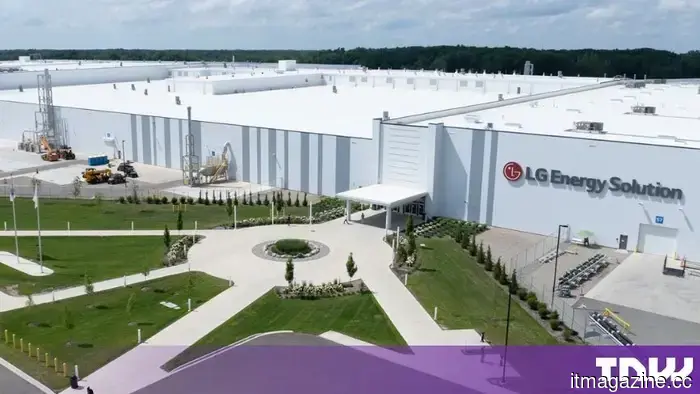 The firm that recently launched the latest battery factory in America states that solid-state vehicles are still ten years from realization.
LG Energy Solution states that developing large-format solid-state cells is still challenging and anticipates that the technology will appear in smartphones well before it does in electric vehicles.
The firm that recently launched the latest battery factory in America states that solid-state vehicles are still ten years from realization.
LG Energy Solution states that developing large-format solid-state cells is still challenging and anticipates that the technology will appear in smartphones well before it does in electric vehicles.
 Betting companies have been removed from Premier League jerseys. Enterprise software has taken their place.
Premier League teams have removed betting brands from the front of their jerseys, and ClickHouse has replaced Fulham’s sponsorship. Eight clubs required new sponsors simultaneously.
Betting companies have been removed from Premier League jerseys. Enterprise software has taken their place.
Premier League teams have removed betting brands from the front of their jerseys, and ClickHouse has replaced Fulham’s sponsorship. Eight clubs required new sponsors simultaneously.
-for-hybrid-rocket-engines-the-law-does-not-call-explosive.jpg) Letara secures ¥2.6 billion (approximately $16 million) for hybrid rocket engines that are not classified as explosive by law.
Letara has secured approximately $16 million for hybrid rocket engines powered by plastic, in an area where Germany's HyImpulse raised €45 million the previous year.
Letara secures ¥2.6 billion (approximately $16 million) for hybrid rocket engines that are not classified as explosive by law.
Letara has secured approximately $16 million for hybrid rocket engines powered by plastic, in an area where Germany's HyImpulse raised €45 million the previous year.
 Chinese AI and chip companies are distributing shares to retain their engineers.
Cambricon has allocated shares to 85% of its employees, while AMEC has done so for over 97%, as Chinese semiconductor companies utilize equity to retain their engineering talent.
Chinese AI and chip companies are distributing shares to retain their engineers.
Cambricon has allocated shares to 85% of its employees, while AMEC has done so for over 97%, as Chinese semiconductor companies utilize equity to retain their engineering talent.
Apollo discovers that AI is impacting individual salaries rather than overall payrolls.
Apollo reports that wages in jobs with high exposure to AI increased by 6.7% at a slower rate after 2023, without any significant impact on employment, with the consequences affecting the lowest paid workers.