
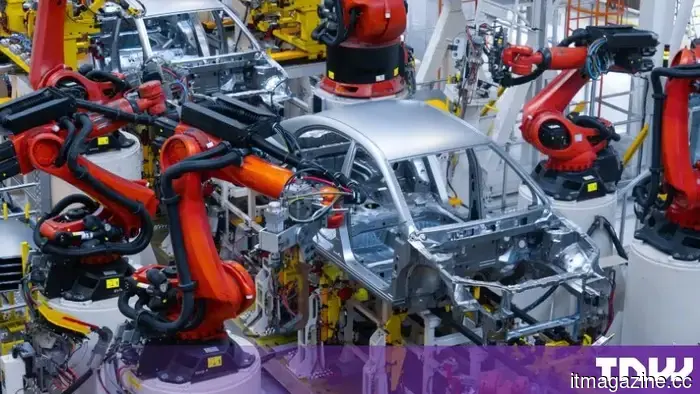
AI data centers are acquiring the capacitors that automakers require.
Chinese automakers report a global shortage of printed circuit boards and multilayer ceramic capacitors, with deficiencies ranging from 20% to 30% and prices having more than tripled in the past year, largely due to demand from AI data centers. In a span of three months, automotive memory prices surged by approximately 180%.
The AI surge has impacted even the most affordable components in vehicles. These shortages are not limited to high-end parts; for instance, a ceramic capacitor is extremely inexpensive, and a modern car equipped with driver assistance systems can contain thousands of them.
The issue is primarily physical rather than financial. According to Geely’s Dai Yong, the shortage of boards and capacitors disrupts assembly lines and production, posing a different challenge than simply facing higher costs.
The driving force behind this demand is data centers. Industry insiders predict it will take at least a year to build up global supply to satisfy the concurrent needs of AI infrastructure and automotive manufacturers.
Memory components are also a significant part of this squeeze. Automotive-grade memory experienced a rise of about 180% over three months, as companies like Samsung, SK Hynix, and Micron have diverted over 80% of their advanced-node capacity to AI servers, contributing to the shortage that increased Pixel prices.
The automobile sector is demanding much more memory as well. A basic level two driver assistance system requires around 8GB, whereas features for urban navigate-on-autopilot can demand upwards of 300GB.
Consumers are already feeling the effects. More than ten Chinese electric vehicle manufacturers have raised prices or reduced discounts by 2,000 to 6,000 yuan. BYD has increased its charges for driver assistance, and General Motors has warned of impending cost hikes.
This shortage is the same issue that has permeated consumer electronics throughout the year, leading to the discontinuation of the $599 Mac Mini and prompting Microsoft to modify Windows for devices with only 8GB of memory.
European automakers source from the same suppliers and do not have a separate queue for components. Companies like Volkswagen, Stellantis, and BMW face the same pricing pressures for capacitors, boards, and memory in a market where electric vehicle prices have already stabilized.
The policy implications are challenging. Europe has allocated its semiconductor funding towards leading-edge fabrication facilities, while the components crucial for keeping production lines running—passive components and automotive memory—have not been considered strategic in industrial policy.
As a result, the least expensive components in a vehicle now dictate overall costs. This is a lesson the industry has learned twice in the last five years, yet it has not changed the approach to stockpiling materials.
Other articles
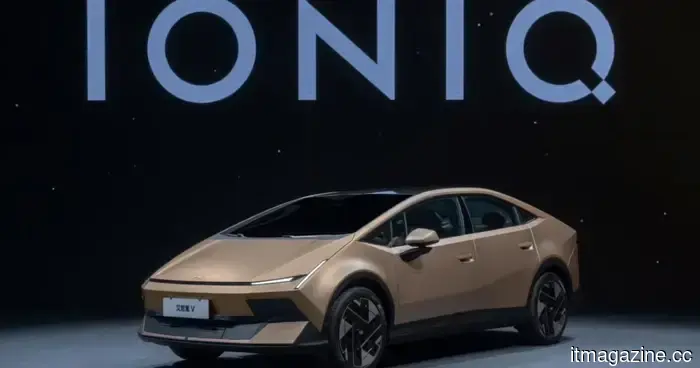 Hyundai's new Ioniq V is priced over $10,000 lower than the least expensive EV in the US.
Hyundai has officially launched the Ioniq V, its first electric vehicle exclusive to China, with a starting price of less than $18,000. It features a 27-inch display and dual AI chatbots.
Hyundai's new Ioniq V is priced over $10,000 lower than the least expensive EV in the US.
Hyundai has officially launched the Ioniq V, its first electric vehicle exclusive to China, with a starting price of less than $18,000. It features a 27-inch display and dual AI chatbots.
 Apollo discovers that AI is impacting individual salaries rather than overall payrolls.
Apollo reports that wages in jobs with high exposure to AI increased by 6.7% at a slower rate after 2023, without any significant impact on employment, with the consequences affecting the lowest paid workers.
Apollo discovers that AI is impacting individual salaries rather than overall payrolls.
Apollo reports that wages in jobs with high exposure to AI increased by 6.7% at a slower rate after 2023, without any significant impact on employment, with the consequences affecting the lowest paid workers.
 Oura faces a lawsuit for supposedly deceptive sleep-tracking assertions.
Oura is facing a potential class-action lawsuit that claims the company has exaggerated the precision of its smart rings in tracking sleep stages.
Oura faces a lawsuit for supposedly deceptive sleep-tracking assertions.
Oura is facing a potential class-action lawsuit that claims the company has exaggerated the precision of its smart rings in tracking sleep stages.
 Anthropic could secure $100 billion, which is ten times the size of Europe's largest public offering in many years.
Anthropic may generate approximately $100 billion through a listing in October, with investors projecting a valuation of at least $2 trillion. The company has stated that it has not established a specific target.
Anthropic could secure $100 billion, which is ten times the size of Europe's largest public offering in many years.
Anthropic may generate approximately $100 billion through a listing in October, with investors projecting a valuation of at least $2 trillion. The company has stated that it has not established a specific target.
 A geothermal company that has been in operation for 60 years has recently transitioned into the AI infrastructure sector.
Ormat has made a 150MW geothermal agreement with Google in Nevada, whereas Europe is addressing the same data center needs by encouraging households to reduce their energy consumption.
A geothermal company that has been in operation for 60 years has recently transitioned into the AI infrastructure sector.
Ormat has made a 150MW geothermal agreement with Google in Nevada, whereas Europe is addressing the same data center needs by encouraging households to reduce their energy consumption.
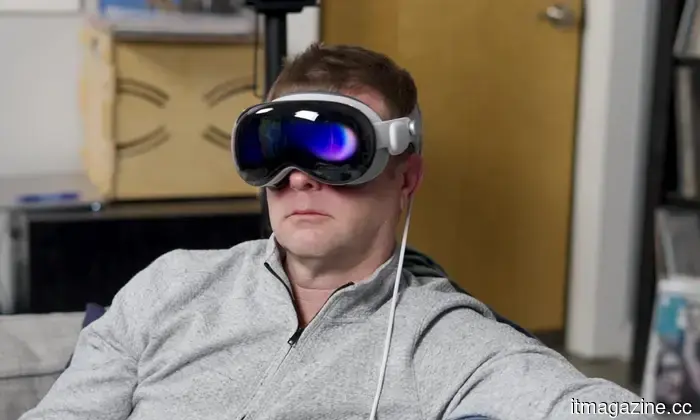 Apple is reducing its Vision Pro workforce as the focus shifts towards smart glasses.
Apple is eliminating over 200 positions within its Vision Pro, Siri, and AI teams, with approximately 100 jobs impacted specifically in the Vision Pro division.
Apple is reducing its Vision Pro workforce as the focus shifts towards smart glasses.
Apple is eliminating over 200 positions within its Vision Pro, Siri, and AI teams, with approximately 100 jobs impacted specifically in the Vision Pro division.
AI data centers are acquiring the capacitors that automakers require.
Chinese automakers report that there is a 20-30% shortage of circuit boards and capacitors, with prices more than tripling due to demand from AI data centers.