
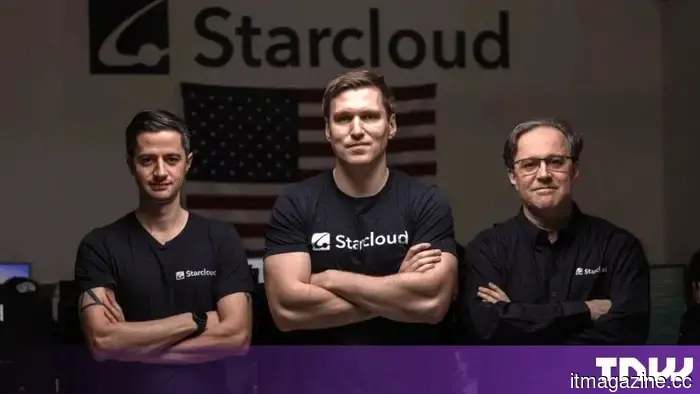
Starcloud secured $250 million to purchase rockets that it is not yet able to book.
Starcloud has secured $250 million to establish AI computing in orbit, with a significant portion of the funding allocated for rockets it cannot currently reserve. The Series A extension values the company at $2.3 billion post-money, bringing its total funding to $450 million. Established in 2024, Starcloud was valued at $1.1 billion during its March round.
The funding round was led by Manhattan West, with new investors including Nvidia and Cisco Investments, along with Cedar Capital, Goanna Capital, and Standard Capital. Returning investors include Benchmark, EQT, Soma, NFX, and 776.
According to the release, the funds will support manufacturing, engineering collaborations with Nvidia, and the “procurement of future launch allocation.” The latter remains a challenging issue. While Starcloud is capable of constructing the satellites, the actual launch is reliant on other entities.
Starcloud's advancements
Starcloud has made more progress than many other orbital computing startups, which is why this funding round is less speculative. Starcloud-1 was launched in November 2025, carrying an Nvidia H100, marking the first time a data center-grade GPU reached orbit. The company claims this provided approximately 100 times the GPU computing power previously available in space.
Since then, Starcloud has claimed to have trained the first AI model in space and has run a version of Google’s Gemini in orbit, demonstrating inference and fine-tuning using onboard hardware. Unlike most other chips sent to orbit, which are typically edge processors, Starcloud is utilizing the same silicon found in data centers on Earth.
The goal: 88,000 satellites
Starcloud aims to create a constellation of 88,000 satellites generating 20 gigawatts of orbital computing power. The company has already requested permission from the US Federal Communications Commission to operate that number of spacecraft.
In the short term, however, the plan is significantly smaller. Starcloud has secured bookings for two Starcloud-2 satellites, each with 8 kilowatts, to be launched via rideshare in 2027. These will provide inference services for clients, including US government agencies, yielding a total of 16 kilowatts against the 20 gigawatt ambition.
With a workforce of 25 employees, the company is relocating to a 100,000 square foot facility in Woodinville, Washington. CEO Philip Johnston noted on LinkedIn that Starcloud plans to scale production to 100 satellites per week.
Concerns regarding launches
Johnston expressed his apprehensions to TechCrunch, stating, “One of the biggest costs is now on securing your launch capacity. Launch is pretty constrained right now because Falcon 9 is scheduled to end in 2028.” SpaceX plans to replace Falcon 9 with Starship, which is larger, although no Starship has yet completed two flights. Recently, Musk indicated that SpaceX would postpone its attempt to catch a returning Starship by several months, aiming for a re-flight by late this year or early 2027.
Options for alternatives are limited. Blue Origin is still investigating the cause of New Glenn’s explosion, ULA's Vulcan isn’t flying routinely, and Rocket Lab’s Neutron hasn’t yet been launched.
“Obviously if we can’t book any SpaceX launch capacity in 2029, that will be challenging for us,” Johnston remarked.
Nvidia’s involvement
Nvidia has invested $25 million, according to a source familiar with the deal. The two companies are working on the Nvidia Space-1 Vera Rubin Module, an adaptation of Nvidia’s current architecture designed for orbit. In July, Nvidia announced that Vera Rubin had begun full production for terrestrial clients.
The space version is still in development, with Starcloud aiming to launch it in late 2028. Johnston mentioned that his engineers are addressing three key questions: how hot the chip operates, determining the location for radiation shielding, and ensuring the hardware can withstand a launch.
Johnston highlighted that Nvidia's investment was motivated by the data collected from Starcloud-1, and emphasized that Nvidia conducted more technical scrutiny than typical venture investors.
The rationale for orbit
Starcloud positions itself as a solution to the AI energy bottleneck, benefiting from continuous sunlight in orbit and lacking the constraints of terrestrial grid connections. This issue is quite tangible on the ground, with a recent TNW report stating that 63% of Europe’s new capacity is being placed outside the five established hubs due to grid delays and land issues.
Cooling in space poses its own challenges since heat dissipation occurs only through radiation, which is why radiator sizing is crucial for design.
Skepticism remains
In June, Masayoshi Son dismissed the concept of space data centers as a gamble on the AI competition rather than a viable business. TechCrunch labeled the economics of orbital AI as harsh, reporting that one competitor concluded there were insufficient rockets and raised $275 million to create its own.
Starcloud is taking a different approach by signing a deal in
Other articles
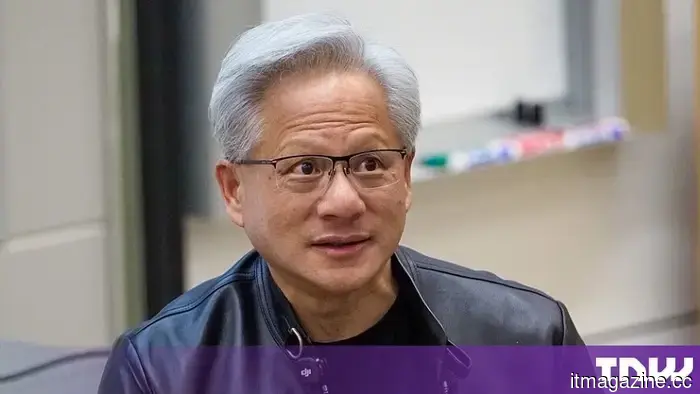 Nvidia is engaged in discussions with the Korean chip designer Rebellions, specializing in inference technology.
Jensen Huang met with the CEO of Rebellions in Santa Clara. This would mark Nvidia's fourth licensing and hiring agreement within a year, following Groq and Poolside.
Nvidia is engaged in discussions with the Korean chip designer Rebellions, specializing in inference technology.
Jensen Huang met with the CEO of Rebellions in Santa Clara. This would mark Nvidia's fourth licensing and hiring agreement within a year, following Groq and Poolside.
 For the first time, New York has surpassed San Francisco in the number of tech workers.
According to CBRE's 2026 report, New York surpassed the Bay Area in tech employment, largely due to San Francisco losing 23,900 jobs. Nonetheless, it remains at the top of the rankings.
For the first time, New York has surpassed San Francisco in the number of tech workers.
According to CBRE's 2026 report, New York surpassed the Bay Area in tech employment, largely due to San Francisco losing 23,900 jobs. Nonetheless, it remains at the top of the rankings.
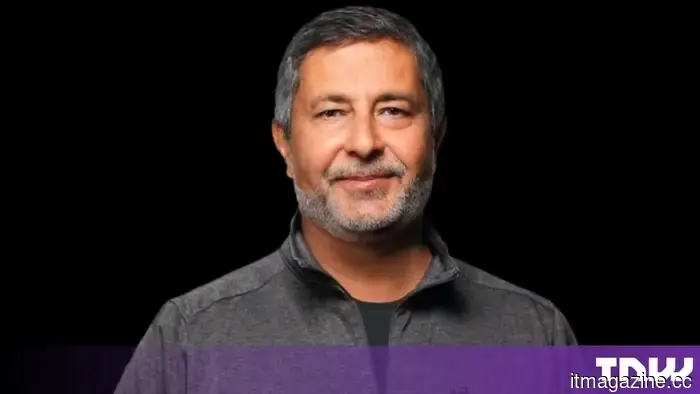 Micron is investing $10 billion in a laboratory, wagering that the memory cycle has shifted.
Micron is investing $10 billion into a research facility in Boise over the next ten years. According to its CEO, AI has altered the value of memory. The company's shares dropped by 29% in July.
Micron is investing $10 billion in a laboratory, wagering that the memory cycle has shifted.
Micron is investing $10 billion into a research facility in Boise over the next ten years. According to its CEO, AI has altered the value of memory. The company's shares dropped by 29% in July.
 Broadcom is looking to raise over $60 billion in debt to finance AI chips for Anthropic.
Broadcom is negotiating to secure over $60 billion in debt to fund AI chip production for Anthropic and other companies, in collaboration with Apollo and Blackstone.
Broadcom is looking to raise over $60 billion in debt to finance AI chips for Anthropic.
Broadcom is negotiating to secure over $60 billion in debt to fund AI chip production for Anthropic and other companies, in collaboration with Apollo and Blackstone.
 Two 21-year-olds developed an AI that operates online shops.
Siml assumes control over store operations rather than just individual tasks. Two founders who began by selling hand sanitizer at age 15 now manage AI agents in over 1,000 stores, and Adobe data indicates that shoppers directed by AI convert at a rate 42% higher than those from paid search.
Two 21-year-olds developed an AI that operates online shops.
Siml assumes control over store operations rather than just individual tasks. Two founders who began by selling hand sanitizer at age 15 now manage AI agents in over 1,000 stores, and Adobe data indicates that shoppers directed by AI convert at a rate 42% higher than those from paid search.
 AI does not have to take the place of humans to diminish human ability.
Researchers at MIT discovered that writers aided by large language models demonstrated reduced brain engagement and performed more poorly after the tool was taken away. Dr. Vishal Kapoor suggests that organizations should evaluate not only what AI automates but also whether their employees are still capable of reasoning independently without it.
AI does not have to take the place of humans to diminish human ability.
Researchers at MIT discovered that writers aided by large language models demonstrated reduced brain engagement and performed more poorly after the tool was taken away. Dr. Vishal Kapoor suggests that organizations should evaluate not only what AI automates but also whether their employees are still capable of reasoning independently without it.
Starcloud secured $250 million to purchase rockets that it is not yet able to book.
Starcloud secured $250 million at a valuation of $2.3 billion to conduct AI inference in orbit. Nvidia has joined the venture. The challenging aspect will be securing launch bookings once the Falcon 9 retires in 2028.