
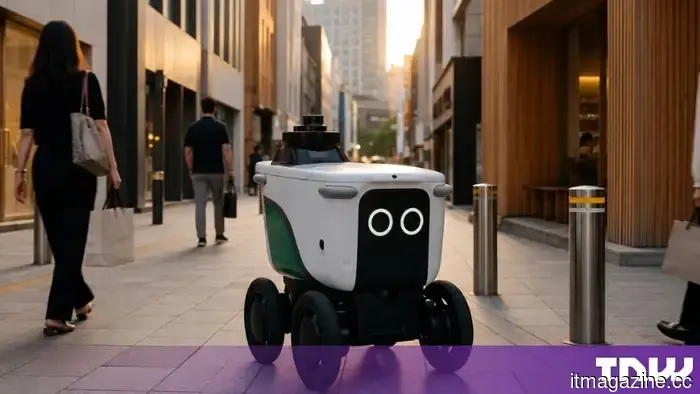
World ID and peaqOS introduce privacy-enhancing human verification for robots and machines.
TL;DR: Autonomous robots using peaqOS can now confirm if they are interacting with real humans through World ID, utilizing zero-knowledge proofs instead of sensitive information like names or documents. This feature, accessible via robotic.sh, doesn’t require an API key or verification fee. In a medication delivery example, a patient verifies their identity at the ordering stage, a pharmacist does the same when loading, and the recipient proves they match the original buyer at delivery, all while maintaining privacy.
Robots and autonomous systems operating on peaqOS can now ascertain if they are engaging with real humans via World ID, thanks to a recent integration found at robotic.sh. This integration allows machines to request and verify World ID proofs without the need for an API key or incurring a verification fee.
This advancement addresses the increasing need for robots to interact with people directly, as they transition from industrial settings. Delivery robots and other autonomous units must ascertain whether someone is genuinely human while avoiding unnecessary data collection.
World ID tackles this issue by employing zero-knowledge proofs. Rather than supplying personal identifiers like names or images, users can generate proof through World App that confirms they are real, distinct individuals. It can also verify that the person executing an action is the same one who initiated it, all while keeping their identity private.
This feature is particularly pertinent for autonomous deliveries. In a medication delivery scenario that illustrates this integration, a patient verifies their identity via World App before the order is processed. The robot receives a zero-knowledge proof instead of any identifying details about the patient. At the pharmacy, the pharmacist confirms the order before placing the medication inside the robot. Upon arrival, the patient verifies their identity again. The system can ascertain that they are the same individual associated with the initial order before unlocking the compartment.
This model presents an alternative to traditional methods like PINs and identity checks, which can be easily compromised or require the collection of personal data. World ID enables machines to obtain a cryptographic proof instead.
peaqOS facilitates the necessary infrastructure for machines to utilize World ID. Robots can employ peaq’s decentralized identifiers for their identities, discover the service through the Machine Market, and manage the verification process from start to finish.
Furthermore, the interaction can produce a verifiable and auditable log indicating that verification occurred without exposing any identity details. This allows operators to confirm that verification took place while ensuring that the robot doesn’t collect personal identity data.
The integration could also be useful in situations where proving human uniqueness is more relevant than identifying individuals. For instance, a robot offering promotional items could use World ID to enforce a one-item-per-person policy without keeping a database of recipients' identities.
Shared robots and machines represent another potential use case, allowing operators to confirm that a user is a real, unique individual without requiring account creation or personal information sharing beforehand.
World ID is now accessible via robotic.sh for robots and machines using peaqOS, enhancing privacy-preserving human verification in interactions between individuals and autonomous systems.
Other articles
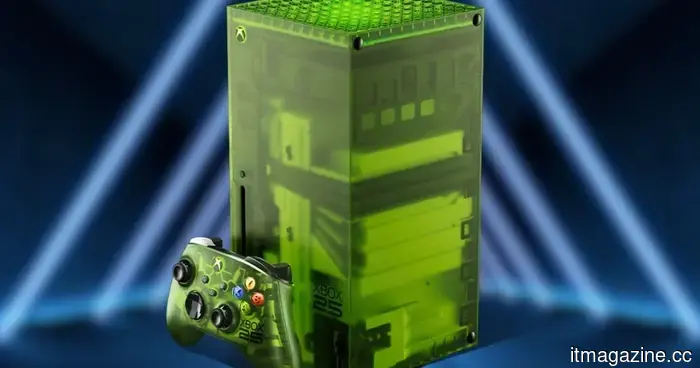 The Xbox console for its 25th anniversary from Microsoft might be priced at $100 above the 1TB Series X model.
The see-through, vintage-inspired Xbox Series X25 might be released right in time for Black Friday this November.
The Xbox console for its 25th anniversary from Microsoft might be priced at $100 above the 1TB Series X model.
The see-through, vintage-inspired Xbox Series X25 might be released right in time for Black Friday this November.
 AI does not have to take the place of humans to diminish human ability.
Researchers at MIT discovered that writers aided by large language models demonstrated reduced brain engagement and performed more poorly after the tool was taken away. Dr. Vishal Kapoor suggests that organizations should evaluate not only what AI automates but also whether their employees are still capable of reasoning independently without it.
AI does not have to take the place of humans to diminish human ability.
Researchers at MIT discovered that writers aided by large language models demonstrated reduced brain engagement and performed more poorly after the tool was taken away. Dr. Vishal Kapoor suggests that organizations should evaluate not only what AI automates but also whether their employees are still capable of reasoning independently without it.
 Anthropic's business initiative has acquired its second consulting firm in a span of four months.
Ode, the $1.5 billion venture created by Anthropic in partnership with Blackstone, has acquired Casper Studios. This marks its second consultancy purchase since May, though the financial details were not disclosed.
Anthropic's business initiative has acquired its second consulting firm in a span of four months.
Ode, the $1.5 billion venture created by Anthropic in partnership with Blackstone, has acquired Casper Studios. This marks its second consultancy purchase since May, though the financial details were not disclosed.
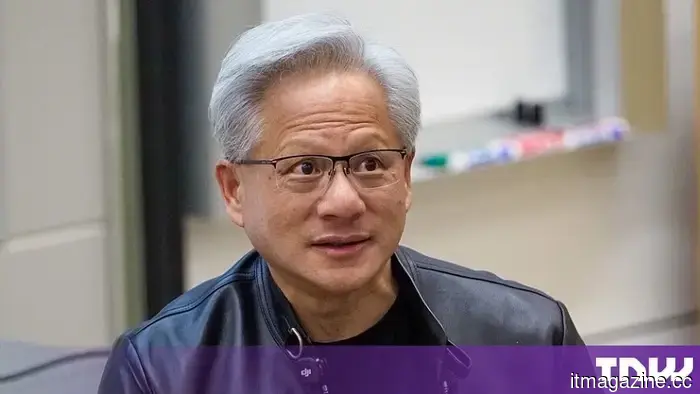 Nvidia is engaged in discussions with the Korean chip designer Rebellions, specializing in inference technology.
Jensen Huang met with the CEO of Rebellions in Santa Clara. This would mark Nvidia's fourth licensing and hiring agreement within a year, following Groq and Poolside.
Nvidia is engaged in discussions with the Korean chip designer Rebellions, specializing in inference technology.
Jensen Huang met with the CEO of Rebellions in Santa Clara. This would mark Nvidia's fourth licensing and hiring agreement within a year, following Groq and Poolside.
 For the first time, New York has surpassed San Francisco in the number of tech workers.
According to CBRE's 2026 report, New York surpassed the Bay Area in tech employment, largely due to San Francisco losing 23,900 jobs. Nonetheless, it remains at the top of the rankings.
For the first time, New York has surpassed San Francisco in the number of tech workers.
According to CBRE's 2026 report, New York surpassed the Bay Area in tech employment, largely due to San Francisco losing 23,900 jobs. Nonetheless, it remains at the top of the rankings.
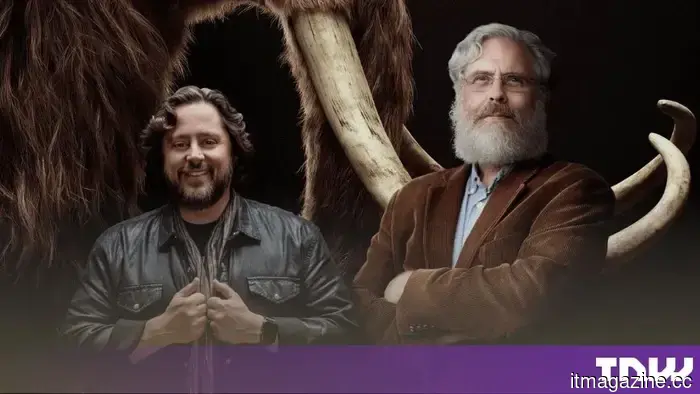 Astromech secured $20 million at a valuation of $3.8 billion to predict how biology fails.
Ben Lamm and George Church secured $20 million at a valuation of $3.8 billion for Astromech, an AI system that analyzes 3.8 billion years of evolutionary data to forecast potential failures in biology.
Astromech secured $20 million at a valuation of $3.8 billion to predict how biology fails.
Ben Lamm and George Church secured $20 million at a valuation of $3.8 billion for Astromech, an AI system that analyzes 3.8 billion years of evolutionary data to forecast potential failures in biology.
World ID and peaqOS introduce privacy-enhancing human verification for robots and machines.
Robots operating on peaqOS can now confirm they are engaging with a genuine human using World ID's zero-knowledge proofs, all while keeping the individual's identity confidential. This integration can be accessed via robotic.sh, and there is no need for an API key or any fee per verification.