

For the first time, New York has surpassed San Francisco in the number of tech workers.
For the first time since CBRE began tracking data 13 years ago, New York has more tech workers than the San Francisco Bay Area. According to the property firm's Scoring Tech Talent 2026 report, subtitled “AI Realignment Underway,” the New York metro area is expected to have 394,300 tech jobs by 2025, compared to 375,730 in the Bay Area. However, New York did not achieve this ranking due to faster growth; it added 30,640 tech jobs between 2022 and 2025, while the Bay Area saw a decline of 23,900 jobs.
San Francisco retains its top ranking. The overall count and rank represent different metrics, with only the headcount showing a change. CBRE evaluates 50 markets based on 13 weighted criteria which include factors like talent depth, concentration, cost, and education pipeline. The top six markets remain unchanged from last year: San Francisco Bay Area, Seattle, Toronto, New York Metro, Austin, and Washington, D.C. In this ranking, New York is fourth, with Quartz reporting index scores of 81.98 for San Francisco and 70.38 for New York Metro. Thus, while New York is now the largest market by headcount, San Francisco still holds the highest rank, and equating the two oversimplifies the findings of the report.
Regarding AI jobs, the workforce in the US and Canada has expanded by 45% year-on-year, reaching 751,000 by mid-2026. Both San Francisco and New York have gained over 20,000 AI positions since mid-2025. Nevertheless, the Bay Area still leads specifically in AI roles, with Quartz noting 98,699 AI workers in the Bay Area compared to 67,949 in the New York Metro area. A total of 37% of American AI-specialty talent is concentrated in four metropolitan areas: the Bay Area, New York, Seattle, and Washington, D.C. In Canada, the concentration is even higher, with 60% of AI jobs located in Toronto, Montreal, and Vancouver. Furthermore, the Bay Area has secured 80% of US AI venture funding since 2020, based on data from Pitchbook and LinkedIn cited in the report.
The job postings have shifted significantly. In June 2026, AI roles constituted 31% of available US tech talent jobs, a substantial increase from 11% during the mid-2022 hiring peak. In the Bay Area, the proportion of AI job postings rose from 20% to 57%. A critical aspect of this change is the drop in non-AI tech postings, which have decreased by 60% across the US and 73% in the Bay Area. Currently, both markets have one-third more AI postings compared to their 2022 peaks, while all other categories have drastically declined.
The report from CBRE also includes data from Challenger, Gray & Christmas that contrasts with the narrative of job growth. In 2025, employers eliminated 1.21 million jobs, an increase from 761,358 in 2024. As of June of this year, tech jobs comprised a record 31% of the 443,604 job cuts announced, compared to just 13% in all of 2025. Layoffs directly associated with AI reached 101,743 by June, which accounted for 22.9% of total cuts, marking a rise from 54,836 or 4.5% for the entire previous year. Thus, the proportion of layoffs attributed to AI has quintupled within six months.
Attribution for these layoffs is somewhat ambiguous, relying on employers' statements. For instance, Salesforce recently laid off an additional 133 employees without mentioning AI in their filings. When discussing the impact of these trends on office demand, Colin Yasukochi, who leads CBRE’s Tech Insights Center, remarked to CNBC that AI “essentially transforms jobs and creates new ones more than it eliminates them,” referring to workforce and office space rather than the Challenger data.
There is a marked decline in remote work in the Bay Area. CBRE reports that remote job postings fell to 7% in April 2026 from 24% in mid-2022, while the overall figure for US tech talent postings is 18%. According to the report, “AI companies predominantly require full-time, in-person work.” Yasukochi noted to CNBC that employees typically work “a minimum of four, but generally five or six days a week” in the office, contrasting with trends seen in other industries. For example, Dropbox's new co-chief executive recently stated that remote work will continue.
The data on office space reflects this trend: AI companies accounted for 58% of all San Francisco leases in the first half of this year, encompassing around 10 million square feet since 2023. Other concentrated areas include Manhattan, Boston
Other articles
 Adobe intends for Firefly to manage the complete soundtrack for your videos.
Adobe Firefly has dedicated the last few years to mastering image and video creation. Now, Adobe aims for it to also manage soundtracks. The features Generate Music, Generate Speech, and Generate Sound Effects are now widely accessible in Firefly, offering creators the ability to produce music, narration, and custom sound effects all within Adobe’s AI environment. Adobe states that Generate Music […]
Adobe intends for Firefly to manage the complete soundtrack for your videos.
Adobe Firefly has dedicated the last few years to mastering image and video creation. Now, Adobe aims for it to also manage soundtracks. The features Generate Music, Generate Speech, and Generate Sound Effects are now widely accessible in Firefly, offering creators the ability to produce music, narration, and custom sound effects all within Adobe’s AI environment. Adobe states that Generate Music […]
 Nvidia has paid Poolside $6 billion to obtain a license for its model factory and to employ 109 workers.
Nvidia is compensating Poolside with $6 billion to license its model-building software and to employ 109 individuals. The letter clarifies that this is not an acquisition.
Nvidia has paid Poolside $6 billion to obtain a license for its model factory and to employ 109 workers.
Nvidia is compensating Poolside with $6 billion to license its model-building software and to employ 109 individuals. The letter clarifies that this is not an acquisition.
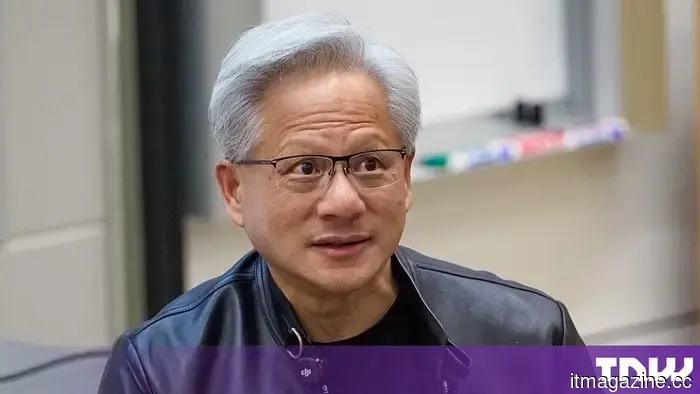 Nvidia is negotiating with the Korean inference chip manufacturer Rebellions.
Jensen Huang met with the CEO of Rebellions in Santa Clara. This would be Nvidia's fourth license-and-hire agreement within a year, following those with Groq and Poolside.
Nvidia is negotiating with the Korean inference chip manufacturer Rebellions.
Jensen Huang met with the CEO of Rebellions in Santa Clara. This would be Nvidia's fourth license-and-hire agreement within a year, following those with Groq and Poolside.
 Uber has been penalized with a fine of 825 million euros regarding the suspension of automated drivers.
The Dutch regulatory authority imposed a fine of 825 million euros on Uber for disabling driver accounts through software without notifying them. This penalty is surpassed only by that imposed on Meta.
Uber has been penalized with a fine of 825 million euros regarding the suspension of automated drivers.
The Dutch regulatory authority imposed a fine of 825 million euros on Uber for disabling driver accounts through software without notifying them. This penalty is surpassed only by that imposed on Meta.
 Two 21-year-olds developed an AI that operates online shops.
Siml assumes control over store operations rather than just individual tasks. Two founders who began by selling hand sanitizer at age 15 now manage AI agents in over 1,000 stores, and Adobe data indicates that shoppers directed by AI convert at a rate 42% higher than those from paid search.
Two 21-year-olds developed an AI that operates online shops.
Siml assumes control over store operations rather than just individual tasks. Two founders who began by selling hand sanitizer at age 15 now manage AI agents in over 1,000 stores, and Adobe data indicates that shoppers directed by AI convert at a rate 42% higher than those from paid search.
 Walmart has started accepting tap-to-pay after previously declining to do so for eleven years.
Walmart will begin accepting tap-to-pay transactions on August 24, eleven years after discontinuing support for Apple Pay. The announcement does not specifically mention Apple Pay or Google Pay.
Walmart has started accepting tap-to-pay after previously declining to do so for eleven years.
Walmart will begin accepting tap-to-pay transactions on August 24, eleven years after discontinuing support for Apple Pay. The announcement does not specifically mention Apple Pay or Google Pay.
For the first time, New York has surpassed San Francisco in the number of tech workers.
In CBRE's 2026 report, New York surpassed the Bay Area in terms of tech headcount, primarily due to San Francisco losing 23,900 jobs. However, it remains at the top of the rankings.