
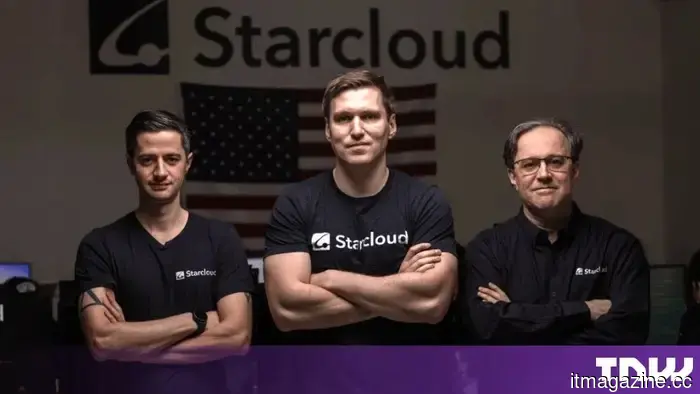
Starcloud secured $250 million to purchase rockets that it is not yet able to sell.
Starcloud has secured $250 million to position AI computing in orbit, with a significant portion of these funds allocated for rockets that it is not yet able to book. The Series A extension values the firm at $2.3 billion post-money, according to the company. Its total funding now reaches $450 million. Founded in 2024, Starcloud was valued at $1.1 billion during its March funding round.
Manhattan West led the investment, with Nvidia and Cisco Investments coming on board as new investors, joining Cedar Capital, Goanna Capital, and Standard Capital. Returning investors include Benchmark, EQT, Soma, NFX, and 776.
The company stated that the capital will support manufacturing, engineering collaborations with Nvidia, and the "procurement of future launch allocation." The latter aspect poses a challenge. Starcloud can construct the satellites, but getting them launched relies on external providers.
What Starcloud has accomplished
Starcloud has progressed further than most startups in orbital computing, making this funding round less speculative. The company's Starcloud-1 successfully launched in November 2025, carrying an Nvidia H100 — the first data center-grade GPU to reach orbit. Starcloud claims this provided about 100 times the GPU computing power previously available in space.
Since then, the firm asserts it has trained the first AI model in space and has operated a version of Google’s Gemini in orbit, demonstrating inference and fine-tuning capabilities using flight hardware. In contrast, most other chips sent to orbit are edge processors; Starcloud utilizes the same silicon found in terrestrial data centers.
The goal of 88,000 satellites
Starcloud envisions a constellation of 88,000 satellites that will deliver 20 gigawatts of orbital computing power. The company has already requested permission from the US Federal Communications Commission to operate such a number of spacecraft.
In the short term, the plan is considerably smaller. Starcloud has secured two Starcloud-2 satellites, each with 8 kilowatts of power, slated for rideshare flights in 2027. These will provide inference services for clients, including US government agencies, amounting to 16 kilowatts towards the 20-gigawatt goal.
With a workforce of 25 employees, the company is relocating to a 100,000 square foot facility in Woodinville, Washington. CEO Philip Johnston announced on LinkedIn that Starcloud aims to increase production to 100 satellites per week.
The launch issue
Johnston expressed concerns to TechCrunch regarding launch capacity. "One of the major costs now involves securing your launch capacity," he commented. "Launch options are quite limited currently since Falcon 9 is expected to retire in 2028."
SpaceX plans to replace Falcon 9 with Starship, though Starship is larger and has not yet been flown multiple times. Recently, Musk announced a delay in efforts to capture a returning Starship for a few months, with aims to re-fly one at the end of this year or early 2027. Earlier reports indicated SpaceX hoped to catch one in August.
Alternative options are sparse. Blue Origin remains uncertain about why its New Glenn rocket exploded, ULA’s Vulcan has not been flying consistently, and Rocket Lab’s Neutron has yet to make its debut.
“Clearly, if we can't book any SpaceX launch capacity in 2029, that will pose a significant challenge for us,” Johnston admitted.
Nvidia's investment details
Nvidia contributed $25 million, according to a source familiar with the deal told TechCrunch. The two companies are collaborating on the Nvidia Space-1 Vera Rubin Module, a version of Nvidia’s current architecture adapted for space. Nvidia mentioned in July that Vera Rubin was in full production for terrestrial users.
The space version is still under development, with hopes to launch it in late 2028. Johnston indicated that his engineers are assessing three key questions: the chip’s thermal performance determines radiator size, the optimal placement for radiation shielding, and how to ensure the hardware withstands the launch.
Johnston noted Nvidia's investment was influenced by the flight data from Starcloud-1, emphasizing that Nvidia conducted more technical diligence than typical venture investors.
The case for orbital computing
Starcloud claims to address the AI energy dilemma. In orbit, there is constant sunlight and no need to rely on grid connectivity.
This limitation is significant on the ground. Recent reports indicated that 63% of new capacity in Europe is being directed outside the five main hubs due to grid delays and land constraints.
Cooling in space presents additional challenges since it relies on radiation rather than air for heat dissipation, making radiator size a critical factor in design.
Skepticism remains
Masayoshi Son has previously dismissed space data centers as a speculative bet on the AI race rather than a viable business model. TechCrunch has described the economics of orbital AI as harsh, noting that one competitor concluded there wasn't sufficient rocket capacity and raised $275 million to
Other articles
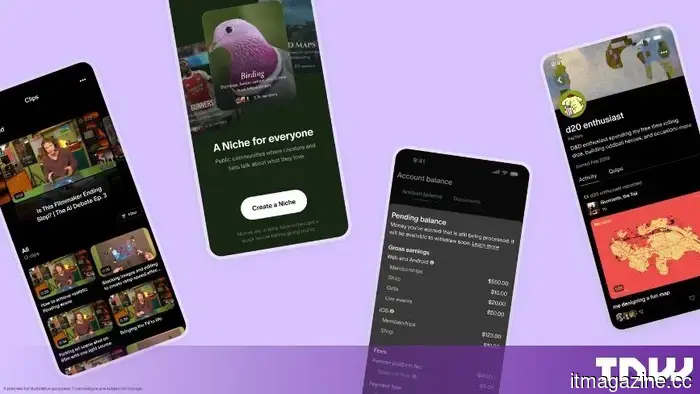 Patreon acknowledges that the issue of discoverability for smaller creators is a result of its own shortcomings.
Patreon's discovery network has favored larger creators. Jack Conte acknowledges that this is a flaw on Patreon's part, and indicates that the algorithm will now assess posts rather than creators.
Patreon acknowledges that the issue of discoverability for smaller creators is a result of its own shortcomings.
Patreon's discovery network has favored larger creators. Jack Conte acknowledges that this is a flaw on Patreon's part, and indicates that the algorithm will now assess posts rather than creators.
 Micron is investing $10 billion in a laboratory, wagering that the memory cycle has shifted.
Micron is investing $10 billion into a research facility in Boise over the next ten years. According to its CEO, AI has altered the value of memory. The company's shares dropped by 29% in July.
Micron is investing $10 billion in a laboratory, wagering that the memory cycle has shifted.
Micron is investing $10 billion into a research facility in Boise over the next ten years. According to its CEO, AI has altered the value of memory. The company's shares dropped by 29% in July.
 For the first time, New York has surpassed San Francisco in the number of tech workers.
In CBRE's 2026 report, New York surpassed the Bay Area in terms of tech headcount, primarily due to San Francisco losing 23,900 jobs. However, it remains at the top of the rankings.
For the first time, New York has surpassed San Francisco in the number of tech workers.
In CBRE's 2026 report, New York surpassed the Bay Area in terms of tech headcount, primarily due to San Francisco losing 23,900 jobs. However, it remains at the top of the rankings.
 Meta pays Microsoft several hundred million dollars annually to lease AI models.
According to Bloomberg, Meta invests several hundred million dollars annually on renting AI models from Microsoft's Azure. Both companies have refrained from commenting on the matter.
Meta pays Microsoft several hundred million dollars annually to lease AI models.
According to Bloomberg, Meta invests several hundred million dollars annually on renting AI models from Microsoft's Azure. Both companies have refrained from commenting on the matter.
 For the first time, New York has surpassed San Francisco in the number of tech workers.
According to CBRE's 2026 report, New York surpassed the Bay Area in tech employment, largely due to San Francisco losing 23,900 jobs. Nonetheless, it remains at the top of the rankings.
For the first time, New York has surpassed San Francisco in the number of tech workers.
According to CBRE's 2026 report, New York surpassed the Bay Area in tech employment, largely due to San Francisco losing 23,900 jobs. Nonetheless, it remains at the top of the rankings.
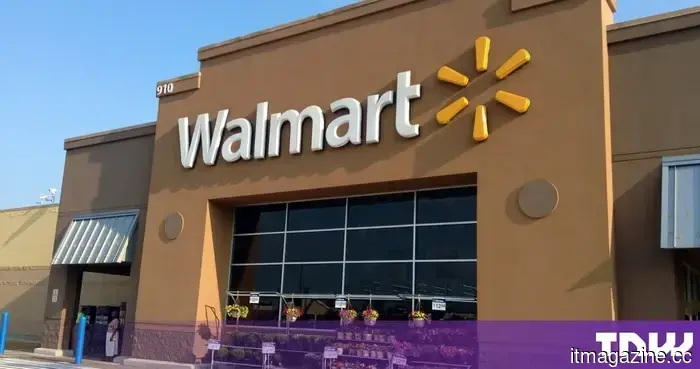 Walmart has started accepting tap-to-pay after previously declining to do so for eleven years.
Walmart will begin accepting tap-to-pay transactions on August 24, eleven years after discontinuing support for Apple Pay. The announcement does not specifically mention Apple Pay or Google Pay.
Walmart has started accepting tap-to-pay after previously declining to do so for eleven years.
Walmart will begin accepting tap-to-pay transactions on August 24, eleven years after discontinuing support for Apple Pay. The announcement does not specifically mention Apple Pay or Google Pay.
Starcloud secured $250 million to purchase rockets that it is not yet able to sell.
Starcloud secured $250 million at a valuation of $2.3 billion to conduct AI inference in space. Nvidia is involved as well. The challenging aspect will be securing launches after Falcon 9's retirement in 2028.