
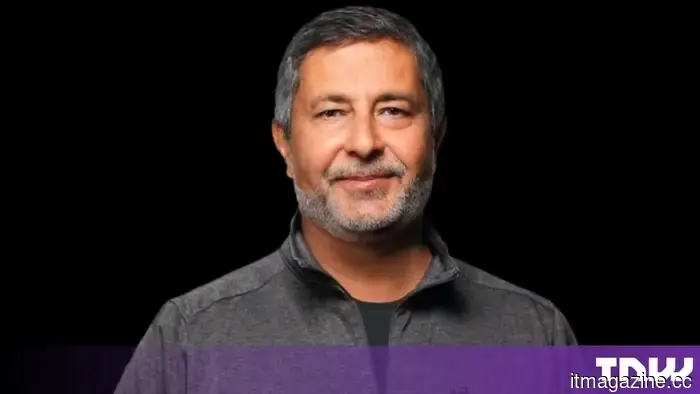
Micron is investing $10 billion in a laboratory, wagering that the memory cycle has shifted.
Micron is investing $10 billion into a research lab based on the belief that AI has fundamentally altered the value of memory. The company announced the establishment of Micron Research Labs on Thursday, located in Boise, Idaho, with the intention of spending $10 billion over the next decade. This initiative is distinct from the over $250 billion Micron has already pledged for American manufacturing and research, and the company claims it will be the first dedicated memory research center of its type in the U.S.
The lab's purpose includes exploring memory technologies, compute architectures, packaging, and future semiconductor manufacturing, with a focus extending beyond ten years. The funding will support a flagship campus in Boise, collaborations with universities, satellite labs, and various industry partnerships. The lab will connect with Micron research sites across the U.S., Europe, Japan, India, Singapore, and Taiwan.
Micron aims to commence construction in 2027 on a facility capable of housing hundreds of researchers. The company currently holds 62,000 lifetime patents. Scott DeBoer, the chief technology and products officer, remarked, “Micron Research Labs gives that legacy a dedicated home for long-horizon innovation, the kind of research that is foundational to every product we develop.”
Sanjay Mehrotra, the CEO, elaborated on this investment during an appearance on CNBC, asserting, “Today, there is no AI without memory. AI systems require more memory, higher performance memory, and lower power memory. Thus, the value of memory has fundamentally shifted.” He emphasized the strategic importance of memory for AI, stating, “Memory is no longer just a component in a system; it has become the strategic infrastructure for AI.”
Historically, memory demand has been cyclical, with heightened demand leading to oversupply and price drops. However, Mehrotra claims that AI is establishing a more stable demand compared to previous cycles. He also noted a shift in purchasing behavior, with customers now designing memory alongside processors, leading to earlier involvement of Micron in the customer development process.
Mehrotra indicated that Micron cannot produce enough memory to meet current demand. “All our customers across our end markets will purchase everything we produce,” he stated, mentioning that data center clients are seeking around 50% more supply than the company can provide. Micron is also securing this demand; during its late-June earnings call, the company announced five-year strategic agreements with 16 customers, with more agreements signed since.
The announcement was accompanied by an extensive list of endorsements. Commerce Secretary Howard Lutnick and Michael Kratsios from the White House Office of Science and Technology Policy framed the lab as a significant accomplishment of the current administration. Kratsios characterized it as a step toward “the AI-driven Golden Age of American Innovation.” Several notable figures, including Jensen Huang, Tim Cook, and various academic and industry leaders, also provided supportive quotes. Micron has received up to $6.2 billion in CHIPS Act funding during the Biden administration.
On the other end of Mehrotra’s value equation, high-bandwidth memory is created by stacking DRAM, which comprised 76% of Micron’s revenue last quarter. As AI consumes this supply, prices for DRAM have risen across all applications. The shortage has even affected DDR2, a standard from 2003, with prices increasing by 60%. T-Mobile has allowed customers to pay for phones over an extended period due to rising costs.
Micron’s financials reflect this trend, with revenue quadrupling last quarter and gross margins exceeding 81%. Despite a significant drop in shares by 29% in July, the stock rebounded by 14% in August. Over the past year, Micron shares have surged by approximately 670%, surpassing competitors such as SK Hynix and Samsung. This year, Micron even reached a market value of over $1 trillion, briefly surpassing Meta and Tesla.
Micron is not alone; SK Hynix is investing $720 billion in memory fabs in Korea, and Samsung is also expanding. The simultaneous capacity additions by the top three HBM suppliers echo the beginnings of previous cycles. Dave Petso, a Boise-based wealth manager since the 1980s, noted that Micron shares skyrocketed in 1999 after a significant gain the previous year, but subsequently lost three-quarters of their value over the next three years. “You guys are excelling now, but I’ve seen this before,” he told clients.
Several uncertainties remain. Nothing has been constructed yet, with groundbreaking slated for 2027. Micron has not disclosed the expected number of employees for the lab or its initial projects. The $10 billion investment is referred to as planned, and the company’s press release includes a forward-looking statement cautioning that actual outcomes could differ significantly. Mehrotra did not claim that the cycle is over; he emphasized that the value dynamics have shifted and that demand is becoming more sustainable, a
Other articles
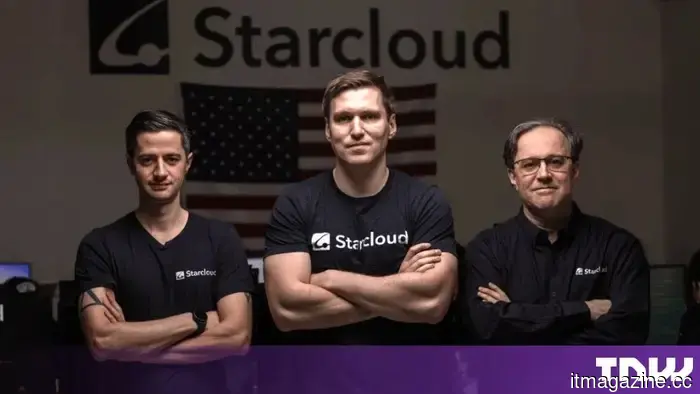 Starcloud secured $250 million to purchase rockets that it is not yet able to sell.
Starcloud secured $250 million at a valuation of $2.3 billion to conduct AI inference in space. Nvidia is involved as well. The challenging aspect will be securing launches after Falcon 9's retirement in 2028.
Starcloud secured $250 million to purchase rockets that it is not yet able to sell.
Starcloud secured $250 million at a valuation of $2.3 billion to conduct AI inference in space. Nvidia is involved as well. The challenging aspect will be securing launches after Falcon 9's retirement in 2028.
 For the first time, New York has surpassed San Francisco in the number of tech workers.
In CBRE's 2026 report, New York surpassed the Bay Area in terms of tech headcount, primarily due to San Francisco losing 23,900 jobs. However, it remains at the top of the rankings.
For the first time, New York has surpassed San Francisco in the number of tech workers.
In CBRE's 2026 report, New York surpassed the Bay Area in terms of tech headcount, primarily due to San Francisco losing 23,900 jobs. However, it remains at the top of the rankings.
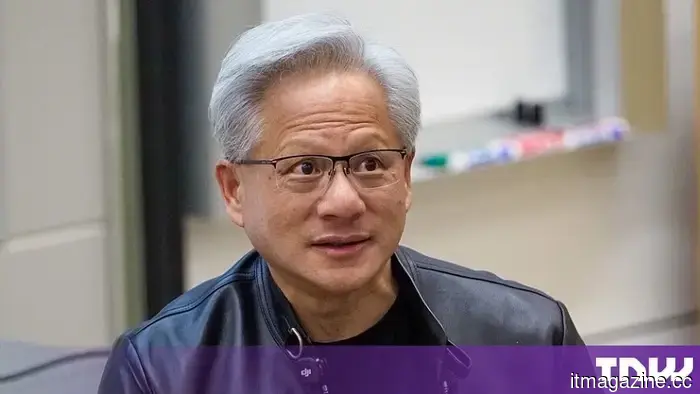 Nvidia is engaged in discussions with the Korean chip designer Rebellions, specializing in inference technology.
Jensen Huang met with the CEO of Rebellions in Santa Clara. This would mark Nvidia's fourth licensing and hiring agreement within a year, following Groq and Poolside.
Nvidia is engaged in discussions with the Korean chip designer Rebellions, specializing in inference technology.
Jensen Huang met with the CEO of Rebellions in Santa Clara. This would mark Nvidia's fourth licensing and hiring agreement within a year, following Groq and Poolside.
 Walmart has started accepting tap-to-pay after previously declining to do so for eleven years.
Walmart will begin accepting tap-to-pay transactions on August 24, eleven years after discontinuing support for Apple Pay. The announcement does not specifically mention Apple Pay or Google Pay.
Walmart has started accepting tap-to-pay after previously declining to do so for eleven years.
Walmart will begin accepting tap-to-pay transactions on August 24, eleven years after discontinuing support for Apple Pay. The announcement does not specifically mention Apple Pay or Google Pay.
 Meta pays Microsoft several hundred million dollars annually to lease AI models.
According to Bloomberg, Meta invests hundreds of millions annually in renting AI models via Microsoft's Azure. Both companies have refrained from making any comments.
Meta pays Microsoft several hundred million dollars annually to lease AI models.
According to Bloomberg, Meta invests hundreds of millions annually in renting AI models via Microsoft's Azure. Both companies have refrained from making any comments.
 Uber has been fined 825 million euros due to the suspension of automated drivers.
The Dutch regulatory authority imposed a fine of 825 million euros on Uber for using software to deactivate driver accounts without informing them. This is second only to the fine imposed on Meta, which was larger.
Uber has been fined 825 million euros due to the suspension of automated drivers.
The Dutch regulatory authority imposed a fine of 825 million euros on Uber for using software to deactivate driver accounts without informing them. This is second only to the fine imposed on Meta, which was larger.
Micron is investing $10 billion in a laboratory, wagering that the memory cycle has shifted.
Micron is investing $10 billion into a research facility in Boise over the next ten years. According to its CEO, AI has altered the value of memory. The company's shares dropped by 29% in July.