

Samsung announces a historic $80 billion return to shareholders, yet the stock declines.
On Friday, Samsung Electronics approved the largest shareholder return in the history of South Korean corporations. Following this announcement, its shares dropped by up to 2.6% in after-hours trading. The board approved a shareholder return between 90 trillion and 110 trillion won for 2026, which translates to approximately $65 billion to $80 billion. This amount is about five times the previous record of 20.3 trillion won set in 2020, marking it as the largest return ever by a Korean company.
In the third quarter, roughly 30 trillion won will be distributed as cash dividends, including the regular payout, with specifics being finalized in an October board meeting. Additionally, the board sanctioned a buyback of around 15 trillion won worth of stock for employee compensation, which it claims will also enhance shareholder value. Samsung presented the initiative as part of a virtuous cycle where corporate growth and shareholder value support each other. However, investors interpreted the announcement differently.
Investors are awaiting further details until January.
Disappointment in the record
Investors had anticipated a higher figure and expressed their expectations. Portfolio manager Kim Minji from Must Asset Management noted, “Some investors had hoped for up to 150 trillion won in shareholder returns, which explains the drop in post-market shares.” Earlier that day, Samsung’s preferred shares had increased over 8% based on expectations of a larger amount.
The comparison Samsung encouraged also worked against it, as Apple announced $110 billion in buybacks for 2024, the largest in U.S. history, while Samsung’s program, at its highest estimate, amounts to about $80 billion, setting a record only within Korea.
The missing detail in the filing
A significant concern is structural; Samsung did not specify how much of the total is allocated to buybacks versus dividends. This distinction is crucial—buybacks that lead to cancellations permanently reduce the number of shares, boosting earnings per share for remaining shareholders. In contrast, dividends mean cash leaving the company, taxed upon receipt, with the number of shares unchanged.
"The critical question is how much will come from buybacks versus dividends,” commented Albert Yong, managing partner and chief investment officer at Petra Capital Management. Jung In Yun, CEO of Fibonacci Asset Management Global, echoed this sentiment, saying that investors will now focus on how the remaining capital will be distributed, rather than just the overall figure.
Samsung stated that the remaining details would be resolved at a board meeting in January 2027, after finalizing the numbers for 2026. Investors have only been given a total amount and a timeline, with little additional information.
A new record established just two days prior
This announcement concludes an extraordinary week for South Korean chipmakers in terms of returning cash. On Wednesday, SK Hynix revealed a 40 trillion won buyback, valued at about $28.6 billion, which was also labeled the largest repurchase in Korea's corporate history. Samsung’s proposal exceeds that amount at the lower end of its range. Anticipating additional returns earlier in the month as profits from high-bandwidth memory increased, Samsung was under pressure.
Funding the return
The funds stem from memory chip sales. According to CNBC’s Jenny Lee, Samsung’s stock has surged about 135% this year due to the demand for chips essential for AI systems. The company has been capitalizing on this boom from multiple avenues, raising foundry prices by up to 15% for new orders, particularly affecting Chinese buyers. Meanwhile, its competitor has invested heavily rather than returning cash, committing to $720 billion in memory fabrication plants in Yongin.
Samsung is still striving to catch SK Hynix in the high-bandwidth memory market, which is critical for AI customers. It is returning an unprecedented amount while lagging its competitor in this profitable segment.
This return aligns with a policy Samsung established in 2024, pledging to distribute half of its free cash flow to shareholders over three years. Based on the company's own figures, the payouts for 2024 and 2025 comprised 19.6 trillion won in regular dividends, a 1.3 trillion won special dividend, and 8.4 trillion won in buybacks for cancellations. Adding 2026 to this, the three-year total will be between 120 trillion and 140 trillion won.
A test for the Korean market
The broader implications of Samsung’s shareholder return pertain more to governance than to chips. South Korean companies have historically traded at lower valuations due to perceptions about their treatment of shareholders. Now two of the nation's largest firms have announced unprecedented returns in the same week. South Korean chip stocks have also influenced global markets, amplifying the signal.
“This could trigger a wider structural change within the Korean stock market,” said Tom Kang, research director at Counterpoint. “We view this as a significant step toward a management style more focused on shareholders, similar to what is typically observed in the U.S. market.”
Albert Yong pointed out that
Other articles
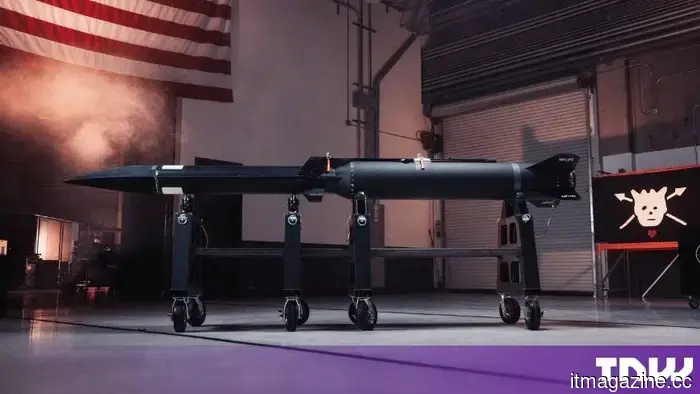 Castelion secures $1 billion at a valuation of $13 billion to enhance the production of hypersonic weapons.
Castelion secured $1 billion at a valuation of $13 billion to ramp up the mass production of hypersonic missiles. The Navy has placed an order for 50 pre-production prototypes to date.
Castelion secures $1 billion at a valuation of $13 billion to enhance the production of hypersonic weapons.
Castelion secured $1 billion at a valuation of $13 billion to ramp up the mass production of hypersonic missiles. The Navy has placed an order for 50 pre-production prototypes to date.
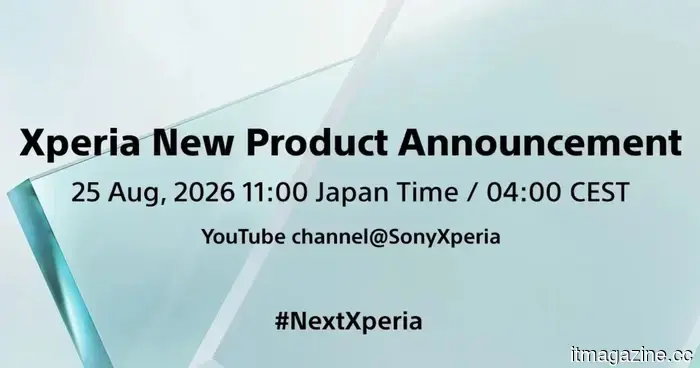 Sony's upcoming Xperia smartphone is set to be released on August 24, but it will probably not be available in the US.
Sony has announced a new Xperia launch event scheduled for August 24, with rumors suggesting the unveiling of the mid-range Xperia 10 VIII.
Sony's upcoming Xperia smartphone is set to be released on August 24, but it will probably not be available in the US.
Sony has announced a new Xperia launch event scheduled for August 24, with rumors suggesting the unveiling of the mid-range Xperia 10 VIII.
 RayNeo's latest iO Smart Glasses introduce a compact display within your field of vision.
RayNeo's iOS Smart Glasses integrate a compact MicroLED display into your view, providing features such as real-time translation, dictation in 112 languages, and an AI memory log, all priced at $479.
RayNeo's latest iO Smart Glasses introduce a compact display within your field of vision.
RayNeo's iOS Smart Glasses integrate a compact MicroLED display into your view, providing features such as real-time translation, dictation in 112 languages, and an AI memory log, all priced at $479.
 GTA 6 might have a second source who has access to internal documents.
Another group has emerged claiming to have GTA 6 development files as Rockstar gets ready to reveal the game on August 27.
GTA 6 might have a second source who has access to internal documents.
Another group has emerged claiming to have GTA 6 development files as Rockstar gets ready to reveal the game on August 27.
 I used the Magic Capture feature on my cat with the Pixel 11 Pro, and I adore every funny shot.
Magic Capture automatically extracted images from videos of my rather uncooperative cat, and even this initial rough test demonstrated the effectiveness of Google's new Pixel camera concept.
I used the Magic Capture feature on my cat with the Pixel 11 Pro, and I adore every funny shot.
Magic Capture automatically extracted images from videos of my rather uncooperative cat, and even this initial rough test demonstrated the effectiveness of Google's new Pixel camera concept.
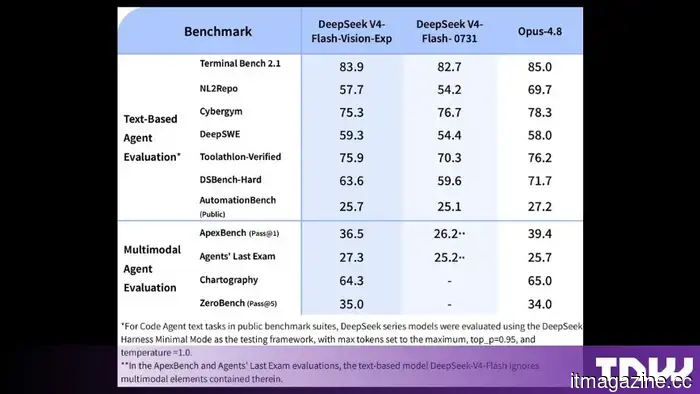 DeepSeek unveils an experimental multimodal model to compete with Anthropic.
DeepSeek's experimental multimodal model has secured victories in three out of eleven benchmarks when compared to Anthropic's Opus-4.8, according to the table published by DeepSeek itself.
DeepSeek unveils an experimental multimodal model to compete with Anthropic.
DeepSeek's experimental multimodal model has secured victories in three out of eleven benchmarks when compared to Anthropic's Opus-4.8, according to the table published by DeepSeek itself.
Samsung announces a historic $80 billion return to shareholders, yet the stock declines.
Samsung will return as much as $80 billion to shareholders, setting a record in Korea. The stock dropped by 2.6% since the details of the buyback distribution remain unclear.