
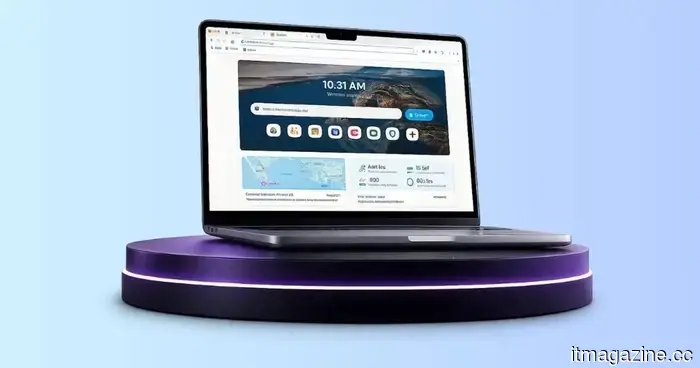
Wave Browser Connects Daily Surfing to Ocean Cleanup Efforts
Most individuals select a web browser based on practical factors such as speed, familiarity, compatibility, and convenience, while environmental considerations often take a backseat. Wave Browser, however, seeks to make sustainability a factor for consumers to ponder.
Created by Eightpoint, Wave is a browser based on Chromium that merges traditional browsing capabilities with features designed to keep users organized and enhance online productivity. Its most unique aspect is not a technical feature, but rather its environmental initiative: a Certified Cleanup Partnership with 4ocean, aimed at aiding in the removal of plastic and other debris from oceans, rivers, and coastlines.
This positioning prompts two questions for potential users: How does the environmental model function, and is it sufficient to set Wave apart from their current browsers?
What is Wave Browser?
Wave is built on Chromium, the open-source project that serves as the foundation for numerous popular browsers. This allows users to enjoy a familiar browsing environment while enabling Wave to incorporate its own features, security measures, and environmental focus.
The browser is aimed at everyday tasks such as web searching, visiting sites, and organizing online activities. Eightpoint describes it as a tool designed for safer, more structured browsing rather than one that necessitates users to modify their internet habits.
“A browser must still be useful,” says Matthew Martinez, Director of Product on Eightpoint’s Desktop team. “The environmental aspect is part of what we are creating, but it exists alongside features that help individuals stay organized and work more efficiently online.”
For consumers, this distinction is significant. An environmental mission may catch initial interest, but users are likely to evaluate a browser based on its performance, compatibility, privacy and security features, and overall user-friendliness.
How the 4ocean Partnership Functions
Wave’s key differentiating factor is its Certified Cleanup Partnership with 4ocean, an organization that carries out and finances cleanup operations for oceans, rivers, and coastlines.
This model does not assert that a specific search, click, or browsing session immediately removes a piece of plastic. Instead, Wave funds a continuous cleanup program through the 4ocean partnership while users browse normally. This clarifies that the company's financial commitment is not linked to claims that attribute specific environmental results to every user action.
“The concept behind Wave is simple,” explains Eightpoint CEO Deniz Gezgin. “People already browse the web. We wanted to link that daily activity to an environmental initiative that yields measurable results, without requiring individuals to take on another responsibility.”
In practical terms, users do not have to complete environmental tasks, earn points, or change their browsing habits. The cleanup operations are conducted via the partnership rather than by the users. Thus, Wave’s role should be seen as funding an environmental initiative in conjunction with its browser product, rather than translating individual browsing actions into direct cleanup events.
What Results Have Been Reported?
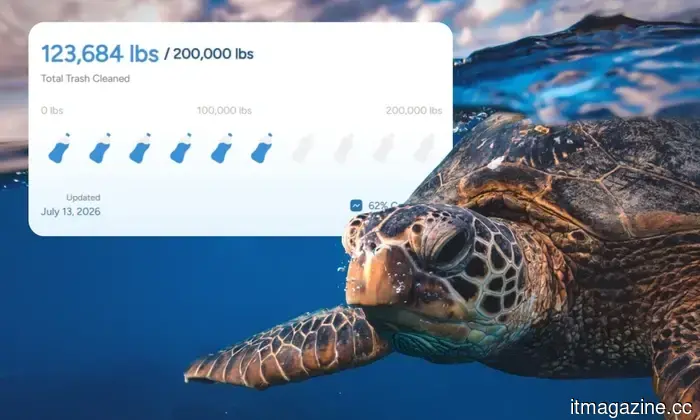
According to Eightpoint, the partnership between Wave and 4ocean has facilitated the removal of over 100,000 pounds of plastic and other waste. The company aims to reach a target of 300,000 pounds by 2028.
This level of specificity provides consumers with more insight than a vague statement suggesting that using a product “helps the ocean.” It identifies the organization performing the work, outlines the type of cleanup funded, and establishes a measurable goal and timeline.
Why Precise Environmental Language is Important
Wave Browser
Claims regarding environmental benefits linked to digital products can easily imply a closer connection between individual actions and tangible outcomes than actually exists. For instance, a statement like “every click removes plastic” may seem concrete but could leave the funding mechanism unclear.
Wave avoids linking its environmental program to a one-click-for-one-item model. Its approach is broader: the browser is associated with an ongoing partnership that supports cleanup efforts regardless of the specific number or type of actions an individual user undertakes.
While this may not be as catchy, it offers a clearer basis for understanding the relationship between browsing and cleanup. The user’s activity does not directly eliminate waste. Instead, the company behind the browser finances efforts conducted by a third-party environmental organization.
Therefore, consumers researching Wave may seek clear answers to several questions: What operations are being supported? Who performs them? How are the outcomes measured? Can progress be monitored? What targets have been set, and by when?
Wave and 4ocean address some of these questions through their partnership materials. Compiling all information into a concise, regularly updated fact sheet or FAQ could further assist users in evaluating the program on its own merits.
Does the Environmental Model Justify Switching Browsers?
For some users, Wave’s environmental program may provide an added incentive to experiment with the browser. It connects a regular digital task to a defined cleanup partnership without requiring users to purchase a separate membership or take on extra responsibilities.
However, that distinction may not be sufficient to convince someone to change from a familiar browser. Before making the switch, users are likely to assess Wave’s performance in practical use, its compatibility with the websites and
Other articles
 The espionage convictions of the former Google engineer have been overturned, although the theft convictions remain intact.
Judge Vince Chhabria annulled seven convictions for economic espionage against Linwei Ding, determining that there was no evidence he engaged in actions that served the interests of China.
The espionage convictions of the former Google engineer have been overturned, although the theft convictions remain intact.
Judge Vince Chhabria annulled seven convictions for economic espionage against Linwei Ding, determining that there was no evidence he engaged in actions that served the interests of China.
 Mark Zuckerberg purchased a castle, while the rest of us settle for a sandcastle once a year.
Mark Zuckerberg purchased a 440-acre estate in Ireland during the week Meta faced trial regarding issues related to children. However, the castle itself is not the issue at hand.
Mark Zuckerberg purchased a castle, while the rest of us settle for a sandcastle once a year.
Mark Zuckerberg purchased a 440-acre estate in Ireland during the week Meta faced trial regarding issues related to children. However, the castle itself is not the issue at hand.
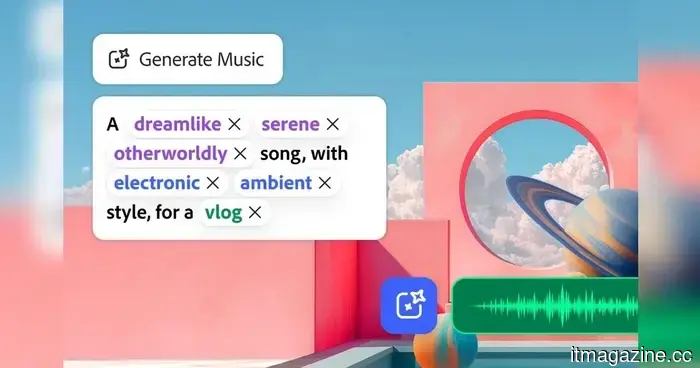 Adobe intends for Firefly to manage the complete soundtrack for your videos.
Adobe Firefly has dedicated the last few years to mastering image and video creation. Now, Adobe aims for it to also manage soundtracks. The features Generate Music, Generate Speech, and Generate Sound Effects are now widely accessible in Firefly, offering creators the ability to produce music, narration, and custom sound effects all within Adobe’s AI environment. Adobe states that Generate Music […]
Adobe intends for Firefly to manage the complete soundtrack for your videos.
Adobe Firefly has dedicated the last few years to mastering image and video creation. Now, Adobe aims for it to also manage soundtracks. The features Generate Music, Generate Speech, and Generate Sound Effects are now widely accessible in Firefly, offering creators the ability to produce music, narration, and custom sound effects all within Adobe’s AI environment. Adobe states that Generate Music […]
 Apple Music will soon inform you about which songs were created using AI.
Apple Music will be introducing AI labels for songs later this year, allowing listeners to identify which tracks were created with the help of artificial intelligence platforms.
Apple Music will soon inform you about which songs were created using AI.
Apple Music will be introducing AI labels for songs later this year, allowing listeners to identify which tracks were created with the help of artificial intelligence platforms.
 A brand new pair of glasses priced at $399 can transform your handheld device into a 307-inch gaming configuration.
RayNeo's latest AR glasses, the GT and GT Max, are designed for movies and gaming, featuring native 3DoF tracking, Bang & Olufsen audio, and virtual screens that extend up to 307 inches.
A brand new pair of glasses priced at $399 can transform your handheld device into a 307-inch gaming configuration.
RayNeo's latest AR glasses, the GT and GT Max, are designed for movies and gaming, featuring native 3DoF tracking, Bang & Olufsen audio, and virtual screens that extend up to 307 inches.
 I moved from the M1 to the M5 MacBook Air, and the sound quality of the speakers has declined.
I utilized the M1 MacBook Air as my main laptop for almost four years. Throughout that period, I relied on it for a range of tasks, including writing news articles and editing photos for reviews, as well as working during flights and on weekend getaways. The one feature that received more praise than its sleek build and overall aesthetic was […]
I moved from the M1 to the M5 MacBook Air, and the sound quality of the speakers has declined.
I utilized the M1 MacBook Air as my main laptop for almost four years. Throughout that period, I relied on it for a range of tasks, including writing news articles and editing photos for reviews, as well as working during flights and on weekend getaways. The one feature that received more praise than its sleek build and overall aesthetic was […]
Wave Browser Connects Daily Surfing to Ocean Cleanup Efforts
The majority of individuals select a web browser based on practical factors such as speed, familiarity, compatibility, and convenience. The environmental impact is often not a significant part of this choice. However, Wave Browser is aiming to make it a consideration for users. Created by Eightpoint, Wave is a Chromium-based browser that merges typical browsing capabilities with features designed to assist […]