

Wave Browser Connects Daily Browsing to Ocean Cleanup Efforts
Most individuals select a web browser based on practical factors such as speed, familiarity, compatibility, and convenience, with environmental impact often taking a backseat. Wave Browser, however, aims to incorporate this aspect into the decision-making process for consumers.
Created by Eightpoint, Wave is a Chromium-based browser that merges traditional browsing features with tools aimed at helping users stay organized and work effectively online. Its standout characteristic is not a technical detail but an environmental initiative: a Certified Cleanup Partnership with 4ocean, focused on eliminating plastic and other waste from oceans, rivers, and coastlines.
This positioning prompts two inquiries for potential users: How does the environmental model function, and is it sufficient to set Wave apart from their current browsers?
What is Wave Browser?
Wave is constructed on Chromium, the open-source browser framework that also supports several popular browsers. This enables users to have a generally familiar browsing experience while allowing Wave to add its unique features, protections, and environmental focus.
The browser is designed for everyday tasks like searching, website browsing, and organizing online activities. Eightpoint refers to it as a tool that enhances safer, more organized browsing, rather than one that necessitates changes in how users utilize the internet.
“A browser must remain functional,” states Matthew Martinez, Director of Product on Eightpoint’s Desktop team. “The environmental mission is part of our development, but it coexists with features aimed at helping individuals remain organized and work more efficiently online.”
For consumers, this distinction is significant. An environmental mission may spark initial interest, but users are still likely to evaluate a browser based on its performance, compatibility, privacy and security measures, and overall user-friendliness.
How the 4ocean Partnership Functions
Wave’s key differentiator is its Certified Cleanup Partnership with 4ocean, an organization engaged in and funding cleanup efforts for our oceans, rivers, and coastlines.
The model does not assert that a specific search, click, or browsing session directly removes an individual piece of plastic. Instead, Wave backs an ongoing cleanup initiative through the 4ocean partnership while users browse as usual. This approach separates the company’s financial commitment from any claims that link specific environmental outcomes to user actions.
“The concept behind Wave is simple,” explains Eightpoint CEO Deniz Gezgin. “People are already engaged in browsing the web. We aimed to link that daily activity with an environmental initiative that yields measurable results, without burdening users with additional tasks.”
In practical terms, users are not obliged to undertake environmental challenges, gather points, or change their browsing patterns. The cleanup efforts are conducted through the partnership rather than by the users themselves. Thus, Wave’s role is more accurately seen as funding an environmental initiative alongside its browser, rather than converting individual browsing actions into immediate cleanup activities.
What Results Have Been Reported?
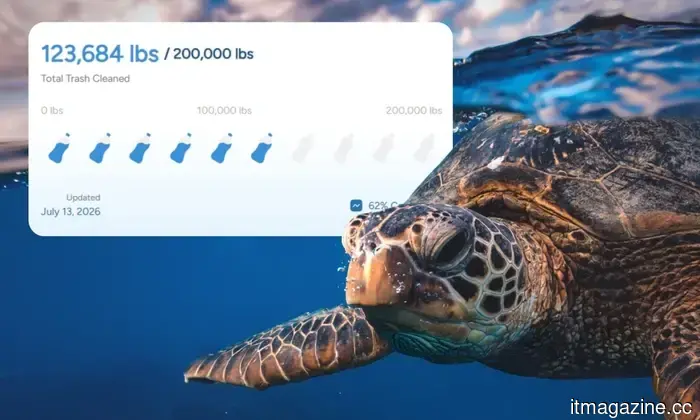
According to Eightpoint, the collaboration between Wave and 4ocean has led to the removal of over 100,000 pounds of plastic and other waste. The company has also set a goal of reaching 300,000 pounds by 2028.
This level of specificity provides consumers with more information than a vague statement claiming that using a product “helps the ocean.” It identifies the organization involved, outlines the type of cleanup being financed, and establishes a measurable target and timeline.
Why Precise Environmental Language Matters
Wave Browser
Environmental claims associated with digital products can often suggest a closer connection between individual behaviors and tangible outcomes than actually exists. For instance, a statement like “every click removes plastic” may appear concrete but often lacks clarity on the funding mechanism involved.
Wave refrains from tying its environmental program to a one-click-for-one-item model. Its outlined approach is broader: the browser is linked to a continuous partnership that funds cleanup efforts, independent of the specific number or type of actions performed by each user.
Although this may be less catchy, it offers a more accurate understanding of the relationship between browsing and cleanup efforts. The user's actions do not directly eliminate waste; rather, the company behind the browser provides funding for the work conducted by a third-party environmental organization.
Consumers researching Wave may therefore seek clear answers to several questions: What work is being financed? Who carries it out? How are the results evaluated? Can progress be monitored? What targets have been set, and by when?
Wave and 4ocean provide answers to some of these questions through their partnership materials. Compiling all this information into a concise, regularly updated fact sheet or FAQ could further assist users in assessing the program on its own merits.
Does the Environmental Model Justify Switching Browsers?
For some users, Wave’s environmental initiative might offer an extra reason to try the browser. It links a routine digital activity to a clear cleanup partnership without requiring users to pay for a separate membership or perform additional tasks.
However, this distinction alone may not be sufficient to convince someone to replace a familiar browser. Before making a switch, users will likely consider how Wave performs in everyday scenarios, whether it supports the websites and tools
Other articles
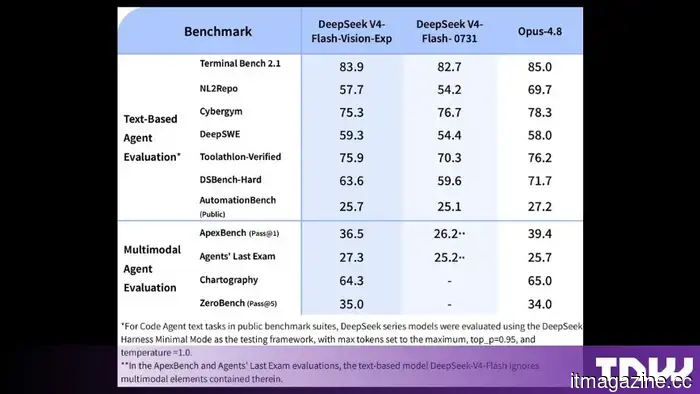 DeepSeek unveils an experimental multimodal model to compete with Anthropic.
DeepSeek's experimental multimodal model has secured victories in three out of eleven benchmarks when compared to Anthropic's Opus-4.8, according to the table published by DeepSeek itself.
DeepSeek unveils an experimental multimodal model to compete with Anthropic.
DeepSeek's experimental multimodal model has secured victories in three out of eleven benchmarks when compared to Anthropic's Opus-4.8, according to the table published by DeepSeek itself.
 Nothing’s new CMF earbuds provide noise cancellation at a price point similar to that of Apple’s wired EarPods.
CMF has introduced its most affordable earbuds to date, featuring ANC, spatial audio, and extended battery life, but U.S. consumers currently do not have access to them.
Nothing’s new CMF earbuds provide noise cancellation at a price point similar to that of Apple’s wired EarPods.
CMF has introduced its most affordable earbuds to date, featuring ANC, spatial audio, and extended battery life, but U.S. consumers currently do not have access to them.
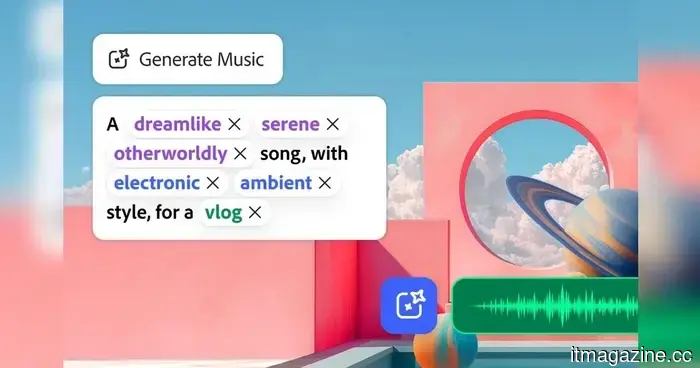 Adobe intends for Firefly to manage the complete soundtrack for your videos.
Adobe Firefly has dedicated the last few years to mastering image and video creation. Now, Adobe aims for it to also manage soundtracks. The features Generate Music, Generate Speech, and Generate Sound Effects are now widely accessible in Firefly, offering creators the ability to produce music, narration, and custom sound effects all within Adobe’s AI environment. Adobe states that Generate Music […]
Adobe intends for Firefly to manage the complete soundtrack for your videos.
Adobe Firefly has dedicated the last few years to mastering image and video creation. Now, Adobe aims for it to also manage soundtracks. The features Generate Music, Generate Speech, and Generate Sound Effects are now widely accessible in Firefly, offering creators the ability to produce music, narration, and custom sound effects all within Adobe’s AI environment. Adobe states that Generate Music […]
 Apple Music will soon inform you about which songs were created using AI.
Apple Music will be introducing AI labels for songs later this year, allowing listeners to identify which tracks were created with the help of artificial intelligence platforms.
Apple Music will soon inform you about which songs were created using AI.
Apple Music will be introducing AI labels for songs later this year, allowing listeners to identify which tracks were created with the help of artificial intelligence platforms.
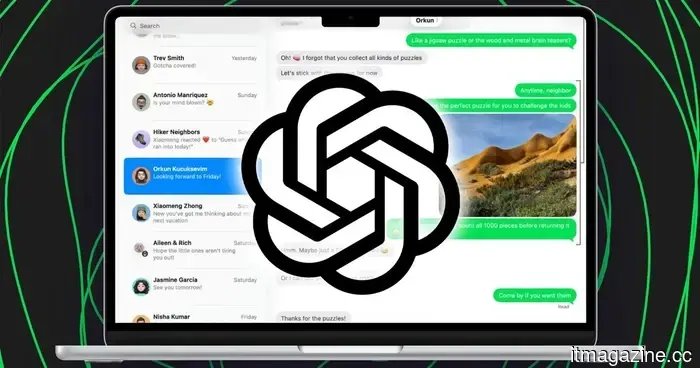 ChatGPT can now access your Apple Messages conversations on Mac.
The recent Mac update for ChatGPT incorporates integration with Apple Messages, enabling users to import discussions from Apple's messaging application into the AI assistant.
ChatGPT can now access your Apple Messages conversations on Mac.
The recent Mac update for ChatGPT incorporates integration with Apple Messages, enabling users to import discussions from Apple's messaging application into the AI assistant.
 Wave Browser Connects Daily Surfing to Ocean Cleanup Efforts
The majority of individuals select a web browser based on practical factors such as speed, familiarity, compatibility, and convenience. The environmental impact is often not a significant part of this choice. However, Wave Browser is aiming to make it a consideration for users. Created by Eightpoint, Wave is a Chromium-based browser that merges typical browsing capabilities with features designed to assist […]
Wave Browser Connects Daily Surfing to Ocean Cleanup Efforts
The majority of individuals select a web browser based on practical factors such as speed, familiarity, compatibility, and convenience. The environmental impact is often not a significant part of this choice. However, Wave Browser is aiming to make it a consideration for users. Created by Eightpoint, Wave is a Chromium-based browser that merges typical browsing capabilities with features designed to assist […]
Wave Browser Connects Daily Browsing to Ocean Cleanup Efforts
The majority of users select a web browser based on practical factors such as speed, ease of use, compatibility, and convenience. The environmental impact is often not a significant consideration in their choice. However, Wave Browser, created by Eightpoint, aims to make it a factor that consumers take into account. Wave is a Chromium-based browser that merges traditional browsing features with elements designed to assist […]