
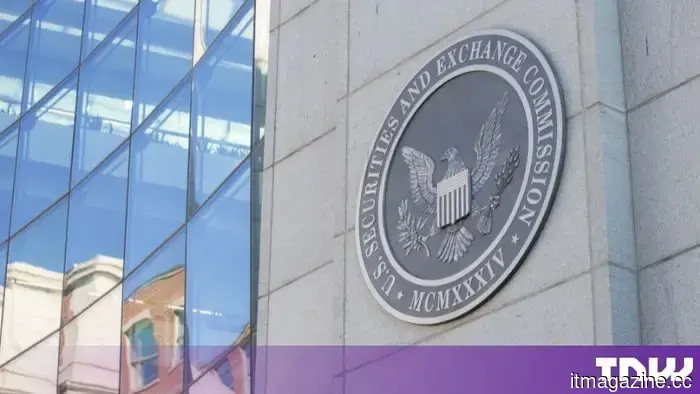
Trump invites cryptocurrency leaders as the SEC suggests its most favorable regulations to date.
On Tuesday, the Securities and Exchange Commission proposed what is considered the most favorable set of crypto regulations ever suggested by an American regulator. The following day, industry leaders who stand to gain from these regulations were dining at the White House with the president.
Donald Trump welcomed crypto executives and officials from industry associations in Washington, alongside Paul Atkins, the SEC chair, Mike Selig from the Commodity Futures Trading Commission, and Patrick Witt, the administration's crypto advisor.
This gathering would typically raise questions, particularly given Trump's reported $1.4 billion in crypto earnings from his family's businesses.
The proposal, named Regulation Crypto Assets, addresses a significant need within the sector that has persisted for nearly a decade. It introduces two registration exemptions: one for a single offering of up to $5 million over four years, and a larger exemption for up to $75 million in any 12-month timeframe, both reliant on narrative disclosures instead of the complete securities framework.
The more impactful aspect is a conditional safe harbor. According to the SEC’s description, a token may no longer be considered an investment contract once its issuer has completed or permanently halted the managerial responsibilities initially promised to investors, at which point the agency views the asset as no longer a wager on a founder.
“This proposal would establish a safe harbor once an issuer has fulfilled or permanently stopped all critical managerial efforts it promised under an investment contract,” Atkins stated in the commission's announcement.
Moreover, the proposed rules would override state registration requirements for qualifying offerings and some secondary trades, eliminating a layer of enforcement that has ensnared multiple token issuers.
This builds upon interpretive guidance issued by the commission in March, which outlined similar logic but lacked enforceable protections for issuers. The key difference now is that this reasoning will be codified in the rulebook, and the SEC has requested feedback on whether the thresholds are appropriately set.
However, industry stakeholders do not view the exemptions as the most significant aspect. The safe harbor is crucial because it determines whether a token that has completed its development phase is considered a security, a question that has driven much of the crypto enforcement in the US since 2017.
Comments will be accepted for 60 days following publication in the Federal Register, which means the final rule is likely to be pushed into next year. The CFTC is expected to share its own perspectives at an industry event on Thursday.
In essence, what the agencies are doing is creating a regulatory framework that Congress has failed to establish through legislation. Comprehensive crypto laws have stalled in Congress for months, with little time remaining this year, prompting the White House to move forward independently.
Concerns about conflicts of interest accompany every one of these meetings. Trump's family businesses include World Liberty Financial and a memecoin, where investors suffered significant losses while the family collected fees. Trump has consistently claimed to have no daily involvement in these businesses and states that his investments are managed independently.
Polling from Reuters and Ipsos indicates that many Americans believe the president and his family have gained improperly from crypto since his return to office, and that his policy decisions are influenced by their financial interests.
None of this presents a legal barrier to the SEC’s proposal, which was crafted by an independent agency and will be evaluated based on its merits during the comment period. However, it does suggest that a rule facilitating token sales is being considered in light of the president’s own ventures in the token space, including the complex relationships of World Liberty’s backers.
For the executives present, the timing appears nearly perfect. The combination of a safe harbor, two exemptions, state preemption, and a supportive chair at both regulatory bodies has provided more for the industry in just two days than it received over four years of litigation.
The proposal remains just that—a proposal—and must navigate through a comment period, a commission vote, and the likelihood of a legal challenge from any opposing party.
Other articles
 AI could be acquiring knowledge from billions of images without replicating any individual one.
A study conducted by MIT reveals that AI-generated images frequently cannot be linked back to specific training images, since larger datasets diminish the impact of individual examples.
AI could be acquiring knowledge from billions of images without replicating any individual one.
A study conducted by MIT reveals that AI-generated images frequently cannot be linked back to specific training images, since larger datasets diminish the impact of individual examples.
 Looking to purchase a new Pixel 11? Here are the top cases available right now.
Ranging from a $13.49 magnetic case that offers great value for its cost to Google's own $49.99 official case, these are the Pixel 11 cases that truly made it into my shopping cart.
Looking to purchase a new Pixel 11? Here are the top cases available right now.
Ranging from a $13.49 magnetic case that offers great value for its cost to Google's own $49.99 official case, these are the Pixel 11 cases that truly made it into my shopping cart.
 A professor from Berkeley discussed students who take shortcuts, but her op-ed was flagged by a detector.
An op-ed by a mathematics professor at UC Berkeley regarding declining standards was marked as being partially generated by AI, but she claims that she utilized AI solely for editing purposes.
A professor from Berkeley discussed students who take shortcuts, but her op-ed was flagged by a detector.
An op-ed by a mathematics professor at UC Berkeley regarding declining standards was marked as being partially generated by AI, but she claims that she utilized AI solely for editing purposes.
 Big Tech is actively working to promote the construction of its data centers.
According to Bloomberg, local opposition has delayed $130 billion worth of US data center projects over a span of three months. Big Tech is now reaching out to the communities it requires, but the outcomes have been varied.
Big Tech is actively working to promote the construction of its data centers.
According to Bloomberg, local opposition has delayed $130 billion worth of US data center projects over a span of three months. Big Tech is now reaching out to the communities it requires, but the outcomes have been varied.
 A professor from Berkeley wrote an op-ed discussing students who take shortcuts, but a detector marked her article.
An op-ed by a mathematics professor from UC Berkeley concerning declining standards was marked as having some AI assistance, although she claims she only utilized AI for editing purposes.
A professor from Berkeley wrote an op-ed discussing students who take shortcuts, but a detector marked her article.
An op-ed by a mathematics professor from UC Berkeley concerning declining standards was marked as having some AI assistance, although she claims she only utilized AI for editing purposes.
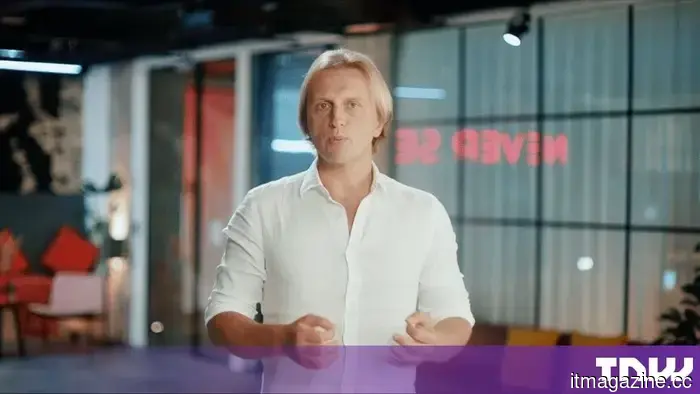 Revolut intends to allow Nik Storonsky to borrow $250 million using his own shares as collateral.
Revolut has requested its shareholders to increase Nik Storonsky’s borrowing limit backed by his stake from $50 million to $250 million as part of an initiative referred to as Project Shasta.
Revolut intends to allow Nik Storonsky to borrow $250 million using his own shares as collateral.
Revolut has requested its shareholders to increase Nik Storonsky’s borrowing limit backed by his stake from $50 million to $250 million as part of an initiative referred to as Project Shasta.
Trump invites cryptocurrency leaders as the SEC suggests its most favorable regulations to date.
On Tuesday, the SEC suggested exemptions for tokens and introduced a conditional safe harbor. The following day, Trump welcomed crypto leaders at the White House.