
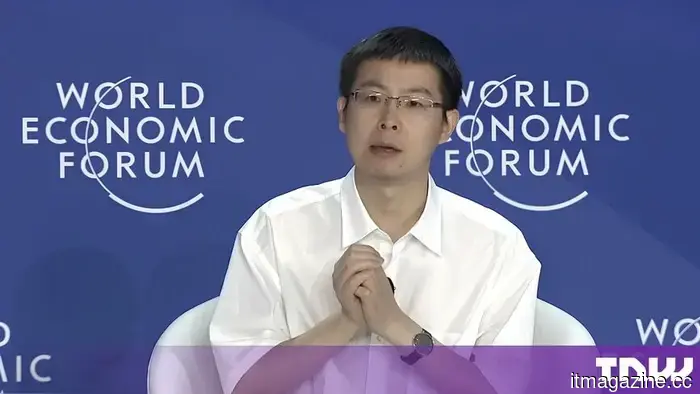
The founder of Unitree states that robots are approaching a 'ChatGPT moment.'
Wang Xingxing spent Thursday morning at the World Robot Conference in Beijing informing the audience that humanoid robots are nearing their “ChatGPT moment.” He also took time to explain why this moment may still be a decade away.
The founder and CEO of Unitree was speaking just a day after his company went public in Shanghai, where its shares surged almost sixfold upon debut before experiencing an 11% drop on Thursday. It's uncommon for a CEO to temper expectations right after a successful stock launch, which is essentially what he did.
“Our progress towards a ‘ChatGPT moment’ in embodied intelligence is significant,” Wang stated, according to reports from the conference. His definition of this moment is notably clear for an industry often characterized by ambiguity.
He described the benchmark as a robot that, when introduced into a new household, can take verbal or written instructions and successfully complete about 80% of the tasks requested. Wang referred to this threshold as a crucial turning point for the sector, and he has been fine-tuning this concept for some time: at the Hongqiao forum in Shanghai last November, he tied it to achieving 80% of tasks across 80% of unfamiliar environments, without prior scene-specific training.
What's changed since then is the timeline. Wang indicated to his Beijing audience that the required software advancements might come in two to three years if progress is favorable, or in five to ten years if it isn’t, a broad range that can accommodate nearly any scenario. Last year, he was advocating a two-year timeframe.
This cautious approach contrasts sharply with the rising funds flowing through the sector. Chinese manufacturers shipped over 40,000 humanoids in the first half of 2026, close to the entire global sum, while the industry's commercialization issues remain largely unresolved, with universities and research institutions still constituting the main customer base.
The recent listing provided the sector with its most explicit price indication to date. Unitree hit the Shanghai market on Wednesday following what Chinese brokers described as unprecedented demand for a robotics company, with the debut valuing it at a level reflective of a company primarily known for its quadrupeds and a humanoid robot that competitors mainly purchase for their labs. The 11% drop on Thursday marked the first correction to this enthusiasm, occurring within just a day.
Wang is not the only one predicting a timeline. Wang He, founder of Beijing-based robotics company Galbot, shared at the same conference that he anticipates the industry's breakthrough around 2028, suggesting that robots will handle 70% to 80% of daily tasks without specialized training by that time.
The convergence of two prominent Chinese robotics founders on the same percentage range could indicate either a genuine consensus within the engineering community or a phrase that has evolved into an industry catchphrase.
Unitree itself remains the most prominent name in the sector. It is the largest producer of robot dogs globally and the second-largest provider of humanoids by shipments, with Wang stating that the company is investing resources and personnel into world models, which are systems enabling a machine to forecast how a physical environment will behave prior to interaction.
This aspect is crucial for achieving the 80% benchmark, and it is also where Nvidia has been exploring alternatives to Unitree. For the moment, the hardware is outpacing the software, a familiar trend observed over the past three years. Morgan Stanley has doubled its forecast for Chinese humanoid output this year, yet the machines produced by those factories still struggle with tasks like loading a dishwasher they haven't encountered before.
Wang did not clarify what Unitree would adjust if the longer end of his timeline proves accurate, and no one at the conference seemed to inquire. The company has yet to release its own target date for the household robot it discussed.
Other articles
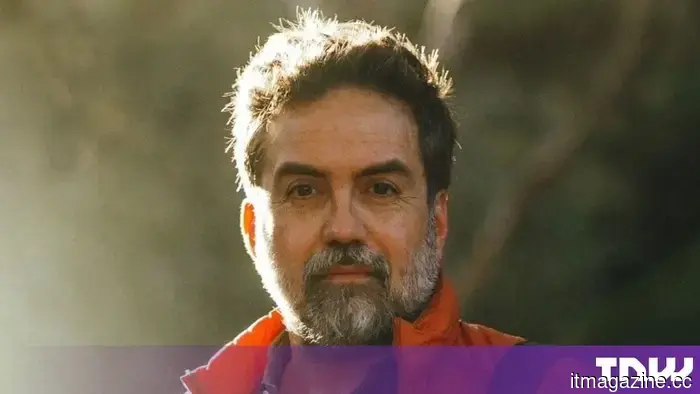 The initial witness for Meta informed the jury that the issue stemmed from Mark Zuckerberg's culture.
Arturo Béjar, a former engineer at Meta, informed an Oakland jury that the company's culture rendered safety improvements unfeasible, during a trial initiated by four states.
The initial witness for Meta informed the jury that the issue stemmed from Mark Zuckerberg's culture.
Arturo Béjar, a former engineer at Meta, informed an Oakland jury that the company's culture rendered safety improvements unfeasible, during a trial initiated by four states.
 Trump invites cryptocurrency leaders as the SEC suggests its most favorable regulations to date.
On Tuesday, the SEC suggested exemptions for tokens and introduced a conditional safe harbor. The following day, Trump welcomed crypto leaders at the White House.
Trump invites cryptocurrency leaders as the SEC suggests its most favorable regulations to date.
On Tuesday, the SEC suggested exemptions for tokens and introduced a conditional safe harbor. The following day, Trump welcomed crypto leaders at the White House.
 A professor from Berkeley wrote an op-ed discussing students who take shortcuts, but a detector marked her article.
An op-ed by a mathematics professor from UC Berkeley concerning declining standards was marked as having some AI assistance, although she claims she only utilized AI for editing purposes.
A professor from Berkeley wrote an op-ed discussing students who take shortcuts, but a detector marked her article.
An op-ed by a mathematics professor from UC Berkeley concerning declining standards was marked as having some AI assistance, although she claims she only utilized AI for editing purposes.
 La nouvelle fonction d'IA d'Avec garantit que vous ne manquerez plus jamais une échéance.
La nouvelle fonctionnalité Never Forget Anything d'Avec détecte automatiquement les délais des emails et envoie des rappels au moment où c'est nécessaire, sans besoin de configuration manuelle.
La nouvelle fonction d'IA d'Avec garantit que vous ne manquerez plus jamais une échéance.
La nouvelle fonctionnalité Never Forget Anything d'Avec détecte automatiquement les délais des emails et envoie des rappels au moment où c'est nécessaire, sans besoin de configuration manuelle.
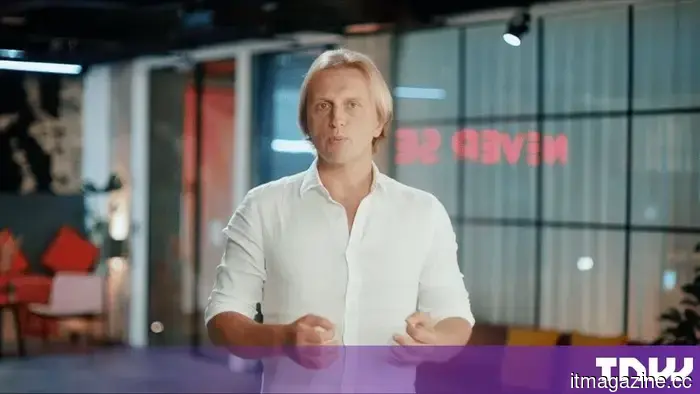 Revolut intends to allow Nik Storonsky to borrow $250 million using his own shares as collateral.
Revolut has requested that shareholders increase Nik Storonsky's borrowing limit secured by his stake from $50 million to $250 million as part of a plan referred to as Project Shasta.
Revolut intends to allow Nik Storonsky to borrow $250 million using his own shares as collateral.
Revolut has requested that shareholders increase Nik Storonsky's borrowing limit secured by his stake from $50 million to $250 million as part of a plan referred to as Project Shasta.
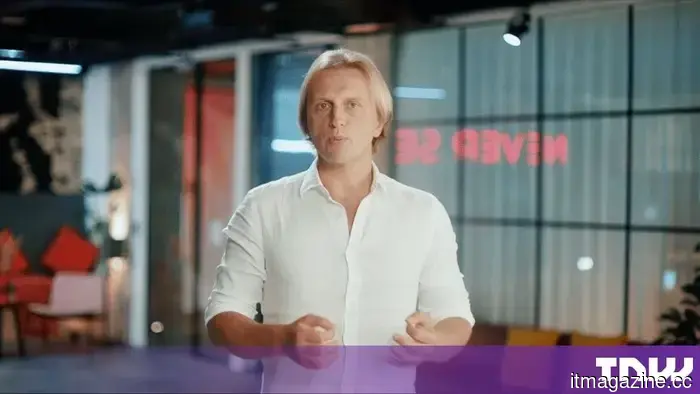 Revolut is willing to allow Nik Storonsky to borrow $250 million using his own shares as collateral.
Revolut has requested that shareholders increase Nik Storonsky’s borrowing maximum against his shareholding from $50 million to $250 million as part of a scheme referred to as Project Shasta.
Revolut is willing to allow Nik Storonsky to borrow $250 million using his own shares as collateral.
Revolut has requested that shareholders increase Nik Storonsky’s borrowing maximum against his shareholding from $50 million to $250 million as part of a scheme referred to as Project Shasta.
The founder of Unitree states that robots are approaching a 'ChatGPT moment.'
Wang Xingxing mentioned at the World Robot Conference that embodied AI is approaching a “ChatGPT moment,” estimating a timeframe of two to ten years for this development.