
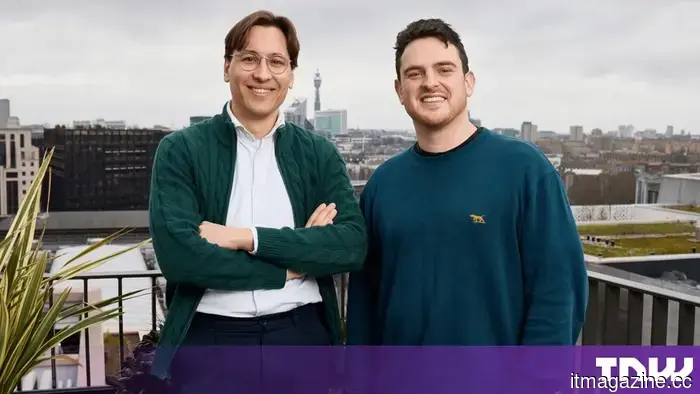
Callosum secures $100 million to reduce the costs of AI workloads, with the British government included as an investor.
Callosum has secured $100 million, just six months after emerging from stealth mode with a $10.25 million initial funding round, which included contributions from the British government. Bloomberg reported this funding, highlighting the UK’s public AI fund as a financial supporter.
The Cambridge-based firm revealed its presence in February with a $10.25 million round spearheaded by Plural, a fund established by ex-Wise executive Taavet Hinrikus, along with the government research agency ARIA and angel investors including Charlie Songhurst, Stan Boland, and John Lazar. Discussions about a significantly larger funding round, potentially reaching $100 million (approximately £75 million), were reported in May.
Callosum focuses on orchestration rather than silicon, providing software that allocates AI tasks across diverse hardware platforms such as Nvidia, AMD, Google, and more. This software directs specific parts of a task to the most suitable chip and model, rather than relying on a uniform grid of GPUs.
The company asserts that for complex tasks requiring autonomous computing, its solution offers double the accuracy, seven times the speed, and costs only a quarter of traditional GPU configurations.
The founders, Danyal Akarca and Jascha Achterberg, met while pursuing PhDs at Cambridge and have contributed to publications in Nature journals, having had past roles at Intel and Google DeepMind. They challenge the existing paradigm: “Large labs are betting that a single model will dominate,” one founder remarked at the launch. “We believe that’s incorrect.”
The involvement of the government is particularly noteworthy. In April, Callosum became the first equity investment from the UK's Sovereign AI Unit, a £500 million initiative chaired by James Wise, which was launched with support from tech secretary Liz Kendall and chancellor Rachel Reeves.
At the time, neither the size of the investment nor the equity stake was revealed, and this lack of information has attracted attention in Parliament. Six other companies mentioned in the same announcement, including Cosine, Prima Mente, Cursive, Doubleword, Twig Bio, and Odyssey, received up to a million GPU hours each on the national supercomputing infrastructure instead of cash.
Akarca noted that the decision to establish the company in Britain was influenced by the nation's wealth of talent from universities and labs like DeepMind, referring to it as the natural home for the business. Ministers have echoed this sentiment publicly, with Kendall stating at the launch that the government is “betting on Britain.”
Callosum is entering the market at a time when the cost of inference has become a major concern in the industry, rather than merely a secondary issue. While model training expenses are dominated by a few companies, the operational costs for running models impact everyone, which has put Nvidia’s software advantage under pressure from unexpected sources this year.
Additionally, Callosum is not the only UK company offering more affordable AI solutions. Velaura has raised $110 million for low-power inference chips, and the total valuation of UK AI startups has reached $256 billion, based on recent industry assessments.
The company's branding draws from neuroscience, which holds significance in this context. The corpus callosum is the collection of fibers linking the brain's two hemispheres, and the founders argue that intelligence arises from the coordination of distinct systems rather than from one large system scaling up.
Whether this engineering premise holds true is still a subject of debate. However, it is decidedly easier to secure funding in the UK for such a concept than for ambitious plans to develop cutting-edge models, given the disparity in capital between UK and American investors.
Several aspects of the funding round remain undisclosed. Bloomberg's report did not include a valuation; the complete list of investors has yet to be confirmed by the company, and it remains unclear how much of the $100 million stemmed from the Sovereign AI Unit compared to private sources.
Companies House filings are expected to clarify ownership details in the coming quarter, providing a slower but more trustworthy answer than a press release. As of this moment, Callosum had not released an official statement.
Other articles
 Revolut is willing to allow Nik Storonsky to borrow $250 million using his own shares as collateral.
Revolut has requested that shareholders increase Nik Storonsky’s borrowing maximum against his shareholding from $50 million to $250 million as part of a scheme referred to as Project Shasta.
Revolut is willing to allow Nik Storonsky to borrow $250 million using his own shares as collateral.
Revolut has requested that shareholders increase Nik Storonsky’s borrowing maximum against his shareholding from $50 million to $250 million as part of a scheme referred to as Project Shasta.
 Meta, Google, TikTok, and LinkedIn are now subject to an Australian news law, regardless of whether they distribute news content or not.
Australia has implemented a 2.5% levy on the local advertising revenue of Meta, Google, TikTok, and LinkedIn, unless they reach agreements with eight news organizations.
Meta, Google, TikTok, and LinkedIn are now subject to an Australian news law, regardless of whether they distribute news content or not.
Australia has implemented a 2.5% levy on the local advertising revenue of Meta, Google, TikTok, and LinkedIn, unless they reach agreements with eight news organizations.
 Skanska has secured a $1.2 billion contract to construct four data centers in the United States for an undisclosed client.
Skanska has secured a $1.2 billion agreement for the construction of four data centers in the southeastern United States, covering a total area of 75,000 square meters, with the project scheduled for completion by the third quarter of 2028.
Skanska has secured a $1.2 billion contract to construct four data centers in the United States for an undisclosed client.
Skanska has secured a $1.2 billion agreement for the construction of four data centers in the southeastern United States, covering a total area of 75,000 square meters, with the project scheduled for completion by the third quarter of 2028.
 China's robotic traffic police are capable of nearly everything except for pulling you over.
In May, Hangzhou deployed 15 humanoid robots to manage traffic. They help direct vehicles and identify violations, but the enforcement remains the responsibility of human officers.
China's robotic traffic police are capable of nearly everything except for pulling you over.
In May, Hangzhou deployed 15 humanoid robots to manage traffic. They help direct vehicles and identify violations, but the enforcement remains the responsibility of human officers.
 Big Tech is actively working to promote the construction of its data centers.
According to Bloomberg, local opposition has delayed $130 billion worth of US data center projects over a span of three months. Big Tech is now reaching out to the communities it requires, but the outcomes have been varied.
Big Tech is actively working to promote the construction of its data centers.
According to Bloomberg, local opposition has delayed $130 billion worth of US data center projects over a span of three months. Big Tech is now reaching out to the communities it requires, but the outcomes have been varied.
 La nouvelle fonction d'IA d'Avec garantit que vous ne manquerez plus jamais une échéance.
La nouvelle fonctionnalité Never Forget Anything d'Avec détecte automatiquement les délais des emails et envoie des rappels au moment où c'est nécessaire, sans besoin de configuration manuelle.
La nouvelle fonction d'IA d'Avec garantit que vous ne manquerez plus jamais une échéance.
La nouvelle fonctionnalité Never Forget Anything d'Avec détecte automatiquement les délais des emails et envoie des rappels au moment où c'est nécessaire, sans besoin de configuration manuelle.
Callosum secures $100 million to reduce the costs of AI workloads, with the British government included as an investor.
The Cambridge-based startup Callosum has secured $100 million for software designed to distribute AI workloads across mixed chips, with support from the UK’s public AI fund among its investors.