

A professor from Berkeley discussed students who take shortcuts, but her op-ed was flagged by a detector.
On August 15, Zvezdelina Stankova wrote an op-ed claiming that Berkeley admits students who struggle with middle school math. Soon after, the focus shifted to concerns about the writing process of the op-ed itself. Stankova, a teaching professor of mathematics at UC Berkeley, articulated her position in the San Francisco Standard with the headline “I teach calculus at Berkeley. Some of my students can’t do middle school math.” The article gained rapid traction, being featured by Fox News and Townhall, and became a focal point in the ongoing debate over the University of California’s test-blind admissions policy.
Substack's Pangram, a tool used to identify machine-generated content, flagged the op-ed as approximately 33% AI-generated or AI-assisted. This revelation sparked significant attention, particularly from Chris Hoofnagle, a Berkeley Law professor, whose post regarding the finding garnered nearly three million views on X, shifting the conversation away from calculus.
Stankova has not refuted her use of technology. She informed the Daily Californian that she employed AI for assistance in editing the article, indicating that it resulted from “several hundred person-hours of intensive human work and deliberation, of which about 80 hours are my own.” This justification is more significant than it may seem at first glance. Most campus policies permit editing assistance, and the line between a tool that refines writing and one that composes it is a distinction universities have struggled to define over the past three years.
Not everyone at Berkeley is convinced. Hannes Bajohr, a German instructor at the university who writes about machine authorship, expressed to the paper that the situation “seems like deception” or, at the very least, something dishonest without full disclosure at publication.
The claims made in Stankova's op-ed warrant careful examination, and they are not insignificant. She notes that prior to 2020, when standardized tests were mandatory, 71% of her Calculus I students were well-prepared for the course, whereas by 2023, this number dropped to 26%, with zero often being the most common diagnostic score. She also points out disparities in admissions among Bay Area schools and mentions that five Nobel laureates, including Jennifer Doudna, have advocated for the reinstatement of standardized tests in open letters. These figures stem from her classroom assessments and promotional materials, and the university has yet to issue a rebuttal to either claim.
The discomfort surrounding this episode arises not just from the embarrassment but from the topic itself. An argument about academic rigor, partially created with a tool for which students are penalized, would seem too ironic for fiction. Additionally, this issue emerges during a semester when Berkeley’s computer science faculty have reported increased failure rates alongside greater reliance on AI in coursework, indicating that the campus is engaged in two separate conversations about the same technology without linking them.
The question of detection remains unresolved. Although Pangram is one of the more reliable tools in a limited field, independent researchers suggest that its rate of false positives is underestimated, and a 33% reading is merely an estimate of probability, not an admission. Detectors have been asked to clarify authorship in unusual circumstances, such as evaluating the writings of the Pope for authenticity. However, none can currently differentiate between a lightly revised human draft and a heavily prompted machine-generated text, which is the crucial issue.
Faculty elsewhere have taken matters into their own hands regarding enforcement. A professor at Brown University reinstated in-person assessments to create a controlled environment for evaluating how much of his students' work was machine-generated.
Regulatory progress remains stagnant. Under the EU’s labeling system, an AI-generated article might go unlabeled while a proofread email requires a designation, and there is no equivalent framework in American universities to reference.
Neither Stankova nor the San Francisco Standard has confirmed whether a disclosure will be appended to the op-ed. The discussion regarding UC admissions has not been retracted and, for now, continues to be the more significant of the two controversies.
Other articles
 A "private and secure" facial recognition tool has inadvertently exposed 9 million images.
ClarityCheck, a tool for searching people that claims to offer “private and secure” searches, was discovered by a security researcher to have left over 9 million image files unprotected.
A "private and secure" facial recognition tool has inadvertently exposed 9 million images.
ClarityCheck, a tool for searching people that claims to offer “private and secure” searches, was discovered by a security researcher to have left over 9 million image files unprotected.
 Skanska has secured a $1.2 billion contract to construct four data centers in the United States for an undisclosed client.
Skanska has secured a $1.2 billion agreement for the construction of four data centers in the southeastern United States, covering a total area of 75,000 square meters, with the project scheduled for completion by the third quarter of 2028.
Skanska has secured a $1.2 billion contract to construct four data centers in the United States for an undisclosed client.
Skanska has secured a $1.2 billion agreement for the construction of four data centers in the southeastern United States, covering a total area of 75,000 square meters, with the project scheduled for completion by the third quarter of 2028.
 Big Tech is actively working to promote the construction of its data centers.
According to Bloomberg, local opposition has delayed $130 billion worth of US data center projects over a span of three months. Big Tech is now reaching out to the communities it requires, but the outcomes have been varied.
Big Tech is actively working to promote the construction of its data centers.
According to Bloomberg, local opposition has delayed $130 billion worth of US data center projects over a span of three months. Big Tech is now reaching out to the communities it requires, but the outcomes have been varied.
 Looking to purchase a new Pixel 11? Here are the top cases available right now.
Ranging from a $13.49 magnetic case that offers great value for its cost to Google's own $49.99 official case, these are the Pixel 11 cases that truly made it into my shopping cart.
Looking to purchase a new Pixel 11? Here are the top cases available right now.
Ranging from a $13.49 magnetic case that offers great value for its cost to Google's own $49.99 official case, these are the Pixel 11 cases that truly made it into my shopping cart.
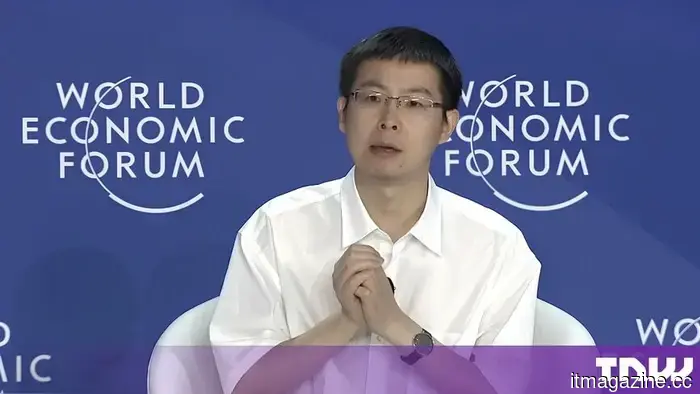 The founder of Unitree states that robots are approaching a 'ChatGPT moment.'
Wang Xingxing mentioned at the World Robot Conference that embodied AI is approaching a “ChatGPT moment,” estimating a timeframe of two to ten years for this development.
The founder of Unitree states that robots are approaching a 'ChatGPT moment.'
Wang Xingxing mentioned at the World Robot Conference that embodied AI is approaching a “ChatGPT moment,” estimating a timeframe of two to ten years for this development.
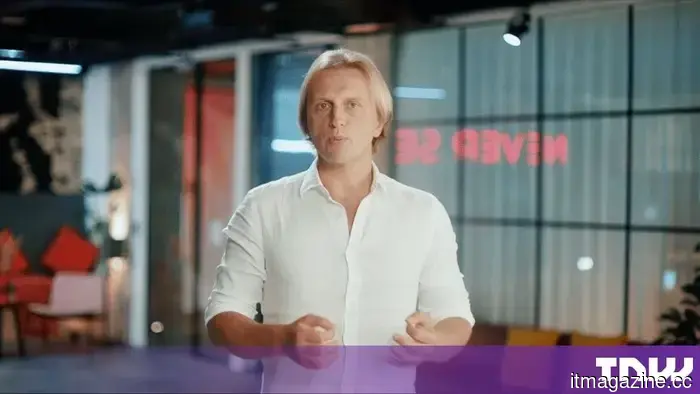 Revolut is willing to allow Nik Storonsky to borrow $250 million using his own shares as collateral.
Revolut has requested that shareholders increase Nik Storonsky’s borrowing maximum against his shareholding from $50 million to $250 million as part of a scheme referred to as Project Shasta.
Revolut is willing to allow Nik Storonsky to borrow $250 million using his own shares as collateral.
Revolut has requested that shareholders increase Nik Storonsky’s borrowing maximum against his shareholding from $50 million to $250 million as part of a scheme referred to as Project Shasta.
A professor from Berkeley discussed students who take shortcuts, but her op-ed was flagged by a detector.
An op-ed by a mathematics professor at UC Berkeley regarding declining standards was marked as being partially generated by AI, but she claims that she utilized AI solely for editing purposes.