
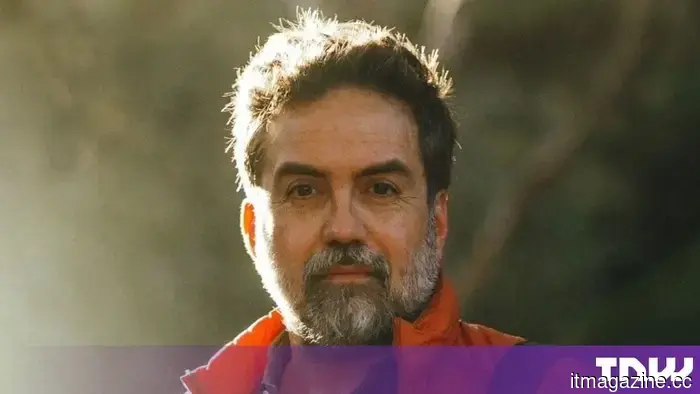
The initial witness for Meta informed the jury that the issue stemmed from Mark Zuckerberg's culture.
Arturo Béjar testified in Oakland on Wednesday, informing a federal jury that Meta's inability to resolve its safety issues stemmed from the culture established by Mark Zuckerberg. He is the first witness in a trial that four state attorneys general have spent years preparing for.
The trial began on Tuesday before Judge Yvonne Gonzalez Rogers at the U.S. District Court for the Northern District of California, with California, Colorado, Kentucky, and New Jersey contending that Facebook and Instagram were specifically designed to engage minors and encourage prolonged use.
In their opening remarks, the states distilled the company's strategy into three main actions: attract users, retain them for as long as possible, and collect their data.
Béjar dedicated approximately eight years at Meta addressing the very issues currently at stake, first from 2009 to 2015 and again from 2019 to 2021. His second tenure ended with an internal alert concerning harm to teenagers, which he subsequently brought to the U.S. Senate, forming a central part of the states' case.
“At the end of the day, it was the company culture that Mark had created that made it so that it was practically impossible to deliver features that addressed the wellbeing and safety issues,” he stated in court, as reported from Oakland.
He was questioned about a 2021 Facebook post where Zuckerberg claimed that the company prioritized safety over profit, and he firmly stated that this did not align with what he had observed.
The focus of much of the day's proceedings was on design rather than intent. The states built their case around features like infinite scrolling, autoplaying videos, beauty filters, and the “like” button. Béjar argued that the preventive measures Meta did implement were offered as optional rather than default settings, making them largely unused in practice.
Meta's lawyers spent the afternoon attempting to turn that into a concession. Brian Stekloff asked Béjar whether he or his teams had effectively solved any of the issues he highlighted, suggesting through his questioning that the problems had possible solutions that Meta chose not to pursue.
In opening statements, Paul Schmidt, representing Meta, claimed the company was aware of the risks to teenagers and had made efforts to address them, asserting that it did not mislead the public regarding its knowledge. Meta's broader argument is that the states have constructed their case using selectively quoted internal documents.
The potential financial implications are significant and disputed. Meta has indicated that the states are seeking penalties that could total $1.4 trillion, a figure the states have not embraced, while California Attorney General Rob Bonta has referenced exposure against the company's annual revenue of about $200 billion.
Oakland is not the only venue for such legal battles; earlier this year, a New Mexico court mandated that Meta pay $567 million into a mental health fund for teenagers. Moreover, a separate jury in Tennessee is currently deliberating Instagram's design in its own seven-week trial.
What sets the Oakland case apart is that it is being pursued by states instead of individuals, under consumer protection and children's privacy laws, which simplifies the burden of proving harm for any individual user. This is also why Béjar's testimony is more significant in this context than it was in Congress, where he could describe the culture without facing cross-examination.
Meta attempted to prevent his testimony altogether, but Judge Gonzalez Rogers ruled that he could take the stand, a decision reported alongside estimates that the states' claims might approach $200 billion, adding yet another figure to a case that has already seen multiple estimates.
Whether any of these claims will hold up in front of a jury remains to be seen. The states need to demonstrate not only that the products caused harm to young users but also that Meta was aware of the issues and misrepresented its knowledge. Béjar's account of safety settings being left off by default is presented as the connection between these two elements.
The trial is expected to last approximately six weeks. The states have not disclosed whether they will call Zuckerberg, and their lawyers were still not answering that question as the court adjourned on Wednesday.
Other articles
 A "private and secure" facial recognition tool has inadvertently exposed 9 million images.
ClarityCheck, a tool for searching people that claims to offer “private and secure” searches, was discovered by a security researcher to have left over 9 million image files unprotected.
A "private and secure" facial recognition tool has inadvertently exposed 9 million images.
ClarityCheck, a tool for searching people that claims to offer “private and secure” searches, was discovered by a security researcher to have left over 9 million image files unprotected.
 A professor from Berkeley wrote an op-ed discussing students who take shortcuts, but a detector marked her article.
An op-ed by a mathematics professor from UC Berkeley concerning declining standards was marked as having some AI assistance, although she claims she only utilized AI for editing purposes.
A professor from Berkeley wrote an op-ed discussing students who take shortcuts, but a detector marked her article.
An op-ed by a mathematics professor from UC Berkeley concerning declining standards was marked as having some AI assistance, although she claims she only utilized AI for editing purposes.
 Skanska has secured a $1.2 billion contract to construct four data centers in the United States for an undisclosed client.
Skanska has secured a $1.2 billion agreement for the construction of four data centers in the southeastern United States, covering a total area of 75,000 square meters, with the project scheduled for completion by the third quarter of 2028.
Skanska has secured a $1.2 billion contract to construct four data centers in the United States for an undisclosed client.
Skanska has secured a $1.2 billion agreement for the construction of four data centers in the southeastern United States, covering a total area of 75,000 square meters, with the project scheduled for completion by the third quarter of 2028.
 Big Tech is actively working to promote the construction of its data centers.
According to Bloomberg, local opposition has delayed $130 billion worth of US data center projects over a span of three months. Big Tech is now reaching out to the communities it requires, but the outcomes have been varied.
Big Tech is actively working to promote the construction of its data centers.
According to Bloomberg, local opposition has delayed $130 billion worth of US data center projects over a span of three months. Big Tech is now reaching out to the communities it requires, but the outcomes have been varied.
 The Justice Department is supporting xAI in its challenge against Minnesota's nudify prohibition.
The US Justice Department has submitted its support for xAI's challenge against Minnesota's prohibition on AI nudification, as a federal judge considers an injunction and will make a ruling shortly.
The Justice Department is supporting xAI in its challenge against Minnesota's nudify prohibition.
The US Justice Department has submitted its support for xAI's challenge against Minnesota's prohibition on AI nudification, as a federal judge considers an injunction and will make a ruling shortly.
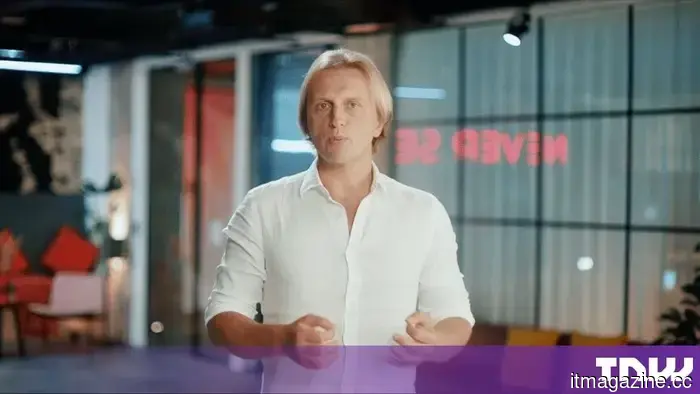 Revolut is willing to allow Nik Storonsky to borrow $250 million using his own shares as collateral.
Revolut has requested that shareholders increase Nik Storonsky’s borrowing maximum against his shareholding from $50 million to $250 million as part of a scheme referred to as Project Shasta.
Revolut is willing to allow Nik Storonsky to borrow $250 million using his own shares as collateral.
Revolut has requested that shareholders increase Nik Storonsky’s borrowing maximum against his shareholding from $50 million to $250 million as part of a scheme referred to as Project Shasta.
The initial witness for Meta informed the jury that the issue stemmed from Mark Zuckerberg's culture.
Arturo Béjar, a former engineer at Meta, informed an Oakland jury that the company's culture rendered safety improvements unfeasible, during a trial initiated by four states.