
Milan's Domyn secures over $1 billion in what is Europe's largest funding round for AI, primarily through debt financing.
Domyn has secured over $1 billion, positioning itself among the largest funding rounds ever reported for a European AI company, with roughly only ten percent of this amount being equity. The Milan-based firm acquired around $1.1 billion in total, divided into approximately 10% equity and 90% debt, as reported by Sifted. This funding structure is significant because it reflects the capital needed for purchasing hardware rather than employing researchers.
Mistral followed a similar model, albeit on a smaller scale, by obtaining $830 million from seven banks to construct its data center near Paris. European AI firms have learned that lenders are willing to finance GPU-filled buildings under conditions that no venture capital fund would provide for a model.
Domyn is developing a supercomputer known as Colosseum in southern Italy, built with Nvidia and Vertiv components. This system consists of 80 Nvidia GB200 NVL72 units and nearly 6,000 Grace Blackwell chips, consuming around 7 MW and boasting a performance of 115 exaflops, designed specifically for models exceeding a trillion parameters.
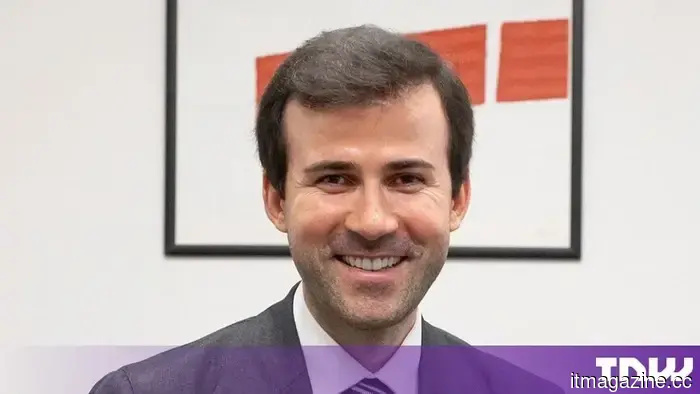
Founded in Milan in 2016 as iGenius by Uljan Sharka, who remains at the helm, it was rebranded as Domyn last year. The company targets banks, insurance firms, pharmaceutical companies, defense contractors, and governments, arguing these clients prefer owning the model to renting access to someone else's.
“We identified an opportunity not just to enable regulated industries to embrace AI, but to actually allow them to own and become AI companies in their respective markets,” Sharka stated to Semafor in April. Customers are granted access to the codebase and can pre-train using their own data, with models distributed via Microsoft’s Foundry platform.
Domyn has released two models: a smaller one designed for general enterprise use and a larger mission-critical system benchmarked against GPT-4o and Claude 3.5 Sonnet. These comparisons are company-derived and have not been independently validated.
Domyn's ambitions are considerable. The company aims to invest $10 billion over three years and generate €1 billion in revenue during the same timeframe, starting from a base projected in the tens of millions of annual recurring revenue. Sharka has been forthright about the scale of the vision, stating, “$1 trillion is the new unicorn right now. If you aren’t discussing $1 trillion, you’re out of touch.”
The timing aligns with a broader European initiative that has seen more announcements than actual deliveries. Brussels has initiated bidding for seven AI gigafactories through a €30 billion program, with French consortia submitting a $10 billion bid for one site. However, this initiative has faced delays that have driven away potential partners.
Italy has pursued its path, introducing a €1 billion national AI fund along with penalties for misuse as part of the legislation. Domyn stands out as the most notable private beneficiary of this initiative and has engaged with Nvidia and the Abu Dhabi group G42 for the Italian supercomputer project.
Skepticism regarding the broader European effort is prevalent and often well-founded. Renting capacity via a GPU-as-a-service model may create a facade of sovereignty rather than delivering genuine sovereignty, making Domyn's choice to own the hardware more compelling than the headline figures.
Owning the equipment also carries the burden of maintenance. A supercomputer depreciates according to timelines set in Santa Clara, and the lifespan of a Blackwell rack is typically shorter than the duration of most infrastructure debt.
Several details regarding the funding round remain undisclosed, including the list of investors, valuation, identities of lenders, and debt terms; Domyn has not released an announcement on its own.
This last point is crucial. Debt-financed computing relies on the assumption that the machines will be sufficiently utilized to meet the loan obligations, and the repayment terms provide insight into the company’s expectations regarding demand. Domyn last raised funds in 2024, securing around €650 million in project financing at an estimated €1.7 billion valuation after a €70 million Series A. The new round surpasses its entire historical fundraising and has been secured based on the machine rather than market conditions.
Other articles
 Two senators have set a deadline of September 1 for TikTok to clarify its safety testing procedures.
Two senators have set a deadline of 1 September for TikTok to respond to 13 questions regarding the safety experiment conducted on 15 million users in the US.
Two senators have set a deadline of September 1 for TikTok to clarify its safety testing procedures.
Two senators have set a deadline of 1 September for TikTok to respond to 13 questions regarding the safety experiment conducted on 15 million users in the US.
 To experiment with Android 17's new feature aimed at reducing mindless scrolling, you'll require a Pixel 11.
Google's latest Pause Point feature introduces a 10-second delay before launching apps you’ve flagged as distracting, although this Digital Wellbeing tool is currently exclusive to the Pixel 11 series.
To experiment with Android 17's new feature aimed at reducing mindless scrolling, you'll require a Pixel 11.
Google's latest Pause Point feature introduces a 10-second delay before launching apps you’ve flagged as distracting, although this Digital Wellbeing tool is currently exclusive to the Pixel 11 series.
 Alibaba's profits declined by 75% as its quarterly expenditures on AI reached $10 billion.
Alibaba's expenditure on AI reached $9.98 billion in the June quarter, while profits decreased by 75%. Meanwhile, the cloud division, which incurs costs, achieved a segment profit increase of 133%.
Alibaba's profits declined by 75% as its quarterly expenditures on AI reached $10 billion.
Alibaba's expenditure on AI reached $9.98 billion in the June quarter, while profits decreased by 75%. Meanwhile, the cloud division, which incurs costs, achieved a segment profit increase of 133%.
 Baidu's Apollo Go has launched on Uber in Dubai, and operates without a safety driver.
Uber introduced Baidu's Apollo Go in Dubai without a safety driver, just one day following the launch of its first European autonomous vehicle rides in Zagreb, where a safety driver was present.
Baidu's Apollo Go has launched on Uber in Dubai, and operates without a safety driver.
Uber introduced Baidu's Apollo Go in Dubai without a safety driver, just one day following the launch of its first European autonomous vehicle rides in Zagreb, where a safety driver was present.
 Alibaba's profit dropped by 75% as its quarterly expenditures on AI reached $10 billion.
Alibaba's expenditure on AI reached $9.98 billion in the June quarter, while profits declined by 75%. However, the cloud division, for which it incurs costs, achieved a segment profit increase of 133%.
Alibaba's profit dropped by 75% as its quarterly expenditures on AI reached $10 billion.
Alibaba's expenditure on AI reached $9.98 billion in the June quarter, while profits declined by 75%. However, the cloud division, for which it incurs costs, achieved a segment profit increase of 133%.
 A data center rack utilizing living neurons has recently begun operation in Singapore.
In Singapore, NUS, DayOne, and Cortical Labs have developed a 20-unit rack of biological computers. However, the assertion regarding its efficiency is made without any accompanying figures.
A data center rack utilizing living neurons has recently begun operation in Singapore.
In Singapore, NUS, DayOne, and Cortical Labs have developed a 20-unit rack of biological computers. However, the assertion regarding its efficiency is made without any accompanying figures.
Milan's Domyn secures over $1 billion in what is Europe's largest funding round for AI, primarily through debt financing.
Domyn, located in Milan, has secured approximately $1.1 billion, with about 90% of that being debt, to enhance the Colosseum supercomputer it developed in collaboration with Nvidia in southern Italy.