
Two senators have set a deadline of 1 September for TikTok to clarify its safety evaluation.
Two U.S. senators have contacted TikTok regarding an experiment that disabled a safety feature for around 15 million American users. Their letter spans four pages and includes 13 inquiries, with a deadline for a response set for September 1. The senators described the decision to conduct this test as “depraved.”
Republican Marsha Blackburn from Tennessee and Democrat Richard Blumenthal of Connecticut sent the letter on Wednesday, according to Bloomberg. The correspondence is directed to TikTok CEO Shou Chew and Adam Presser, who oversees the company’s U.S. operations. The two senators previously co-authored the Kids Online Safety Act, making their request significant as they draft legislation aimed at regulating the company.
What the senators are seeking
The senators’ questions are detailed. They demand the names of every employee informed about the experiment, an explanation for allowing minors to participate, and when the executives became aware of the situation. They also request a “complete, unredacted version” of the internal document detailing the experiment.
One request extends beyond this specific safety test. The senators have asked for a comprehensive list of every algorithmic experiment conducted by TikTok in the United States where a safety feature was “withheld, disabled, delayed, or reduced.” They seek the number of users affected in each instance, as well as how many of these were minors.
The letter begins by referencing “disgusting new reports that TikTok knowingly withheld a critical safety measure for millions of American users,” including children. The test aimed to determine if prioritizing user safety would impact the company’s profits. The alarming findings “raise serious questions about TikTok’s repeated assurances to Congress, parents, and the American public” regarding its commitment to the welfare of young people over profits, the senators stated.
Background on the document
The experiment came to light through a confidential TikTok document from 2023. Attorneys disclosed it during litigation against major social media companies, and a court had sealed it. Bloomberg Businessweek reported on its contents on August 4, revealing that TikTok intentionally withheld a safety fix from 15 million U.S. users.
The document indicates that TikTok deactivated an algorithmic safeguard for 10% of its U.S. users, designating them as a control group. This safeguard was meant to disrupt echo chambers of harmful content. At that time, 10% represented about 15 million individuals, including Chase Nasca, a 16-year-old from Bayport, New York, who was randomly selected on January 25, 2022, and died by suicide within a month.
The document explicitly states the rationale behind the differential treatment of his account: “TikTok’s filter bubble prevention strategies did not take effect on this user by design.” It characterizes the choice as “a delicate balance across safety and the ability to measure impact on DAU (daily active users) and core metrics.”
TikTok's response
TikTok did not provide a comment regarding the letter but issued a statement during the Businessweek investigation. A spokesperson stated that the company is “deeply committed to the safety and well-being of users,” especially teenagers, adding, “Our hearts break for any family that experienced a tragic loss.”
The company highlighted its ongoing investments in Trust and Safety, which include detection systems and enforcement teams that remove content violating community guidelines.
The senators argue that the timing of the experiment exacerbates the situation. Since October 2021, Congress has expressed concerns about algorithms steering young users toward harmful content, and the experiment commenced after those concerns were raised. Thus, TikTok was aware of how its recommendation systems impacted children, they pointed out.
Connections to legislative efforts
Blackburn and Blumenthal are advocating for expedited progress on their bill. The Kids Online Safety Act would require platforms to prioritize child safety over profit, having previously failed in the House in 2024 but returning in the current session. Following the August 4 publication of the Businessweek article, the Senate Commerce Committee voted to advance the revived version.
The Senate bill includes a duty-of-care provision, mandating companies to take reasonable precautions to prevent mental health harms to minors, such as anxiety, depression, and compulsive usage. Blackburn contends that this provision would deter future experiments, as safety would need to be integrated from the outset.
The House took a different approach, with its children’s online safety package passing in June and also addressing AI chatbots and video games, but removing the duty-of-care provision due to First Amendment concerns. The same issue is active in courts, where a California judge recently issued a First Amendment ruling on addictive feeds.
Florida Republican Gus Bilirakis, who backed the House bill, has a notable history in this matter. During a March 2023 hearing, shortly after the confidential document was drafted, he questioned Chew about Chase Nasca, asserting that his technology was contributing to deaths. Chew responded that the company takes such issues very seriously, mentioning mental health resources offered to
Other articles
 Baidu's Apollo Go has launched on Uber in Dubai, and operates without a safety driver.
Uber introduced Baidu's Apollo Go in Dubai without a safety driver, just one day following the launch of its first European autonomous vehicle rides in Zagreb, where a safety driver was present.
Baidu's Apollo Go has launched on Uber in Dubai, and operates without a safety driver.
Uber introduced Baidu's Apollo Go in Dubai without a safety driver, just one day following the launch of its first European autonomous vehicle rides in Zagreb, where a safety driver was present.
 The Google Pixel 11 will allow you to tailor the vibration settings of your phone.
Google's concealed vibration options are finally available. The Pixel 11 series allows you to choose distinct vibrations for ringtones, notifications, and even individual contacts.
The Google Pixel 11 will allow you to tailor the vibration settings of your phone.
Google's concealed vibration options are finally available. The Pixel 11 series allows you to choose distinct vibrations for ringtones, notifications, and even individual contacts.
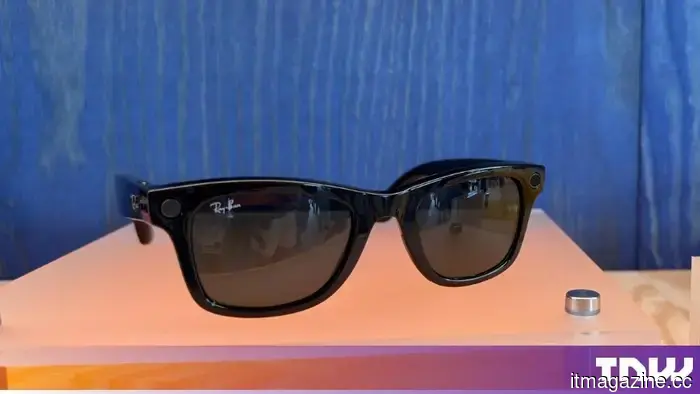 Cinemas, schools, and ICE are all prohibiting the use of Meta smart glasses.
Cinemas, schools in the US, and ICE are all placing limitations on Meta smart glasses, each for reasons that are unrelated. The rule concerning cinemas has been in place since 2014.
Cinemas, schools, and ICE are all prohibiting the use of Meta smart glasses.
Cinemas, schools in the US, and ICE are all placing limitations on Meta smart glasses, each for reasons that are unrelated. The rule concerning cinemas has been in place since 2014.
 Octopus Charge consolidates 210,000 US charging stations into a single app, excluding Tesla, Ionna, and Electrify America.
Octopus Energy has introduced Octopus Charge in North America, featuring 210,000 chargers. In Europe, the service boasts 1.5 million chargers, which is attributed to regulatory requirements.
Octopus Charge consolidates 210,000 US charging stations into a single app, excluding Tesla, Ionna, and Electrify America.
Octopus Energy has introduced Octopus Charge in North America, featuring 210,000 chargers. In Europe, the service boasts 1.5 million chargers, which is attributed to regulatory requirements.
 Two senators have set a deadline of September 1 for TikTok to clarify its safety testing procedures.
Two senators have set a deadline of 1 September for TikTok to respond to 13 questions regarding the safety experiment conducted on 15 million users in the US.
Two senators have set a deadline of September 1 for TikTok to clarify its safety testing procedures.
Two senators have set a deadline of 1 September for TikTok to respond to 13 questions regarding the safety experiment conducted on 15 million users in the US.
 Waymo developed its own chip specifically for robotaxis and made its list of suppliers public.
Waymo has released details about its robotaxi computing architecture, which includes a custom 5nm chip and identifies its seven suppliers. Nvidia and AMD remain included in this list.
Waymo developed its own chip specifically for robotaxis and made its list of suppliers public.
Waymo has released details about its robotaxi computing architecture, which includes a custom 5nm chip and identifies its seven suppliers. Nvidia and AMD remain included in this list.
Two senators have set a deadline of 1 September for TikTok to clarify its safety evaluation.
Two senators set a deadline of 1 September for TikTok to respond to 13 inquiries regarding the safety experiment conducted on 15 million users in the United States.