

A data center rack powered by living neurons is now functional in Singapore.
NUS Medicine, data center operator DayOne, and Melbourne’s Cortical Labs have launched a prototype for a biological data center in Singapore, consisting of a 20-unit rack of neuron-powered CL1 computers. However, the efficiency claims associated with this project lack published data.
A setup of computers that operates using living human neurons has been activated in Singapore. On 6 August, NUS Medicine, DayOne, and Cortical Labs presented the prototype to approximately 80 attendees.
The hardware comprises 20 CL1 units, which the collaborators claim to be the first biologically integrated server rack functioning independently anywhere in the world. The neurons utilized are derived from stem cells and cultured at the NUS Life Sciences Institute.
The main argument for this technology revolves around electricity usage. Biological computing is marketed as a means to enhance AI capabilities while consuming significantly less power than traditional silicon servers. Yet, the announcement does not provide any figures to substantiate these claims. According to published specifications from Cortical Labs, a single CL1 consumes between 850 and 1,000 watts, which would result in this rack drawing up to 20 kilowatts.
This power consumption is typical for conventional data center racks, primarily because the energy is used to maintain the cells rather than for computation, which differs from problems addressed by startups in other areas. The efficiency is attributed to the neurons, but not to the surrounding hardware just yet. Switzerland’s FinalSpark, operating a remote setup with 16 brain organoids in Vevey, claims its biological processors utilize about a million times less energy than digital chips.
These assertions pertain to the cells performing the computing tasks. The incubators, pumps, and temperature controls crucial for their survival impact the electricity costs.
In contrast, Europe is advancing in silicon technology. The Netherlands is developing a neuromorphic computing hub focused on chips that mimic neurons without requiring sustenance.
Cortical Labs is determined to attract customers rather than merely publish research. Founder Hon Weng Chong emphasizes that the prototype “shifts the conversation from research to commercial application,” identifying areas such as drug discovery, humanoid robotics, cybersecurity, and fraud detection as potential applications for the technology.
A biological limitation exists, as the life support system of the CL1 can sustain its neurons for up to six months, necessitating a maintenance schedule that typical silicon racks do not require.
The critical measurement needed would be watts per useful task, which remains unpublished. Meanwhile, investors continue to invest in brain-inspired technologies that solely rely on electricity.
Other articles
 Data indicates that Tesla's robotaxis in Austin are now completely autonomous.
All 170 Tesla robotaxi rides monitored in Austin over a two-week period operated without supervision. Just two days prior, a passenger recorded one navigating past bollards.
Data indicates that Tesla's robotaxis in Austin are now completely autonomous.
All 170 Tesla robotaxi rides monitored in Austin over a two-week period operated without supervision. Just two days prior, a passenger recorded one navigating past bollards.
 Milan's Domyn secures over $1 billion in the largest AI funding round in Europe, primarily through debt.
Domyn, based in Milan, has secured approximately $1.1 billion, with around 90% of that amount being debt, to enhance the Colosseum supercomputer it developed in collaboration with Nvidia in southern Italy.
Milan's Domyn secures over $1 billion in the largest AI funding round in Europe, primarily through debt.
Domyn, based in Milan, has secured approximately $1.1 billion, with around 90% of that amount being debt, to enhance the Colosseum supercomputer it developed in collaboration with Nvidia in southern Italy.
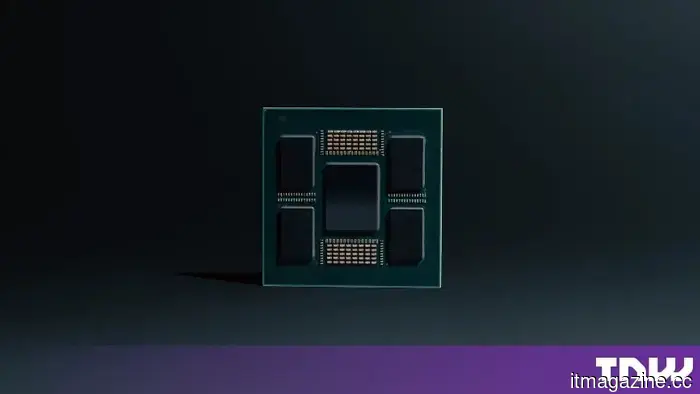 Waymo developed its own chip specifically for robotaxis and made its list of suppliers public.
Waymo has released details about its robotaxi computing architecture, which includes a custom 5nm chip and identifies its seven suppliers. Nvidia and AMD remain included in this list.
Waymo developed its own chip specifically for robotaxis and made its list of suppliers public.
Waymo has released details about its robotaxi computing architecture, which includes a custom 5nm chip and identifies its seven suppliers. Nvidia and AMD remain included in this list.
 Sony REON Pocket Pro Plus review: Tranquil personal cooling is a delight, but it comes at a higher cost.
Sony's REON Pocket Pro aims to substitute neck fans with thermoelectric cooling. It's discreet, efficient, and effectively provides personal cooling; however, its price is somewhat elevated.
Sony REON Pocket Pro Plus review: Tranquil personal cooling is a delight, but it comes at a higher cost.
Sony's REON Pocket Pro aims to substitute neck fans with thermoelectric cooling. It's discreet, efficient, and effectively provides personal cooling; however, its price is somewhat elevated.
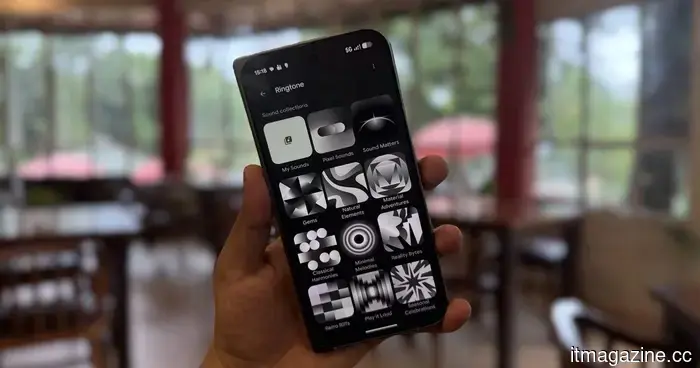 The Google Pixel 11 will allow you to tailor the vibration settings of your phone.
Google's concealed vibration options are finally available. The Pixel 11 series allows you to choose distinct vibrations for ringtones, notifications, and even individual contacts.
The Google Pixel 11 will allow you to tailor the vibration settings of your phone.
Google's concealed vibration options are finally available. The Pixel 11 series allows you to choose distinct vibrations for ringtones, notifications, and even individual contacts.
 Cinemas, educational institutions, and ICE are all prohibiting Meta smart glasses.
Cinemas, US educational institutions, and ICE are all imposing limitations on Meta smart glasses, each for reasons that are unrelated. The regulation in cinemas goes back to 2014.
Cinemas, educational institutions, and ICE are all prohibiting Meta smart glasses.
Cinemas, US educational institutions, and ICE are all imposing limitations on Meta smart glasses, each for reasons that are unrelated. The regulation in cinemas goes back to 2014.
A data center rack powered by living neurons is now functional in Singapore.
In Singapore, NUS, DayOne, and Cortical Labs have developed a 20-unit rack of biological computers. However, the assertion of its efficiency is made without any accompanying figures.