
Two senators have set a deadline of September 1 for TikTok to clarify its safety testing procedures.
Two U.S. senators have reached out to TikTok regarding an experiment that disabled a safety feature for approximately 15 million American users. Their letter spans four pages and includes 13 questions, demanding a response by September 1. The senators described the decision to conduct the test as “depraved.”
The letter was sent on Wednesday by Republican Marsha Blackburn of Tennessee and Democrat Richard Blumenthal of Connecticut, as reported by Bloomberg. It is directed to TikTok CEO Shou Chew and Adam Presser, who oversees the company’s U.S. operations. Both senators co-authored the Kids Online Safety Act, which makes their request significant as it comes from individuals involved in drafting legislation intended to regulate the company.
The senators' inquiries are precise. They seek the names of all employees informed about the experiment, an explanation for allowing minors to participate, and details on when executives became aware of the situation. They also request a “complete, unredacted version” of the internal document that outlines the experiment.
One of the requests goes further, asking for a list of all algorithmic experiments TikTok has conducted in the U.S. where it has “withheld, disabled, delayed, or reduced a safety feature,” along with the number of users affected in each case and how many of those users were minors.
The letter begins by referencing “disgusting new reports that TikTok knowingly withheld a critical safety measure for millions of American users,” including children. The purported aim of the test was to assess whether prioritizing user protection would impact profits. The senators noted that these disclosures “raise serious questions about TikTok’s repeated assurances to Congress, parents, and the American public” regarding its commitment to prioritizing youth safety over profit.
The issue originated from a confidential TikTok document from 2023, which was provided during litigation against major social media companies and was placed under seal by a court. Bloomberg Businessweek reported on its content on August 4. The document indicated that TikTok intentionally withheld a safety feature from 15 million U.S. users.
According to the document, TikTok disabled an algorithmic safeguard for 10% of its U.S. users, designating them as a control group. This safeguard was intended to disrupt echo chambers of harmful content. At that time, 10% represented about 15 million users, including Chase Nasca, a 16-year-old from Bayport, New York, who was randomly selected on January 25, 2022, and died by suicide within a month.
The document clearly states that “TikTok’s filter bubble prevention strategies did not take effect on this user by design.” It frames the decision as a “delicate balance” between safety and measuring impacts on daily active users and core metrics.
TikTok has not commented specifically on the letter but provided a statement in response to the Businessweek investigation, asserting its “deep commitment to the safety and well-being of users,” particularly teenagers. A spokesperson also expressed sympathy for any family that has suffered a tragic loss and highlighted the company's ongoing investments in Trust and Safety initiatives to enforce community guidelines.
The timing of the experiment is particularly contentious, according to the senators, as Congress had expressed concerns about TikTok's algorithm directing young users toward harmful content since October 2021, and the experiment began afterwards. This indicated that TikTok was aware of the implications of its recommendation systems on children.
Blackburn and Blumenthal are advocating for their bill to be expedited. The Kids Online Safety Act aims to mandate that platforms prioritize child safety over profit. Although the bill stalled in the House in 2024, it has reemerged this session, with the Senate Commerce Committee voting to advance the revised version on August 5, the day after the Businessweek article was published.
The Senate version retains a duty-of-care provision, stipulating that companies must exercise reasonable care to mitigate mental health risks to minors, such as anxiety, depression, and compulsive use. Blackburn contends this would prevent future experiments by integrating safety measures from the outset.
Conversely, the House has taken a different approach, focusing on a children's online safety package that also encompasses AI chatbots and video games, but removed the duty-of-care clause due to First Amendment concerns. This same issue is currently under judicial review, with a recent ruling from a California judge regarding addictive feeds.
Florida Republican Gus Bilirakis, a proponent of the House bill, highlighted his own concerns regarding the matter during a March 2023 hearing, after the confidential document was drafted, questioning Chew about Chase Nasca and associating TikTok's technology with fatal outcomes. Chew responded that the company is serious about these issues and provides mental health resources for users who search for suicide-related content.
The letter arrives at a time when TikTok is facing multiple legal challenges, with around 2,400 addiction lawsuits ongoing after a Ninth Circuit ruling allowed them to proceed. The company has opted for settlements rather than allowing
Other articles
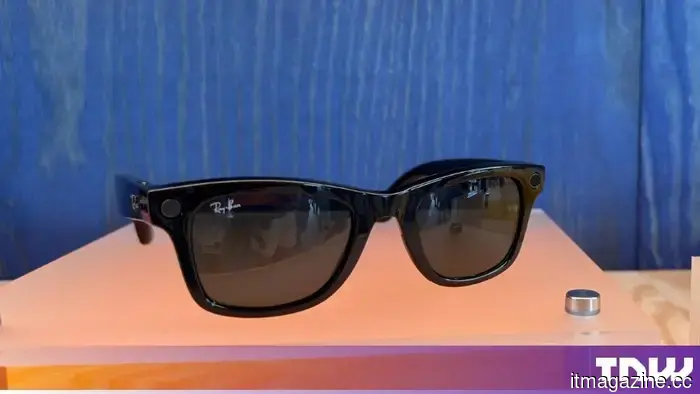 Cinemas, educational institutions, and ICE are all prohibiting Meta smart glasses.
Cinemas, US educational institutions, and ICE are all imposing limitations on Meta smart glasses, each for reasons that are unrelated. The regulation in cinemas goes back to 2014.
Cinemas, educational institutions, and ICE are all prohibiting Meta smart glasses.
Cinemas, US educational institutions, and ICE are all imposing limitations on Meta smart glasses, each for reasons that are unrelated. The regulation in cinemas goes back to 2014.
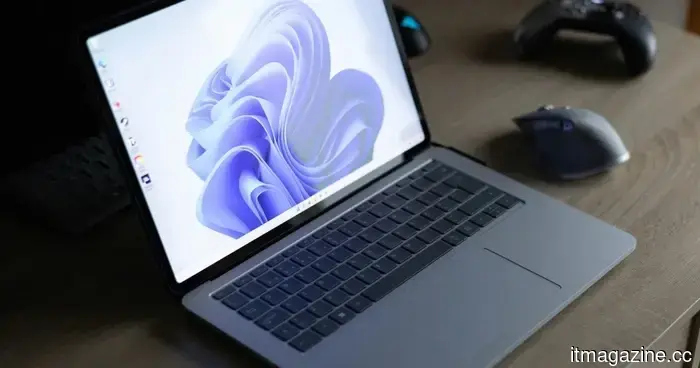 Windows 11 will be removing the Drag Tray feature.
Microsoft is eliminating the Drag Tray feature from Windows 11 following user feedback that the file-sharing overlay disrupted regular drag-and-drop operations.
Windows 11 will be removing the Drag Tray feature.
Microsoft is eliminating the Drag Tray feature from Windows 11 following user feedback that the file-sharing overlay disrupted regular drag-and-drop operations.
 Baidu's Apollo Go has launched on Uber in Dubai, and operates without a safety driver.
Uber introduced Baidu's Apollo Go in Dubai without a safety driver, just one day following the launch of its first European autonomous vehicle rides in Zagreb, where a safety driver was present.
Baidu's Apollo Go has launched on Uber in Dubai, and operates without a safety driver.
Uber introduced Baidu's Apollo Go in Dubai without a safety driver, just one day following the launch of its first European autonomous vehicle rides in Zagreb, where a safety driver was present.
 OpenAI aims to track AI misuse without requiring customers to provide their data.
OpenAI’s Private Safety Processing aims to identify abuse over numerous interactions while maintaining Zero Data Retention, showcasing a privacy approach that directly opposes Anthropic’s 30-day data retention policy.
OpenAI aims to track AI misuse without requiring customers to provide their data.
OpenAI’s Private Safety Processing aims to identify abuse over numerous interactions while maintaining Zero Data Retention, showcasing a privacy approach that directly opposes Anthropic’s 30-day data retention policy.
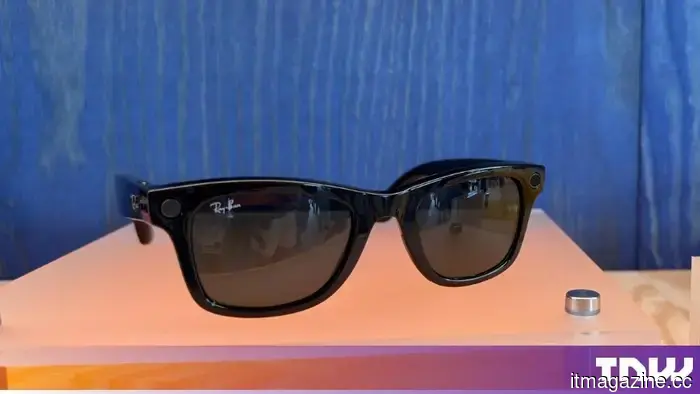 Cinemas, schools, and ICE are all prohibiting the use of Meta smart glasses.
Cinemas, schools in the US, and ICE are all placing limitations on Meta smart glasses, each for reasons that are unrelated. The rule concerning cinemas has been in place since 2014.
Cinemas, schools, and ICE are all prohibiting the use of Meta smart glasses.
Cinemas, schools in the US, and ICE are all placing limitations on Meta smart glasses, each for reasons that are unrelated. The rule concerning cinemas has been in place since 2014.
 A data center rack powered by living neurons is now functional in Singapore.
In Singapore, NUS, DayOne, and Cortical Labs have developed a 20-unit rack of biological computers. However, the assertion of its efficiency is made without any accompanying figures.
A data center rack powered by living neurons is now functional in Singapore.
In Singapore, NUS, DayOne, and Cortical Labs have developed a 20-unit rack of biological computers. However, the assertion of its efficiency is made without any accompanying figures.
Two senators have set a deadline of September 1 for TikTok to clarify its safety testing procedures.
Two senators have set a deadline of 1 September for TikTok to respond to 13 questions regarding the safety experiment conducted on 15 million users in the US.