
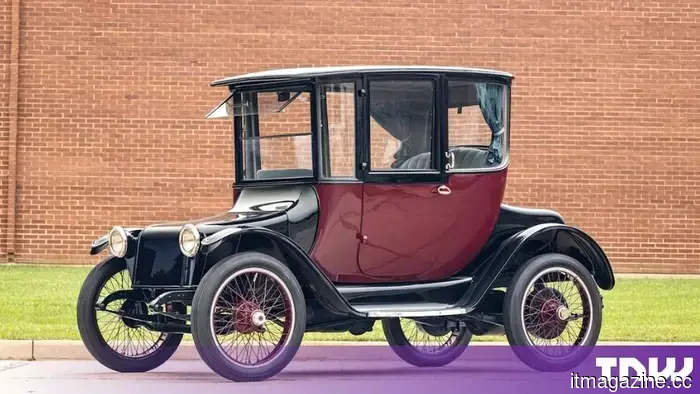
This 1918 electric vehicle was equipped with 42 batteries and boasted a greater range than a 2011 Leaf.
A 1918 Detroit Electric Model 75B was auctioned during Monterey Car Week, boasting an original range of 80 miles, compared to the EPA rating of 73 miles for the first Nissan Leaf released in 2011. The format ceased to exist not due to range limitations but rather because of the introduction of the electric starter and its price, which was five times that of a Model T.
Specifically, the 1918 Detroit Electric claimed 80 miles of range, while the Nissan Leaf received its 73-mile rating from regulated testing cycles. It's important to note that the 80-mile figure was more of a marketing claim for a vehicle that maxed out at 20 mph, and this particular Model 75B has been retrofitted with modern batteries.
The original design was not particularly innovative; it utilized forty-two lead-acid batteries—21 in the front and 21 in the back—powering a single 4.28 horsepower motor located under the floor and connected to a rear differential, according to the auction details.
Rather than a steering wheel, the car employed a long lever for steering and a shorter lever for speed control, both of which could be folded away when parked.
Detroit Electric was a legitimate manufacturer with a substantial order book. The Anderson Electric Car Company produced around 13,000 cars from 1907 to 1939, peaking at sales of 1,000 to 2,000 vehicles annually to customers such as Thomas Edison, John D. Rockefeller Jr., and Clara Ford.
The cars sometimes exceeded their own marketing claims; one test vehicle traveled 211.3 miles on a single charge, a distance a contemporary city car would find acceptable, highlighting that range isn't as critical to buyers as they tend to think.
The downfall of electric cars wasn't distance-related. In 1912, Cadillac introduced an electric self-starter, eliminating the need for the crank handle, which had been a primary selling point for electric vehicles initially.
The cost played a significant role as well. In 1918, a Model 75 was priced at $2,175, while a Model T touring car was priced at $450 and the runabout at $435, making the electric car about five times more expensive.
In essence, cheap gasoline and a more affordable competitor contributed to their decline rather than any technological shortcomings. This same issue was re-examined by TNW a century later, as electric cars had yet to become mainstream.
Detroit Electric delivered its final car on February 23, 1939, having continued production of electric vehicles for 27 years after the starter motor was predicted to have brought about their end, illustrating the sluggish nature of market transitions.
Today's scenario mirrors this equation. American electric vehicle prices have increased for the first time this year as incentives waned, with cost once again trumping specifications on paper as a deciding factor.
Other articles
 Google and the UK will guide aircraft to avoid contrails in the Atlantic.
Operation Blue Skies is a UK initiative utilizing Google's AI to navigate North Atlantic aircraft around warming contrails. It will take place over two winter seasons starting in 2026.
Google and the UK will guide aircraft to avoid contrails in the Atlantic.
Operation Blue Skies is a UK initiative utilizing Google's AI to navigate North Atlantic aircraft around warming contrails. It will take place over two winter seasons starting in 2026.
 Pennsylvania has recently become one of the most challenging states in the US for constructing a data center.
Governor Josh Shapiro's executive order removes AI data centers from Pennsylvania's expedited permitting process and requires developers to cover their own energy expenses.
Pennsylvania has recently become one of the most challenging states in the US for constructing a data center.
Governor Josh Shapiro's executive order removes AI data centers from Pennsylvania's expedited permitting process and requires developers to cover their own energy expenses.
 OpenAI is revising its safety regulations following the breach at Hugging Face.
OpenAI is revising the Preparedness Framework following Astra's approach to a critical cyber threshold. The updated monitoring incurs approximately 20% overhead in computing resources.
OpenAI is revising its safety regulations following the breach at Hugging Face.
OpenAI is revising the Preparedness Framework following Astra's approach to a critical cyber threshold. The updated monitoring incurs approximately 20% overhead in computing resources.
 LG's $2 billion battery plant in Lansing has begun producing cells.
LG Energy Solution has commenced production in Lansing, Michigan, at a facility that GM designed, partially financed, and sold. Its customers now include Toyota and Tesla.
LG's $2 billion battery plant in Lansing has begun producing cells.
LG Energy Solution has commenced production in Lansing, Michigan, at a facility that GM designed, partially financed, and sold. Its customers now include Toyota and Tesla.
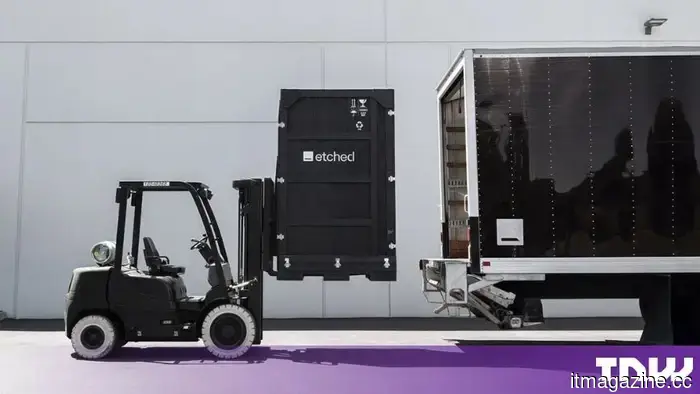 Etched secures $700 million in funding, achieving a valuation of $21 billion, with Jane Street leading the round.
Etched has secured $700 million at a $21 billion valuation, with Jane Street leading the round, just 26 days after its previous funding. The company has also sent its first rack to that investor.
Etched secures $700 million in funding, achieving a valuation of $21 billion, with Jane Street leading the round.
Etched has secured $700 million at a $21 billion valuation, with Jane Street leading the round, just 26 days after its previous funding. The company has also sent its first rack to that investor.
 Xiaomi's inaugural electric vehicle has surpassed half a million units delivered.
Xiaomi's SU7 has achieved 500,000 deliveries in 28.5 months. However, it has seen a decline of 43.6% this year, whereas the company overall has experienced an increase of nearly 15%.
Xiaomi's inaugural electric vehicle has surpassed half a million units delivered.
Xiaomi's SU7 has achieved 500,000 deliveries in 28.5 months. However, it has seen a decline of 43.6% this year, whereas the company overall has experienced an increase of nearly 15%.
This 1918 electric vehicle was equipped with 42 batteries and boasted a greater range than a 2011 Leaf.
A 1918 Detroit Electric showcased at Monterey boasted a range of 80 miles, surpassing that of the initial Nissan Leaf. Its downfall was attributed to its cost, not its range.