
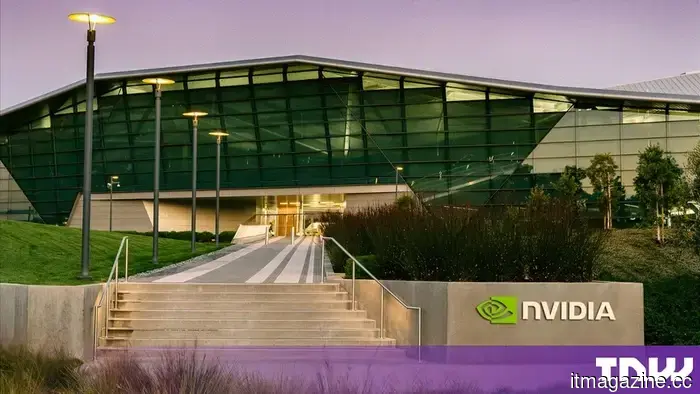
Nvidia's H200 has finally arrived for Chinese consumers, although it may not be available in mainland China.
After eight months of mostly stalled export licenses, Nvidia's H200 accelerators have begun to arrive at Chinese tech firms. According to the Financial Times, ByteDance and Tencent have received approximately 10,000 of these processors in recent weeks, while other Chinese companies are anticipated to receive similar quantities soon.
Even at first glance, these numbers are small compared to previous expectations. When the Commerce Department permitted around ten Chinese companies to purchase H200s in May, each license had a cap of 75,000 units, but not a single chip had been shipped; reports indicated that Chinese buyers had ordered around two million units back in January.
One statistic from the FT article does not align with previous records. The paper states that the U.S. limit is 100,000 chips per company, although Bloomberg reported a cap of 75,000 in March, which was reiterated in articles about the May approvals. No sources have confirmed any changes, so the higher figure appears to originate solely from the FT until the Commerce Department clarifies.
Reaching this stage has involved nearly a year of inconsistent policy from both sides. China halted H200 shipments at customs in January but conditionally approved ByteDance, Alibaba, and Tencent for a combined total of over 400,000 units two weeks later, after which Washington again restricted the approved companies in May.
A more intriguing complication arises from geography. Beijing has instructed companies to keep the hardware outside mainland China to protect its domestic chip manufacturers. Regulators are allowing companies to send processors to Hong Kong, which is outside the mainland's customs territory.
This workaround is not spontaneous. Hong Kong handles over half of China's chip imports, valued at about $124 billion from January to May, making it a logical location to store silicon that isn't officially welcomed directly.
Mainland engineering teams can access computing resources located in Hong Kong via cross-border network connections, allowing the chips to remain technically offshore while still being functionally accessible.
Washington has taken notice, and the Bureau of Industry and Security is examining how Chinese firms gain access to hardware that they cannot own directly.
Commerce had already attempted to address the geographic gap. A clarification issued on May 31 extended the licensing requirement to Chinese and Macau-based entities anywhere in the world, specifically targeting the loophole that a Hong Kong data center could otherwise exploit.
In response, Nvidia has tightened its own compliance measures, removing over half of its Asian clients from an internal approved-buyer list in July, a costly decision for a company whose China business was previously worth billions before the controls were implemented.
Importantly, the obstacles in this trade are stemming from Beijing rather than Washington. Commerce Secretary Howard Lutnick noted in May that "the Chinese central government has not let them … buy the chips, because they’re trying to keep their investment focused on their own domestic industry," reflecting the $295 billion domestic AI data center initiative that Beijing proposed in June.
The commercial terms of this trade remain unconventional. Trump announced in December that the U.S. would permit Nvidia to export H200s to sanctioned customers in China, specifying that "25% will be paid to the United States of America," an increase from the 15% revenue share that Nvidia and AMD agreed upon for H20 and MI308 sales the previous August.
Meanwhile, Congress has received a significantly narrower perspective. Jeffrey Kessler, the undersecretary of commerce for industry and security, informed the House Foreign Affairs Committee on July 14 that "very few" H200s had arrived in China or Hong Kong, a quantity he separately described as trivial.
While 20,000 units is no longer trivial, it also does not represent a substantial market. The future balance now depends much less on American export licenses and more on how long Beijing believes its own chip manufacturers can afford the wait.
Other articles
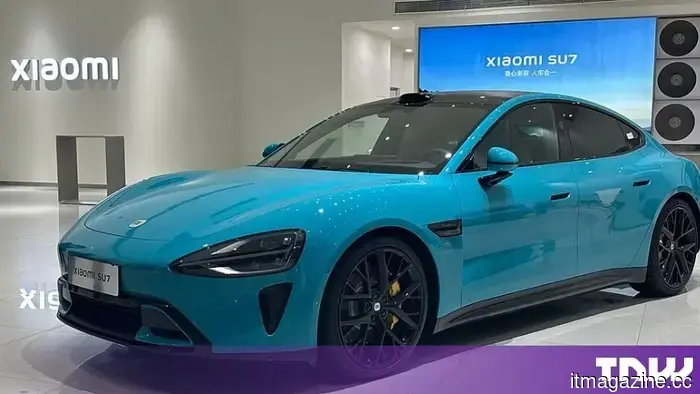 Xiaomi's inaugural electric vehicle has surpassed half a million units delivered.
Xiaomi's SU7 has achieved 500,000 deliveries in 28.5 months. However, it has seen a decline of 43.6% this year, whereas the company overall has experienced an increase of nearly 15%.
Xiaomi's inaugural electric vehicle has surpassed half a million units delivered.
Xiaomi's SU7 has achieved 500,000 deliveries in 28.5 months. However, it has seen a decline of 43.6% this year, whereas the company overall has experienced an increase of nearly 15%.
 Spotify's latest Running Mode enhances workout playlists significantly.
Spotify's new Running Mode can create a playlist tailored to your workout, musical preferences, and even your running rhythm.
Spotify's latest Running Mode enhances workout playlists significantly.
Spotify's new Running Mode can create a playlist tailored to your workout, musical preferences, and even your running rhythm.
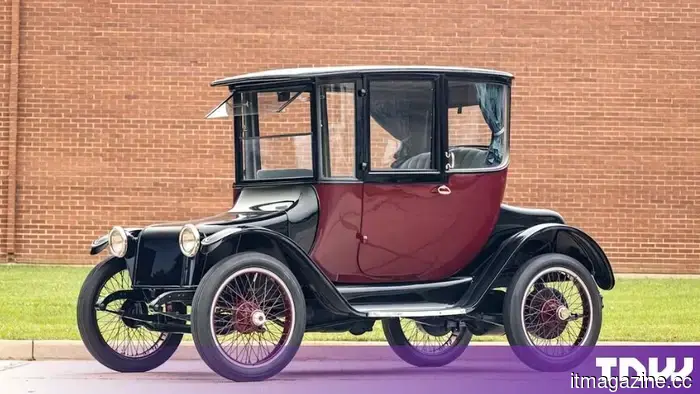 This 1918 electric vehicle was equipped with 42 batteries and offered a greater range than a 2011 Leaf.
A 1918 Detroit Electric advertised at Monterey boasted a range of 80 miles, surpassing that of the first Nissan Leaf. The factor that led to its downfall was its price, rather than its range.
This 1918 electric vehicle was equipped with 42 batteries and offered a greater range than a 2011 Leaf.
A 1918 Detroit Electric advertised at Monterey boasted a range of 80 miles, surpassing that of the first Nissan Leaf. The factor that led to its downfall was its price, rather than its range.
 A recent report indicates that Meta compensates influencers to advocate against social media restrictions for teenage accounts globally.
As nations begin to prohibit teenagers from using social media, Meta is paying actors, psychologists, and parenting influencers in over a dozen countries to advocate against a widespread ban on teen accounts.
A recent report indicates that Meta compensates influencers to advocate against social media restrictions for teenage accounts globally.
As nations begin to prohibit teenagers from using social media, Meta is paying actors, psychologists, and parenting influencers in over a dozen countries to advocate against a widespread ban on teen accounts.
 Cerebras has introduced the CS-4, its inaugural multi-wafer system, although the chip it contains is not novel.
Cerebras' CS-4 combines three wafers into a single rack and boasts a performance that is 30 times faster than a GPU. However, the processor it contains is the WSE-3, which operates at a higher clock speed.
Cerebras has introduced the CS-4, its inaugural multi-wafer system, although the chip it contains is not novel.
Cerebras' CS-4 combines three wafers into a single rack and boasts a performance that is 30 times faster than a GPU. However, the processor it contains is the WSE-3, which operates at a higher clock speed.
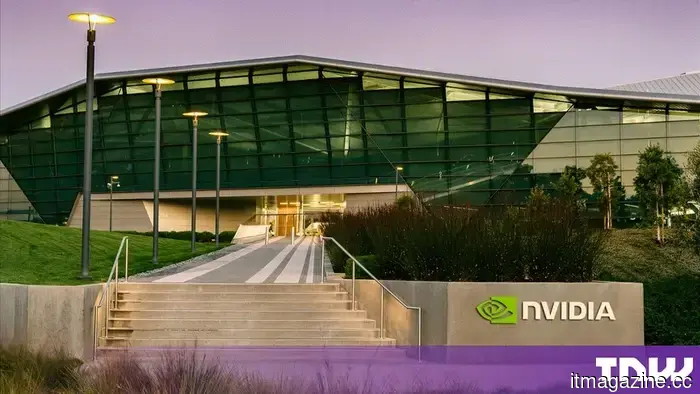 Nvidia's H200 has eventually made its way to Chinese customers, although it may not be available in mainland China.
According to the FT, ByteDance and Tencent have both acquired approximately 10,000 Nvidia H200 chips, but Beijing is requesting that the hardware be stored in Hong Kong.
Nvidia's H200 has eventually made its way to Chinese customers, although it may not be available in mainland China.
According to the FT, ByteDance and Tencent have both acquired approximately 10,000 Nvidia H200 chips, but Beijing is requesting that the hardware be stored in Hong Kong.
Nvidia's H200 has finally arrived for Chinese consumers, although it may not be available in mainland China.
According to the Financial Times, ByteDance and Tencent have each acquired approximately 10,000 Nvidia H200 chips, but Beijing prefers that the equipment be stored in Hong Kong.