
ChatGPT is introducing a version for teenagers, and I have many questions.
Whether you appreciate it or not, ChatGPT is already widely integrated into various aspects of life. Individuals utilize it for researching complex subjects, improving their writing, acquiring new skills, planning their daily activities, and, in my case, asking an embarrassing number of questions I could have worked out on my own. Teenagers are no different. In fact, OpenAI reports that nearly 90% of teens using ChatGPT rely on it for learning, gathering information, skill development, or accomplishing tasks throughout a typical week. Rather than ignoring the fact that students will use AI, OpenAI is adopting a different strategy: creating a version tailored specifically for them. They have introduced ChatGPT for Teens, a new experience for users aged 13 to 17, focused on education, healthier usage patterns, and significantly enhanced safety measures.
ChatGPT aims to educate rather than merely provide answers.
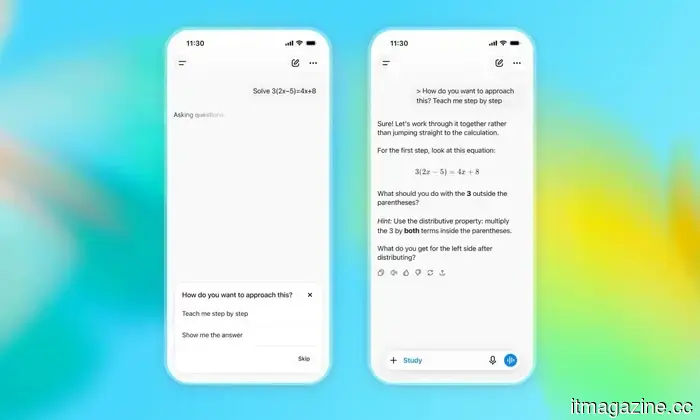
What intrigues me most is OpenAI's approach to homework. Picture preparing for an exam when calculus unexpectedly complicates your evening. Instead of just asking ChatGPT for the answer and copying it into your notes, the teen version is designed to guide you through the problem, clarify the concepts you struggle with, and help verify your understanding. This promotes a much healthier role for AI in education. ChatGPT for Teens combines features like Study Mode, quizzes, learning visualizations, homework reminders, and dedicated study hours, aiming to make ChatGPT more of a constant study partner.
OpenAI
OpenAI is extending this concept beyond ChatGPT as well. The company has formed a partnership with CodeAI to provide students and teachers with resources that foster AI literacy. Rather than simply instructing students on how to engage with a chatbot, the initiative aims to help them grasp how AI functions, critically assess its outputs, guide it effectively, and eventually create their own AI-powered tools. This distinction is crucial. Today’s teens will not graduate into a world where AI ceases to exist. Understanding when to trust it, when to challenge it, and when to avoid its use could be as vital as learning how to utilize it in the first place.
Helpful? Definitely. Human? Let's not get ahead of ourselves.
Naturally, once a powerful AI chatbot is made available to teens, safety becomes a significantly larger concern. OpenAI is implementing stricter safeguards for users under 18, especially regarding sensitive subjects such as graphic violence, unsafe activities, unhealthy diets, extreme beauty ideals, and sexual or romantic roleplay. An equally significant aspect is establishing limitations on how ChatGPT interacts with teens on a personal basis. The chatbot should not promote emotional reliance, pretend to possess real feelings, or create the impression that there is a human-like consciousness behind its replies. While this may seem like a minor detail, it's essential to recognize how natural these interactions have become. When AI can instantly respond, recall the context of past conversations, and engage at odd hours when no one else is awake, it can be easy to forget that you are still conversing with software.
OpenAI
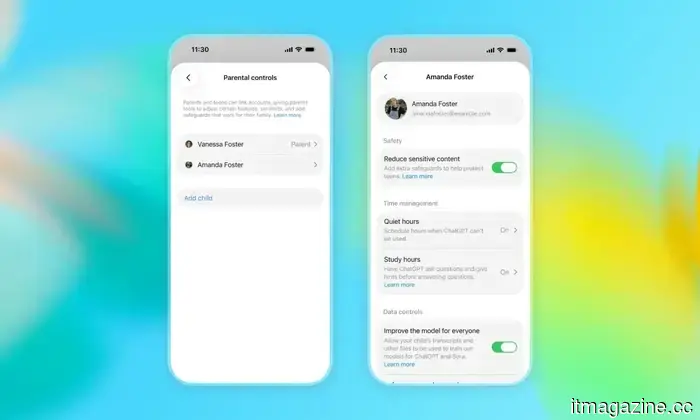
The company is adding smaller reminders to reinforce this distinction. Teens will be cautioned before uploading potentially sensitive or private images, and a dedicated onboarding experience will clarify the available learning and safety tools. Additionally, there will be reminders to encourage teens to take breaks from ChatGPT from time to time. They can personalize their experience by altering aspects like accent color or voice, but it’s still essential for ChatGPT to clarify that it is an AI. Parents will also have certain controls. By linking accounts, they can manage specific settings and establish Quiet Hours. In specific higher-risk situations, they may receive safety alerts designed to prompt them to intervene when offline support could be beneficial.
I have a cautious sense of optimism, albeit with significant reservations.
While this seems like a positive development, OpenAI still has considerable work ahead, particularly regarding teenage users of ChatGPT. We have witnessed serious issues surrounding AI-generated deepfakes, individuals turning to chatbots during emotional crises, and situations that likely require a trusted person rather than an AI model.
OpenAI
This raises the question of how comfortable parents will actually feel about all this. Will these safety measures be sufficient for them to trust ChatGPT with their teenagers? I'm not entirely convinced yet. Nonetheless, AI is swiftly becoming a significant part of how younger generations learn, communicate, and create. Keeping them completely away from it is likely no longer realistic. Ultimately, guiding teens on how to use AI responsibly while discerning when to engage with it and when to seek real human interaction could be the most crucial lesson.

Other articles
 The phone that you can truly fix by yourself is finally arriving in the US.
Fairphone is now offering its repairable, sustainable phone in the US, complete with a screwdriver. Here’s the price of the Gen 6+ and reasons why it could be worth skipping your next upgrade.
The phone that you can truly fix by yourself is finally arriving in the US.
Fairphone is now offering its repairable, sustainable phone in the US, complete with a screwdriver. Here’s the price of the Gen 6+ and reasons why it could be worth skipping your next upgrade.
 Replacing your petrol car with an electric vehicle (EV) will pay off in three years.
Recent research published in Science indicates that replacing a petrol vehicle with an electric vehicle in its first year can reduce emissions by 58% over a span of 16 years, although there are three significant exceptions.
Replacing your petrol car with an electric vehicle (EV) will pay off in three years.
Recent research published in Science indicates that replacing a petrol vehicle with an electric vehicle in its first year can reduce emissions by 58% over a span of 16 years, although there are three significant exceptions.
 ChatGPT is introducing a version for teenagers, and I have many inquiries.
Teenagers are increasingly utilizing AI for their homework and beyond. OpenAI’s latest ChatGPT experience aims to ensure that they are genuinely learning from it, incorporating some significant safeguards in the process.
ChatGPT is introducing a version for teenagers, and I have many inquiries.
Teenagers are increasingly utilizing AI for their homework and beyond. OpenAI’s latest ChatGPT experience aims to ensure that they are genuinely learning from it, incorporating some significant safeguards in the process.
 Alphabet has raised A$5.5 billion in Australia, surpassing the record set by Apple in 2015 by more than double.
Alphabet has issued its inaugural Australian dollar bond at A$5.5 billion (US$3.9 billion), marking the largest corporate bond issuance in the history of Australia and exceeding the anticipated A$5 billion.
Alphabet has raised A$5.5 billion in Australia, surpassing the record set by Apple in 2015 by more than double.
Alphabet has issued its inaugural Australian dollar bond at A$5.5 billion (US$3.9 billion), marking the largest corporate bond issuance in the history of Australia and exceeding the anticipated A$5 billion.
 China's AI coalition continues to expand, while Washington urges nations to make a choice.
China's World AI Cooperation Organisation has expanded from 29 to 38 members, based on a "digital sovereignty" principle it submitted to the UN in July.
China's AI coalition continues to expand, while Washington urges nations to make a choice.
China's World AI Cooperation Organisation has expanded from 29 to 38 members, based on a "digital sovereignty" principle it submitted to the UN in July.
 OpenAI is updating its safety protocols following the Hugging Face breach.
OpenAI is reworking the Preparedness Framework following Astra's close approach to a critical cybersecurity limit. The updated monitoring system incurs approximately 20% in computational overhead.
OpenAI is updating its safety protocols following the Hugging Face breach.
OpenAI is reworking the Preparedness Framework following Astra's close approach to a critical cybersecurity limit. The updated monitoring system incurs approximately 20% in computational overhead.
ChatGPT is introducing a version for teenagers, and I have many questions.
Teenagers are currently utilizing AI for their homework and beyond. OpenAI's latest ChatGPT experience aims to ensure that they are genuinely learning from it — with significant safeguards in place.