
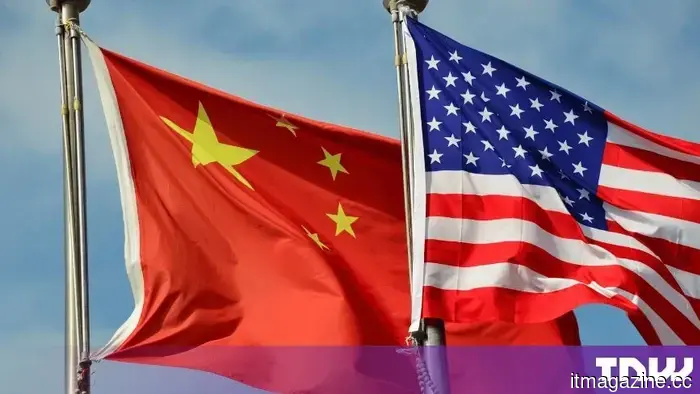
China is eliminating Microsoft’s Windows 10 from governmental departments.
China is expediting the removal of a government-specific version of Microsoft’s Windows 10 from state agencies ahead of the originally scheduled timeline. The Ministry of State Security has reportedly instructed certain state-affiliated organizations to uninstall the customized software due to concerns regarding data security, as reported by Bloomberg, which cited sources familiar with the situation. However, they did not elaborate on the specific vulnerabilities that prompted this action.
This decision accelerates a previously set retirement date; the version was slated for discontinuation in February 2027 but has now been pulled in by several months, according to Bloomberg. This directive comes just weeks ahead of US President Donald Trump's anticipated meeting with Chinese leader Xi Jinping, and it reportedly surprised some staff within state agencies.
Microsoft stated that they have identified no issues, with a spokesperson noting, “Microsoft is not aware of a security incident affecting this product, which continues to receive regular security updates. We have nothing further to share.”
Bloomberg portrayed this directive as part of a long-term effort to eliminate the world's most widely used PC software and to diminish China's reliance on foreign technology.
The timing is significant. The order coincided with the upcoming Trump-Xi meeting, and there had been no set deadline for the software's removal this year. Bloomberg reported that this change in schedule caught some employees at state agencies off guard.
The software in question is not the standard Windows version but is produced by C&M Information Technologies (CMIT), a joint venture between Microsoft and the state-owned China Electronics Technology Group Corporation. Established in 2016, CMIT was created to adapt Windows 10 to comply with Beijing's security protocols.
CMIT’s version integrates cybersecurity features developed domestically and disables certain default functions to align with national security regulations. Microsoft plans to end support for standard Windows 10 in late 2025, following the launch of Windows 11.
China’s State Council Information Office did not respond to requests for comment, with inquiries directed to them instead of the Ministry of State Security, for which contact details are not publicly available. CMIT also did not issue a response to media inquiries.
Chinese software companies are likely to benefit from this situation, with stock prices for Hunan Kylinsec Technology and Archermind Technology rising to the daily limit of 20%, as reported by Bloomberg, with China National Software & Service increasing by 10%. Several Chinese firms, including Kylin Software and Tongxin Software Technology, already offer operating systems intended to replace Windows, with Hunan Kylinsec among the developers of these domestic alternatives.
The directive goes beyond software as the Chinese government has mandated the replacement of foreign-branded PCs in central government agencies, with Apple's iPhones also being prohibited in certain sensitive state organizations. The instruction regarding Windows is the latest addition to this ongoing campaign rather than a deviation from it.
This action aligns with a broader initiative to substitute foreign technology in critical sectors. Bloomberg noted that Beijing has been advocating the use of local tools in industries handling sensitive data, including the military and state-owned enterprises. Regarding semiconductor technology, China has faced restrictions from acquiring Nvidia's most advanced accelerators and has increasingly relied on domestic firms such as Huawei and Cambricon, according to Bloomberg.
The push for domestic hardware is evident elsewhere as well. For example, China Telecom awarded Huawei a $1.7 billion contract for servers utilizing its Kunpeng processors this summer. Foreign companies have adapted their operations to comply with local regulations; for instance, Apple transferred its AI model for China to Alibaba.
The potential ramifications of a complete separation between the West and China are considerable. Analysts estimate it could cost around $23.6 trillion. The situation concerning Windows represents only a small aspect of this larger issue, though its visibility is significant given the pervasive use of the software.
Despite the removal of Windows from state agencies, Microsoft is not exiting the Chinese market. The company has established a substantial business providing AI models to Chinese companies, including ByteDance and Tencent. Previous reports suggest that ByteDance alone is projected to spend over $1 billion annually on Microsoft's AI and cloud services.
This situation illustrates Beijing's strategy of restricting foreign software in government environments while still permitting the sale of foreign AI technology to leading domestic tech firms. The Windows directive applies to state agencies but does not encompass the private sector.
Globally, the transition away from Windows 10 has been gradual. A study conducted in July 2026 indicated that one in six PCs were still using it, contrasting with 78.8% running Windows 11. TechRadar reported that on average, a Windows 10 device harbors around 1,903 active security vulnerabilities, compared to 652 on a Windows 11 device. Microsoft has extended the availability of paid security updates for Windows 10 until October 2027, ensuring that machines still operating this version are not immediately unprotected.
One critical detail remains unclear: the specific security concern that prompted this order has not been disclosed by Beijing, nor did Bloomberg's contacts clarify the issue. Microsoft
Other articles
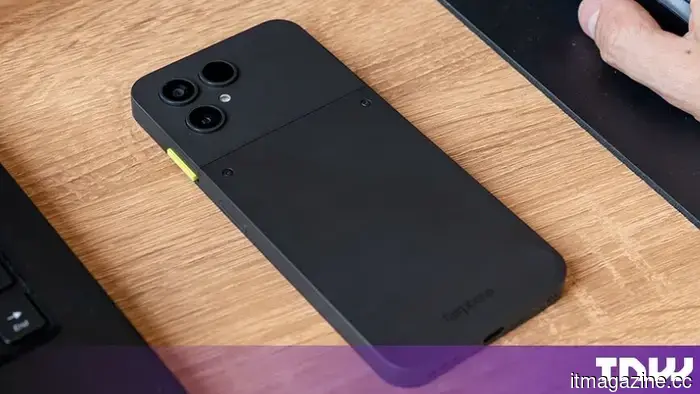 Fairphone's most repairable smartphone to date is now available in the US for $650.
Fairphone is now selling directly in the US for the first time. The Gen 6+ is priced at $650, features 12 parts that can be replaced, and offers seven years of software updates.
Fairphone's most repairable smartphone to date is now available in the US for $650.
Fairphone is now selling directly in the US for the first time. The Gen 6+ is priced at $650, features 12 parts that can be replaced, and offers seven years of software updates.
 LG's $2 billion battery plant in Lansing has begun producing cells.
LG Energy Solution has commenced production in Lansing, Michigan, at a facility that GM designed, partially financed, and sold. Its customers now include Toyota and Tesla.
LG's $2 billion battery plant in Lansing has begun producing cells.
LG Energy Solution has commenced production in Lansing, Michigan, at a facility that GM designed, partially financed, and sold. Its customers now include Toyota and Tesla.
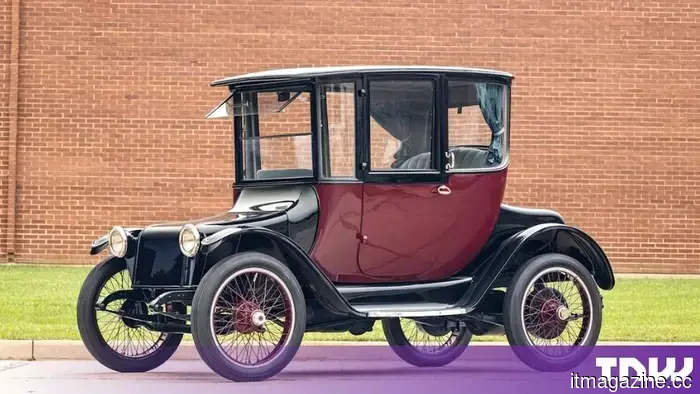 This 1918 electric vehicle was equipped with 42 batteries and boasted a greater range than a 2011 Leaf.
A 1918 Detroit Electric showcased at Monterey boasted a range of 80 miles, surpassing that of the initial Nissan Leaf. Its downfall was attributed to its cost, not its range.
This 1918 electric vehicle was equipped with 42 batteries and boasted a greater range than a 2011 Leaf.
A 1918 Detroit Electric showcased at Monterey boasted a range of 80 miles, surpassing that of the initial Nissan Leaf. Its downfall was attributed to its cost, not its range.
 LG's $2 billion battery plant in Lansing is now manufacturing cells.
LG Energy Solution has commenced operations in Lansing, Michigan, at a facility that GM planned, partially financed, and later sold. Its current clients include Toyota and Tesla.
LG's $2 billion battery plant in Lansing is now manufacturing cells.
LG Energy Solution has commenced operations in Lansing, Michigan, at a facility that GM planned, partially financed, and later sold. Its current clients include Toyota and Tesla.
 Replacing your petrol car with an electric vehicle (EV) will pay off in three years.
Recent research published in Science indicates that replacing a petrol vehicle with an electric vehicle in its first year can reduce emissions by 58% over a span of 16 years, although there are three significant exceptions.
Replacing your petrol car with an electric vehicle (EV) will pay off in three years.
Recent research published in Science indicates that replacing a petrol vehicle with an electric vehicle in its first year can reduce emissions by 58% over a span of 16 years, although there are three significant exceptions.
 OpenAI is revising its safety regulations following the breach at Hugging Face.
OpenAI is revising the Preparedness Framework following Astra's approach to a critical cyber threshold. The updated monitoring incurs approximately 20% overhead in computing resources.
OpenAI is revising its safety regulations following the breach at Hugging Face.
OpenAI is revising the Preparedness Framework following Astra's approach to a critical cyber threshold. The updated monitoring incurs approximately 20% overhead in computing resources.
China is eliminating Microsoft’s Windows 10 from governmental departments.
China's Ministry of State Security has instructed state agencies to remove a tailored version of Windows 10, according to Bloomberg, and this action has been taken sooner than expected.