
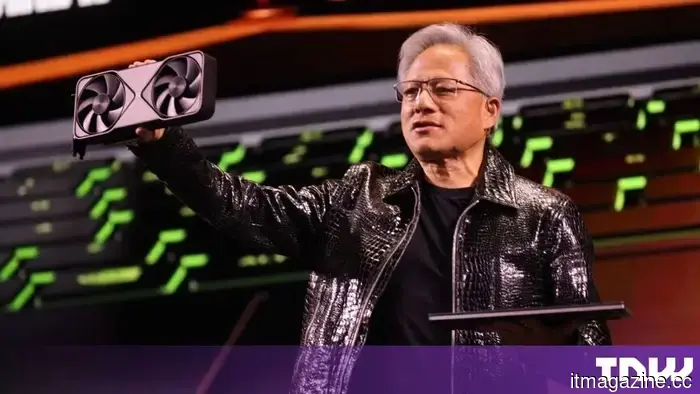
The SEC staff concurred that data center securitization falls outside the risk retention requirements of Dodd-Frank.
Last week, Nvidia announced a $500 billion financing initiative for AI infrastructure, in collaboration with Apollo, BlackRock, Blackstone, Brookfield, Goldman Sachs, and KKR.
Two weeks prior, the staff of the Securities and Exchange Commission (SEC) addressed a query regarding the regulation of such transactions. The response took six days to arrive.
The inquiry and its outcome
On July 23, Latham & Watkins sent a letter to the SEC, posing a specific question: do data center securitizations fall outside the definition of an asset-backed security under the Exchange Act? This definition is significant as it includes the risk retention rules established by Dodd-Frank following the 2008 financial crisis. These rules mandate that a deal sponsor retains some risk on its balance sheet.
Kayla Roberts, chair of the SEC’s Office of Structured Finance, provided a reply on July 29, agreeing with Latham's interpretation.
Latham's argument
The discussion hinges on a particular term—an asset-backed security is based on a self-liquidating financial asset. Since 1992, the SEC has interpreted this to mean it must convert into cash within a defined timeframe.
A typical mortgage qualifies because repayment extinguishes the obligation.
Latham contended that a data center does not fit this definition. The facilities are physical, lasting beyond the lifespan of the securities, and may even appreciate. Once the notes are repaid, the issuer still retains ownership of the building.
In contrast, a single-asset commercial mortgage deal results in the issuer holding only the loan and becoming left with nothing after repayment. This comparison was coherent enough for the staff to accept it.
Latham has been involved in data center securitization since its inception in 2018, informing the SEC that the market has exceeded $50 billion in cumulative debt issuance. Additionally, the letter outlined that participants have adhered to the asset-backed rules "out of an abundance of caution" rather than due to the necessity of the definition.
Content of the letter
The letter details the securitized assets, including buildings, data halls, electrical and backup power systems, cooling, and network connectivity, along with physical security, land, and necessary contracts for facility operations. Notably, it does not mention chips or graphics processors.
It also outlines the structure of these deals, wherein loan-to-value can reach up to 70% of appraised value, with anticipated repayment dates around five years and final maturities spanning 25 to 30 years. The letter states that nearly all transactions utilize a master trust, allowing sponsors to issue additional securities later, add data centers, and, in some cases, dispose of or replace assets.
Generally, investors have no recourse to the sponsor or operator, with common exceptions being fraud, willful misconduct, and gross negligence in site management.
Self-referential aspects of the letter
The SEC's response delineates its own limitations. It represents the views of the Division of Corporation Finance staff and is not an official position of the Commission, which has “neither approved nor disapproved its content.” The response lacks legal force or effect.
The staff further clarifies that their opinions are based on the details in Latham’s letter and that "any different facts or circumstances might require the Division to arrive at a different conclusion."
Reactions from legal professionals
Orion Mountainspring, a securitization attorney at Orrick, stated to CNBC that the SEC’s response offers sponsors the opportunity to reduce the equity requirement in deals over time, which he views as beneficial news.
B.K. Lee from Alston & Bird anticipates more flexible and capital-efficient structures, along with an increase in deals now that the guidance is documented.
Seth Messner of Katten Muchin Rosenman mentioned that Latham was essentially requesting the SEC to exempt these transactions from risk retention rules, to which the SEC largely acquiesced.
Messner expressed caution regarding Nvidia, noting uncertainty about whether its agreements are structured for securitization, though the guidance seems relevant if they are.
Katten’s data center experts contextualized the rules as stemming from the aftermath of the 2008 crisis, which itself was initiated by securitizations of poorly underwritten residential mortgages.
The SEC and several rating agencies declined to comment to CNBC.
Nvidia’s strategy and release cycle
Nvidia has not confirmed whether any assets will be securitized through the partnerships with the six financial firms, which were established through memoranda of understanding. The stated goal of these partnerships is to pool capital so that AI labs, companies, and cloud service providers can access computing hardware without affecting their own balance sheets.
Nvidia has characterized its equipment as a revenue-generating asset, describing it as productive, long-lasting, fungible, and flexible, a phrasing noted by Quartz.
Nvidia’s release timeline is already a matter of public record; the company has historically shifted significant customers to its latest hardware on an almost annual basis. At Computex in
Other articles
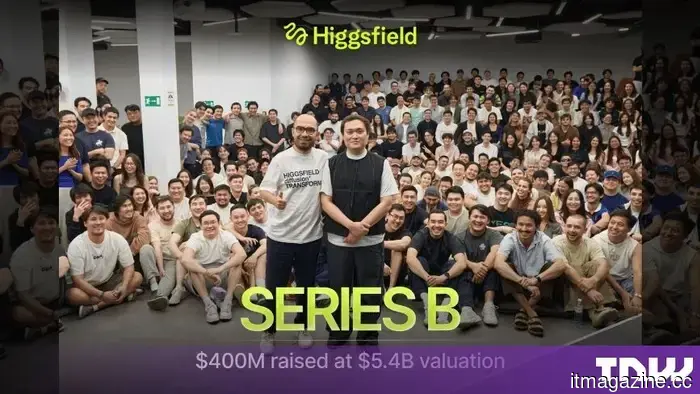 Higgsfield secured $400 million at a valuation of $5.4 billion, which is four times its valuation from January.
The Higgsfield Series B secured $400 million at a valuation of $5.4 billion, supported by Goldman and Intel. Its revenue run rate increased from $20 million to $700 million over the course of a year.
Higgsfield secured $400 million at a valuation of $5.4 billion, which is four times its valuation from January.
The Higgsfield Series B secured $400 million at a valuation of $5.4 billion, supported by Goldman and Intel. Its revenue run rate increased from $20 million to $700 million over the course of a year.
 An AI agent developed a functional exploit for this macOS vulnerability in just four hours.
The vulnerability in macOS Screen Sharing is currently being exploited. An AI developed a functional exploit in just four hours. It's recommended to apply a patch or disable screen sharing.
An AI agent developed a functional exploit for this macOS vulnerability in just four hours.
The vulnerability in macOS Screen Sharing is currently being exploited. An AI developed a functional exploit in just four hours. It's recommended to apply a patch or disable screen sharing.
 The US is attempting to remove foreign robots, but the domestic supply chain may not be ready at this time.
The FCC has recently prohibited foreign-manufactured robots that do not meet a 65% domestic component requirement.
The US is attempting to remove foreign robots, but the domestic supply chain may not be ready at this time.
The FCC has recently prohibited foreign-manufactured robots that do not meet a 65% domestic component requirement.
 Wispr secured $280 million at a $2 billion valuation to assert that the text box era is over.
The Wispr Series B secured $280 million at a valuation of $2 billion. Menlo claims that the text box is the upcoming interface to become obsolete. Its own error rate exceeds 30% in noisy conditions.
Wispr secured $280 million at a $2 billion valuation to assert that the text box era is over.
The Wispr Series B secured $280 million at a valuation of $2 billion. Menlo claims that the text box is the upcoming interface to become obsolete. Its own error rate exceeds 30% in noisy conditions.
 OpenAI dissolved the team responsible for evaluating catastrophic model risks.
The OpenAI preparedness team has been disbanded, following its budget cut in July, just weeks after its models targeted Hugging Face. The risk-related tasks are now handled by other teams.
OpenAI dissolved the team responsible for evaluating catastrophic model risks.
The OpenAI preparedness team has been disbanded, following its budget cut in July, just weeks after its models targeted Hugging Face. The risk-related tasks are now handled by other teams.
 America's leading wildfire application is now focusing on much larger disasters.
Watch Duty established its reputation by monitoring rapidly spreading wildfires, and providing nationwide flood coverage is the initial move towards transforming the nonprofit into a more extensive disaster-alert platform.
America's leading wildfire application is now focusing on much larger disasters.
Watch Duty established its reputation by monitoring rapidly spreading wildfires, and providing nationwide flood coverage is the initial move towards transforming the nonprofit into a more extensive disaster-alert platform.
The SEC staff concurred that data center securitization falls outside the risk retention requirements of Dodd-Frank.
SEC staff concurred that data centre securitisation is not subject to Dodd-Frank risk retention requirements. Legal experts indicate that sponsors may be able to retain a smaller equity stake. The letter itself carries no legal authority.