
EY will retain interns for a year prior to extending a job offer to them.
EY is introducing a paid Career Residency program that allows assurance interns to continue working part-time for 8 to 12 months after their eight-week internship. During their final year of college, they will work remotely on EY projects. Those who successfully complete the program and receive an offer will start as analysts instead of staff.
The firm has determined that an eight-week period is insufficient. The new Career Residency will enable assurance interns to engage in part-time work remotely on actual projects while they complete their final year at university.
The change is influenced by the role of AI in the workplace. Junior consultants previously focused on tasks that Errol Gardner, EY’s global head of consulting, refers to as “assembly” work, such as creating presentations, drafting proposals, and compiling information.
The skills that remain are more complex to transmit in a short summer program. The residency aims to develop judgment, professional skepticism, critical thinking, collaboration, and communication through simulations and real EY projects instead of a set curriculum.
There is an incentive upon completion. Residents who finish the program and receive an offer will advance to analyst positions, which is a step above the current starting point for new consultants, along with a salary increase linked to their performance and evaluation.
According to EY, this initiative was in the works before the advent of new technology. The firm was reevaluating its internship model even before generative AI became prevalent, as noted by Ginnie Carlier, EY Americas chief talent and culture officer, but the technology has acted as a "catalyst" for these changes.
However, this can also be interpreted less favorably. Entering the profession now requires eight weeks of internship followed by up to a year of part-time work before a permanent job offer is made.
The demand for these positions is not a limiting factor. EY has reported receiving over 24,000 applications from students pursuing their CPA in the last year, extending 2,400 internship offers, and experiencing a 33% increase in applications year over year.
What makes this situation intriguing is the contrasting approach taken by other firms. PwC has been hiring fewer consultants as AI alters similar job functions, presenting an alternative solution to the same issue.
Both responses are indicative of a broader trend. AI is constricting the internship pipeline that previously transitioned students into employment, and research from Switzerland has identified a decrease in job advertisements aimed at entry-level candidates.
EY has opted to extend the duration of its internship process rather than reduce the number of available spots, which is the more generous approach. Whether this will result in more capable juniors or merely delay the decision of how many employees are still needed remains to be seen in the upcoming two years.
Other articles
 The inaugural Ferrari Luce was sold for $40 million, which is 36 times higher than its estimated value.
The Chassis 0 of Ferrari's Luce EV was auctioned for $40 million at Monterey, setting a record for a new car, an electric vehicle, and a charity auction. Delivery is expected in 2027.
The inaugural Ferrari Luce was sold for $40 million, which is 36 times higher than its estimated value.
The Chassis 0 of Ferrari's Luce EV was auctioned for $40 million at Monterey, setting a record for a new car, an electric vehicle, and a charity auction. Delivery is expected in 2027.
 Opening statements commence in the largest consumer protection case in the United States.
The trial concerning Meta's social media practices begins today. The $1.4 trillion amount is reported by Meta itself. A lawyer from California informed the court of a $193 billion figure. The jury's role is solely advisory.
Opening statements commence in the largest consumer protection case in the United States.
The trial concerning Meta's social media practices begins today. The $1.4 trillion amount is reported by Meta itself. A lawyer from California informed the court of a $193 billion figure. The jury's role is solely advisory.
 An AI agent developed a functional exploit for this macOS vulnerability in just four hours.
The vulnerability in macOS Screen Sharing is currently being exploited. An AI developed a functional exploit in just four hours. It's recommended to apply a patch or disable screen sharing.
An AI agent developed a functional exploit for this macOS vulnerability in just four hours.
The vulnerability in macOS Screen Sharing is currently being exploited. An AI developed a functional exploit in just four hours. It's recommended to apply a patch or disable screen sharing.
 The OnePlus 16 may feature a display that could potentially challenge Samsung.
A recent leak suggests that the OnePlus 16's BOE X4 display consumes less power, has a lifespan twice that of its predecessors, and could potentially surpass Samsung's top panels in performance.
The OnePlus 16 may feature a display that could potentially challenge Samsung.
A recent leak suggests that the OnePlus 16's BOE X4 display consumes less power, has a lifespan twice that of its predecessors, and could potentially surpass Samsung's top panels in performance.
 Google selected and financed the company that is anonymizing the data for Spirit Airlines.
The agreement for the sale of data by Spirit Airlines states that Google assigns the deidentification agent, covers the costs, and that the data scrubbing must maintain referential integrity.
Google selected and financed the company that is anonymizing the data for Spirit Airlines.
The agreement for the sale of data by Spirit Airlines states that Google assigns the deidentification agent, covers the costs, and that the data scrubbing must maintain referential integrity.
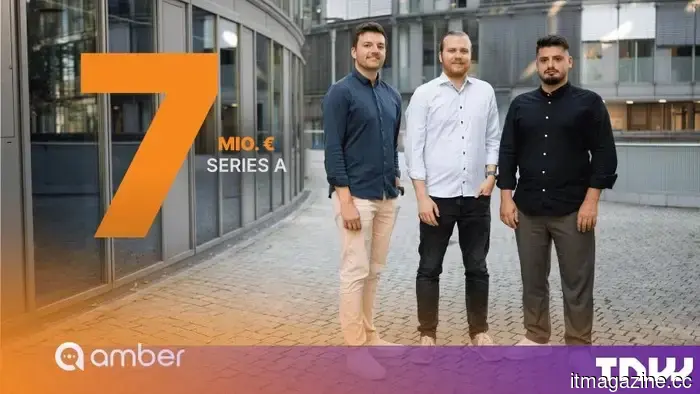 Aachen's amber secured €7 million to promote AI sovereignty for small and medium-sized enterprises (Mittelstand).
The amber Series A successfully secured €7 million from Ventech and a German state bank. Their proposal emphasized organizing the data initially and ensuring it remains outside of US jurisdiction.
Aachen's amber secured €7 million to promote AI sovereignty for small and medium-sized enterprises (Mittelstand).
The amber Series A successfully secured €7 million from Ventech and a German state bank. Their proposal emphasized organizing the data initially and ensuring it remains outside of US jurisdiction.
EY will retain interns for a year prior to extending a job offer to them.
EY will retain assurance interns on a part-time basis for 8 to 12 months following their internship, as AI takes over the junior tasks that new employees used to learn.