
EY will retain interns for a year prior to extending a job offer.
EY is introducing a paid Career Residency that allows assurance interns to remain employed part-time for an additional 8 to 12 months after their eight-week internship, working remotely on EY projects as they complete their final year of college. Those who finish the program and receive an offer will start as analysts instead of staff positions.
The firm has concluded that eight weeks is insufficient time. The new Career Residency will keep assurance interns engaged for an extra 8 to 12 months, part-time and remotely on real projects while they finish their university studies.
This change is in response to the impact of AI. Junior consultants previously handled what Errol Gardner, EY’s global head of consulting, refers to as “assembly” tasks, such as assembling presentations, drafting proposals, and synthesizing information.
What remains is more complex and difficult to teach within a short summer program. The residency emphasizes skills like judgment, professional skepticism, critical thinking, collaboration, and communication, which will be developed through simulations and real EY projects rather than a set curriculum.
There is a benefit at the end of the residency. Those who complete it and receive offers will join as analysts, a level above the current starting point for new consultants, along with a pay increase linked to performance assessments.
According to EY, this initiative was conceived before the advent of generative AI. The firm was already reassessing its internship model prior to the technology's emergence, as noted by Ginnie Carlier, EY Americas chief talent and culture officer, but AI has acted as a “catalyst” for this change.
A less favorable interpretation of this situation is that entry into the profession now requires an eight-week internship, followed by up to a year of part-time work before a permanent position is offered.
The demand for these roles is not a limiting factor. EY reports that it received over 24,000 applications from CPA-track students in the past year, made 2,400 internship offers, and saw a 33% year-on-year increase in applications.
What makes this situation noteworthy is the alternate approach being taken by other firms. PwC has been hiring fewer consultants as AI continues to transform similar tasks, representing another potential solution to this challenge.
Both firms are reacting to a measurable trend. AI has been narrowing the internship pipeline that traditionally transitioned students into employees, and research from Switzerland indicates a decline in job advertisements aimed at entry-level candidates.
EY has opted to extend the training period rather than reduce the number of interns, which is the more accommodating choice. The impact of this decision on the development of junior consultants, or whether it merely delays the decision on the quantity of junior talent that firms require, will be revealed over the next two years.
Other articles
 OpenAI is financing 13 local newsletters from Axios in a three-year agreement.
The local news agreement between Axios and OpenAI will support 13 newsletters over the span of three years. Both companies have declined to disclose the amount paid or whether Axios relinquished its right to take legal action.
OpenAI is financing 13 local newsletters from Axios in a three-year agreement.
The local news agreement between Axios and OpenAI will support 13 newsletters over the span of three years. Both companies have declined to disclose the amount paid or whether Axios relinquished its right to take legal action.
 Terra Industries secures $52 million in seed funding and establishes its inaugural office outside of Africa.
Terra Industries has successfully completed its seed round, raising $52 million through three tranches over eight months, and is inaugurating its first office outside of Africa in London.
Terra Industries secures $52 million in seed funding and establishes its inaugural office outside of Africa.
Terra Industries has successfully completed its seed round, raising $52 million through three tranches over eight months, and is inaugurating its first office outside of Africa in London.
 The initial Ferrari Luce was sold for $40 million, which is 36 times higher than its estimated value.
Ferrari's Luce EV Chassis 0 was sold at Monterey for $40 million, setting records for a new car, an electric vehicle, and a charity auction item. The delivery is expected in 2027.
The initial Ferrari Luce was sold for $40 million, which is 36 times higher than its estimated value.
Ferrari's Luce EV Chassis 0 was sold at Monterey for $40 million, setting records for a new car, an electric vehicle, and a charity auction item. The delivery is expected in 2027.
 The DOJ is looking into Andreessen Horowitz regarding rival board positions.
The DOJ investigation into Andreessen Horowitz is questioning if its partners are part of rival AI boards. This was reported by Bloomberg on Monday. The legislation originates from 1914.
The DOJ is looking into Andreessen Horowitz regarding rival board positions.
The DOJ investigation into Andreessen Horowitz is questioning if its partners are part of rival AI boards. This was reported by Bloomberg on Monday. The legislation originates from 1914.
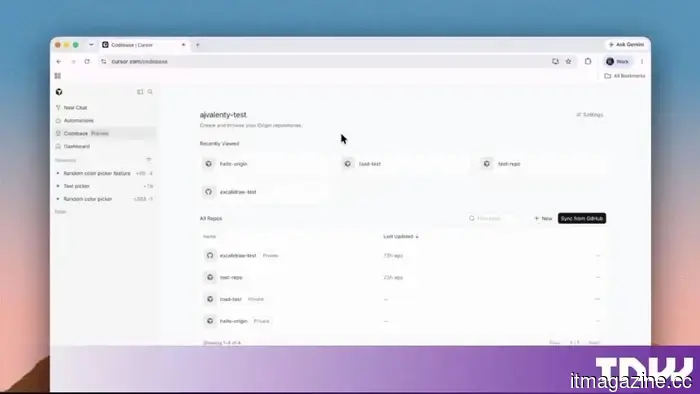 Cursor Origin is enabled by default for paid users, and the terms regarding its data are not publicly available.
Cursor Origin was released just hours before the GitHub outage, not following it. It is enabled by default for paid subscriptions, and Cursor has not provided any data terms regarding it.
Cursor Origin is enabled by default for paid users, and the terms regarding its data are not publicly available.
Cursor Origin was released just hours before the GitHub outage, not following it. It is enabled by default for paid subscriptions, and Cursor has not provided any data terms regarding it.
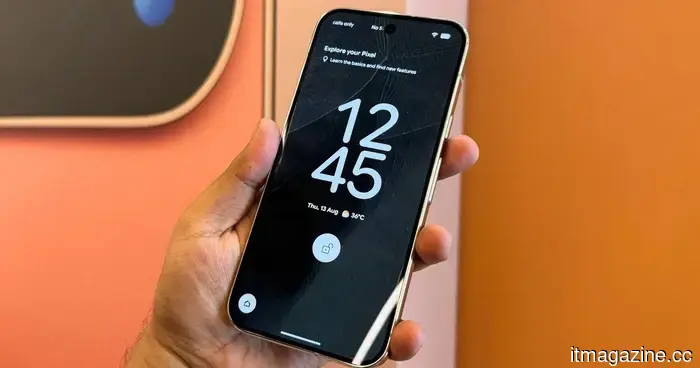 I've waited way too long for Pixels to receive this ridiculously simple gesture.
Google is continuing to develop a double-tap-to-sleep gesture for Pixel devices, and Android 17 QPR2 Beta 3 indicates that it might finally function from the home screen as well.
I've waited way too long for Pixels to receive this ridiculously simple gesture.
Google is continuing to develop a double-tap-to-sleep gesture for Pixel devices, and Android 17 QPR2 Beta 3 indicates that it might finally function from the home screen as well.
EY will retain interns for a year prior to extending a job offer.
EY will retain assurance interns on a part-time basis for 8 to 12 months following their internship, as AI takes over the junior tasks that new employees once learned.