

OpenAI is financing 13 local newsletters from Axios in a three-year agreement.
OpenAI is covering the initial expenses for 13 new Axios Local newsletters, which includes funding for both personnel and technology. Additionally, Axios employees receive free credits for OpenAI’s enterprise solutions. In exchange, Axios allows OpenAI to train its models using its publicly available news content. This agreement is set to last for three years.
Issie Lapowsky detailed this arrangement in the Columbia Journalism Review last week, providing the most comprehensive description of the partnership to date, which serves as the basis for much of what follows.
Axios aims to determine if a local newsroom can thrive with all aspects other than journalism and the journalist being automated. Jim VandeHei, the company’s CEO, framed it as a question to Lapowsky: “Could we use AI to basically automate everything you need in a local market other than the journalist and the journalism itself?”
Three years, six weeks
On August 9, VandeHei wrote a column discussing what he refers to as post-processable velocity, indicating that change is happening faster than any individual, organization, market, or government can manage. While preparing for an Axios board meeting, he remarked that discussions with six-month timelines seemed unrealistic. He noted a significant insight: “For the first time ever, my confident line of sight is six weeks tops.”
He advised readers to reduce their reliance on long-term plans that depend on forecasts of future events. The Axios OpenAI local news initiative spans three years, supports 13 newsrooms, and encourages reporters to develop careers within them.
What remains unsaid
Allison Murphy, Axios’s COO, informed CJR that OpenAI has invested sufficiently to launch the new markets. However, neither company has revealed the specific amount involved. Furthermore, they have not clarified whether this agreement prohibits Axios from pursuing legal action against OpenAI. An OpenAI representative mentioned that the terms of the deal are confidential.
This second silence is particularly significant. Local newspapers are currently litigating against OpenAI for utilizing their work in training models. Whether Axios has forfeited the right to take similar action is not merely a standard business detail but a crucial distinction between a licensing agreement and the resolution of an unfiled lawsuit.
Axios does not include this partnership in its local job postings, nor does it feature prominently in its OpenAI reporting, except in articles focused on media agreements. An Axios employee anonymously expressed to CJR that this lack of transparency has led to discomfort among journalists.
Funding did not target news deserts
OpenAI initially financed four cities: Pittsburgh, Kansas City, Boulder, and Huntsville—each chosen by Axios. Notably, Huntsville lacks a daily newspaper, but the other three do not typically fall into the category of news deserts as defined by researchers.
VandeHei commented to CJR that covering entirely unserved communities would represent “the Holy Grail.” However, he emphasized that Axios needs to demonstrate the financial viability first. Currently, Axios Local boasts over two million subscribers but is not yet profitable, which Axios has indicated was anticipated. VandeHei stated that achieving profitability in each city within five years would be viewed as a major accomplishment.
Structural issues highlighted
Matt Pearce, policy director at Rebuild Local News, a coalition of over 3,000 newsrooms, pointed out the inherent problem with one-off arrangements. “If you create a direct partnership with an AI company, it benefits you alone and not anyone else. There’s a broader systemic issue at play, and this doesn’t address it,” Pearce stated to CJR.
Lack of union representation creates limitations
Prior to the OpenAI agreement, Axios reduced its workforce by 10% and cut an additional 11 positions this year. The organization is not unionized. In contrast, the union at Politico successfully enforced an arbitration ruling that halted two AI tools at the outlet co-founded by VandeHei.
During an OpenAI panel discussion in March, VandeHei spoke about how Axios dealt with internal opposition. “We were upfront with our employees that if they were apprehensive or disapproved, we were not concerned,” VandeHei remarked, insisting that staff needed to accept the changes.
Holly Moore, the executive editor of Axios Local, conveyed to CJR that staff concerns diminished once it became evident that nobody was required to utilize AI for reporting. On the same panel, Shira Center from the Boston Globe differentiated her employer’s stance, stating that the Globe does not intend to replace reporters with automated tools.
Arguments for the arrangement
The most compelling case for the partnership is illustrated by working journalist Robert Sanchez, who writes two Axios newsletters covering Douglas and Arapahoe counties in Colorado, an expanse larger than Rhode Island. He is the sole byline for local stories, whereas competitors deploy multiple reporters in the same regions.
When covering AI in policing, Sanchez utilized ChatGPT to draft a public records request in accordance with Colorado law, including identifying the appropriate recipient. He processed the request through a filter developed by Axios to minimize the
Other articles
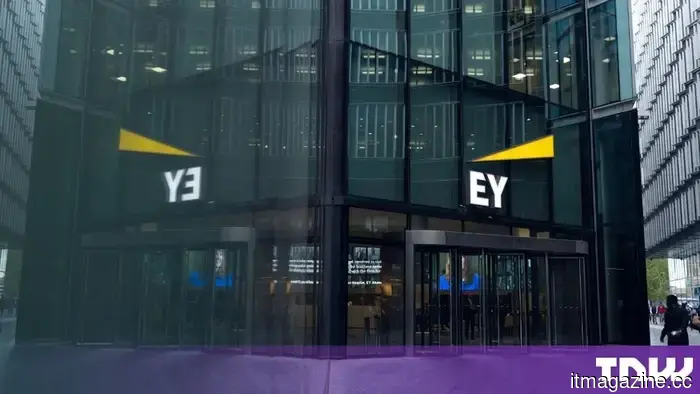 EY will retain interns for a year prior to extending a job offer.
EY will retain assurance interns on a part-time basis for 8 to 12 months following their internship, as AI takes over the junior tasks that new employees once learned.
EY will retain interns for a year prior to extending a job offer.
EY will retain assurance interns on a part-time basis for 8 to 12 months following their internship, as AI takes over the junior tasks that new employees once learned.
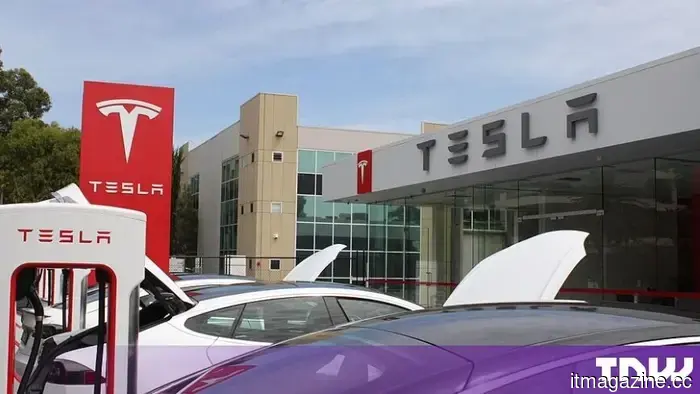 Tesla Discreetly Activates Power Export Feature on Its Top-Selling Electric Vehicle
Tesla has discreetly activated vehicle-to-load functionality on the Model Y Premium in the US, using an $80 adapter limited to 2.4kW. However, vehicles in Europe and Canada still lack this feature.
Tesla Discreetly Activates Power Export Feature on Its Top-Selling Electric Vehicle
Tesla has discreetly activated vehicle-to-load functionality on the Model Y Premium in the US, using an $80 adapter limited to 2.4kW. However, vehicles in Europe and Canada still lack this feature.
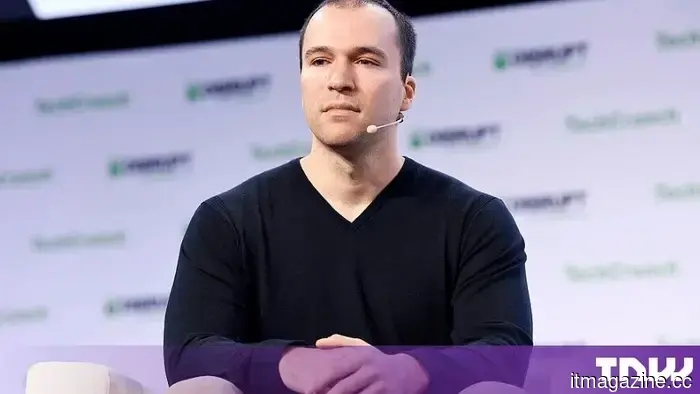 Greg Brockman mentioned that OpenAI did not fully recognize the cyber capabilities of its own models.
Greg Brockman dismissed OpenAI's departures on television. In a blog post he authored, he stated that the company didn't fully grasp the cyber abilities of its models.
Greg Brockman mentioned that OpenAI did not fully recognize the cyber capabilities of its own models.
Greg Brockman dismissed OpenAI's departures on television. In a blog post he authored, he stated that the company didn't fully grasp the cyber abilities of its models.
 The DOJ is looking into Andreessen Horowitz regarding rival board positions.
The DOJ investigation into Andreessen Horowitz is questioning if its partners are part of rival AI boards. This was reported by Bloomberg on Monday. The legislation originates from 1914.
The DOJ is looking into Andreessen Horowitz regarding rival board positions.
The DOJ investigation into Andreessen Horowitz is questioning if its partners are part of rival AI boards. This was reported by Bloomberg on Monday. The legislation originates from 1914.
 I've waited way too long for Pixels to receive this ridiculously simple gesture.
Google is continuing to develop a double-tap-to-sleep gesture for Pixel devices, and Android 17 QPR2 Beta 3 indicates that it might finally function from the home screen as well.
I've waited way too long for Pixels to receive this ridiculously simple gesture.
Google is continuing to develop a double-tap-to-sleep gesture for Pixel devices, and Android 17 QPR2 Beta 3 indicates that it might finally function from the home screen as well.
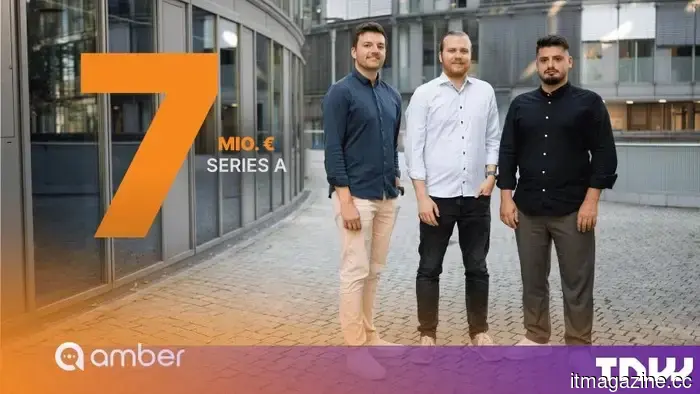 Aachen's amber secured €7 million to promote AI sovereignty for small and medium-sized enterprises (Mittelstand).
The amber Series A successfully secured €7 million from Ventech and a German state bank. Their proposal emphasized organizing the data initially and ensuring it remains outside of US jurisdiction.
Aachen's amber secured €7 million to promote AI sovereignty for small and medium-sized enterprises (Mittelstand).
The amber Series A successfully secured €7 million from Ventech and a German state bank. Their proposal emphasized organizing the data initially and ensuring it remains outside of US jurisdiction.
OpenAI is financing 13 local newsletters from Axios in a three-year agreement.
The local news agreement between Axios and OpenAI will support 13 newsletters over the span of three years. Both companies have declined to disclose the amount paid or whether Axios relinquished its right to take legal action.