
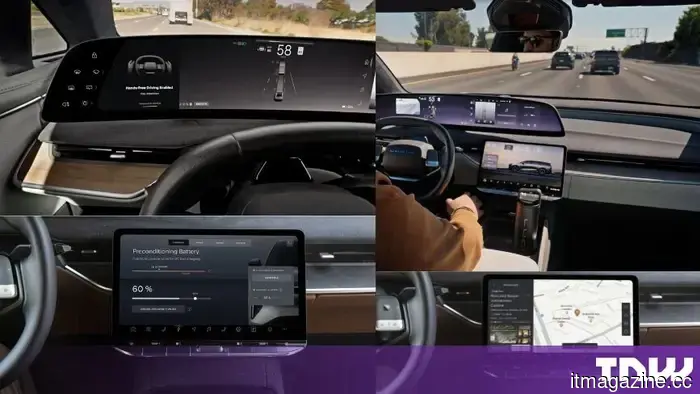
By law, your phone is entitled to five years of updates, while your car receives no such updates.
On August 15, Robert Ferris posed a question to forecasters and executives for CNBC. According to Mobility Global, the average age of American cars has now reached 12.8 years. A new vehicle approaches a cost of nearly $50,000, and those selling software-defined cars are hesitant to guarantee their longevity. Sam Fiorani, who forecasts vehicles for AutoForecastSolutions, offered a straightforward perspective: “We honestly don’t know how long these vehicles will last," he remarked, pointing out current issues where hardware struggles to support new software.
Two responses have already emerged. In 2016, Tesla stated that all its vehicles were equipped with the hardware necessary for full self-driving. Elon Musk reiterated this in 2019, identifying the Hardware 3 computer as pivotal for this feature. However, in April of this year, he stated that these cars require new computers and cameras for autonomous FSD, offering qualified owners either an upgrade or a discounted trade-in. Tesla did not provide a comment in response to CNBC's inquiry.
Rivian is facing a lawsuit related to a similar issue, which was previously reported in June. Owners of the first-generation R1T and R1S vehicles, which were marketed as capable of hands-free, eyes-off driving, filed a class-action complaint. The lawsuit asserts that “No software update, no matter how sophisticated, will enable its Gen 1 vehicles to perform as advertised." Meanwhile, the second-generation R1s possess the necessary hardware, enabling them to receive the feature through an update.
Wassym Bensaid, Rivian’s chief software officer, presents an optimistic viewpoint. He described a software-defined vehicle as “no longer stale in time” during his interview with CNBC, suggesting that the least capable Rivian one owns is the one at delivery. The engineering principle behind this is referred to as headroom, which Rivian aims to build in, allowing for seven to ten years of software upgrades.
He further clarified that new features and ongoing safety or security updates are different. It’s the latter category that comes with an indefinite promise: your vehicle will remain functional and secure for as long as you own it, even if it doesn’t remain up to date.
A precedent that often goes unrecognized occurred when AT&T deactivated its 3G network in 2022, resulting in millions of vehicles losing access to emergency response systems, parts of navigation, and entertainment features. While the cars remained operable, owners lost previously paid-for features due to the retirement of the underlying network by a third party.
However, the landscape differs across the Atlantic. Since June 20, 2025, EU ecodesign regulations mandate a minimum of five years for operating system and security updates for smartphones and tablets, along with seven years of spare parts availability and a repairability label included with the product. Germany advocated for even longer obligations, aiming for seven years of updates, beyond what was ultimately enacted by Brussels.
This poses a contrast: while a €600 smartphone must adhere to legally mandated support periods, a €60,000 car does not, despite the average ownership duration being 12.8 years.
Vehicles are regulated, albeit not in ways most drivers are aware of. Two United Nations regulations, R155 focusing on cybersecurity and R156 concerning software updates, have been in effect since July 2022 for new vehicle types, and will apply to all new vehicles sold in the EU starting July 2024. R156 necessitates a system for managing software updates throughout a vehicle's lifespan, while also establishing a legal framework for over-the-air updates across the EU, UK, Japan, and South Korea. As a result, American manufacturers must comply when selling in these regions, despite the absence of similar regulations in the U.S.
Moreover, these regulations can have real implications; for example, Porsche withdrew the 718 Boxster and Cayman from EU sales in 2024 rather than modify them to comply with R155. However, it’s essential to note that R156 does not stipulate how many years a manufacturer must continue to provide updates, leaving a crucial gap highlighted by Fiorani.
Looking ahead, Alex Yurchenko from J.D. Power does not foresee a drastic overall effect of software on used car values, but anticipates a division between cars with ongoing over-the-air support and those without, where the former group is likely to retain value better. He points out that there are no widely accepted benchmarks for evaluating software-enabled features; buyers are concerned with aspects such as driver-assistance calibration, feature availability, data privacy, and the longevity of subscriptions and connected services.
The concern around batteries has diminished, ironically. Data from Recurrent and Geotab indicate that EV batteries are lasting longer than initially anticipated. Hence, the vehicle's computing system emerges as the component most susceptible to becoming outdated first.
Regarding subscription offerings, the range of features varies significantly in cost and quality. Michael Wayland tested both Rivian’s and GM
Other articles
 Nvidia reduced its $250 billion commitment to OpenAI by half. Following that, it demonstrated to investors its portfolio.
The Nvidia OpenAI backstop decreases from $250 billion to below $120 billion, during the same week a 13F revealed that its investments in SpaceX and Intel fluctuated by $20 billion.
Nvidia reduced its $250 billion commitment to OpenAI by half. Following that, it demonstrated to investors its portfolio.
The Nvidia OpenAI backstop decreases from $250 billion to below $120 billion, during the same week a 13F revealed that its investments in SpaceX and Intel fluctuated by $20 billion.
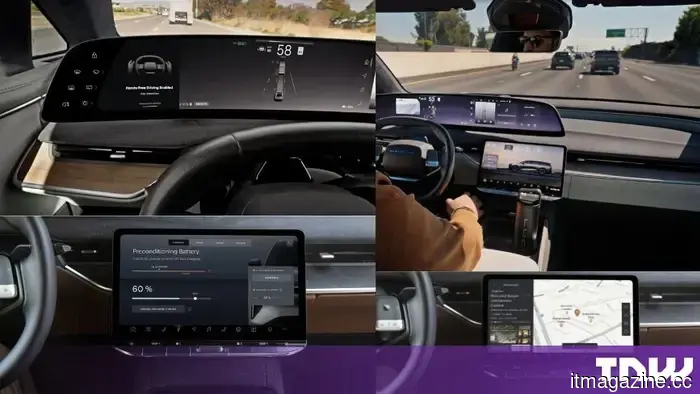 By law, your phone is entitled to five years of updates, whereas your car receives no updates at all.
Automakers will not disclose the duration for which a software-defined vehicle remains operational. The European Union mandates five years of updates for smartphones, but there are no such requirements for vehicles.
By law, your phone is entitled to five years of updates, whereas your car receives no updates at all.
Automakers will not disclose the duration for which a software-defined vehicle remains operational. The European Union mandates five years of updates for smartphones, but there are no such requirements for vehicles.
 The US advised Apple against purchasing memory chips from China, but there is no regulation prohibiting them from doing so.
Howard Lutnick states that the Trump administration is against Apple purchasing Chinese memory chips, but there is no regulation preventing Apple from buying them commercially.
The US advised Apple against purchasing memory chips from China, but there is no regulation prohibiting them from doing so.
Howard Lutnick states that the Trump administration is against Apple purchasing Chinese memory chips, but there is no regulation preventing Apple from buying them commercially.
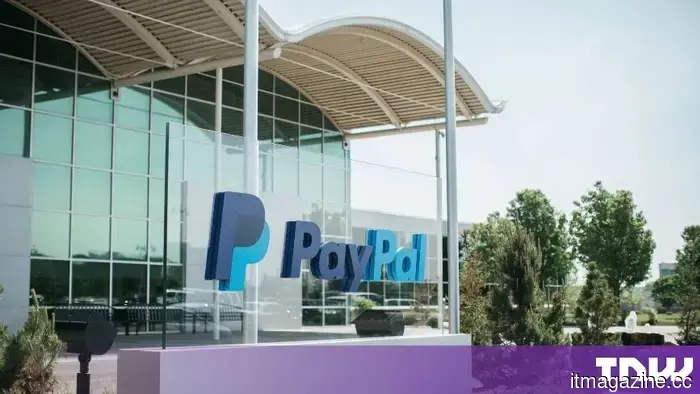 PayPal is no longer rejecting sales. The current issue is whether regulators will permit it.
The Stripe PayPal agreement could be revealed within weeks. An antitrust evaluation indicates that approving it might be detrimental to Venmo or Braintree.
PayPal is no longer rejecting sales. The current issue is whether regulators will permit it.
The Stripe PayPal agreement could be revealed within weeks. An antitrust evaluation indicates that approving it might be detrimental to Venmo or Braintree.
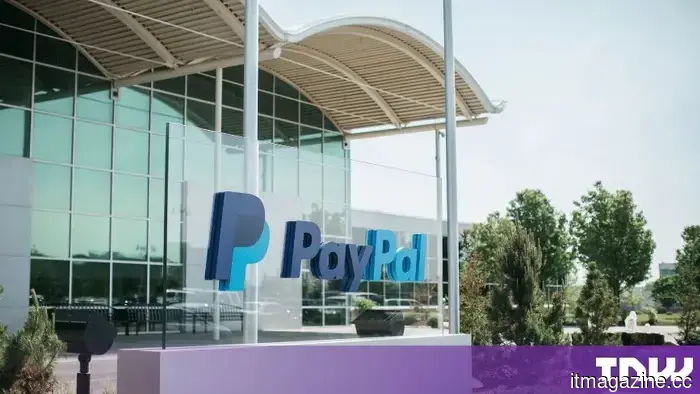 PayPal has stopped rejecting sales. The question now is whether regulators will permit it.
The announcement of the Stripe PayPal agreement may come in a matter of weeks. An antitrust evaluation suggests that approving it could have negative implications for Venmo or Braintree.
PayPal has stopped rejecting sales. The question now is whether regulators will permit it.
The announcement of the Stripe PayPal agreement may come in a matter of weeks. An antitrust evaluation suggests that approving it could have negative implications for Venmo or Braintree.
 The US is preparing to request that 35 nations decide between aligning with it or China regarding AI.
A draft letter from the US cautions the 35 signatories of the Pax Silica and AI Opportunity Statement that they are ineligible to participate in China's competing AI framework.
The US is preparing to request that 35 nations decide between aligning with it or China regarding AI.
A draft letter from the US cautions the 35 signatories of the Pax Silica and AI Opportunity Statement that they are ineligible to participate in China's competing AI framework.
By law, your phone is entitled to five years of updates, while your car receives no such updates.
Automakers are unwilling to disclose the lifespan of a software-defined vehicle. The European Union mandates five years of updates for smartphones but has no such requirements for cars.