
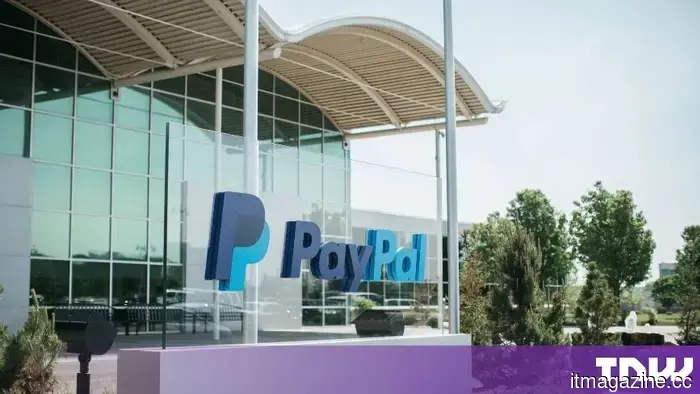
PayPal is no longer rejecting sales. The current issue is whether regulators will permit it.
The Wall Street Journal reported on the negotiations on August 14, authored by Cara Lombardo, Gina Heeb, and Lauren Thomas. The framing of the situation has shifted; PayPal is in discussions to sell itself rather than merely responding to an offer it previously turned down.
In July, Stripe and Advent International offered $60.50 per share, which PayPal deemed inadequate. The two parties have been negotiating for a higher price since then, and a potential deal may be finalized in the upcoming weeks. PayPal has opted not to comment, while a Stripe spokesperson mentioned that the company does not address rumors or speculation.
Investors interpreted this as a positive development, leading to a 1.8% increase in PayPal’s shares on the day the report was published. The initial rejection was a stance rather than a definitive answer. This desk reported the $60.50 proposal on July 15, valuing PayPal at over $53 billion, backed by approximately $50 billion in committed bank financing. Just two days later, the board deemed the offer too low, resulting in a nearly 19% spike in shares, which reached $56.60 following the announcement.
By month’s end, PayPal responded with better-than-expected results and a $70 price target from Cantor Fitzgerald, with the CEO indicating openness to any offers that provided superior value. When viewed sequentially, those three moments suggest a company taking a defensive stance. However, in light of Friday's report, they appear as a company trying to establish a pricing benchmark.
The significance of this merger goes beyond just the financial figures. Stripe processes around $1.9 trillion annually from the merchant side, while PayPal and Venmo manage over 440 million consumer accounts. Together, they would oversee approximately $3.7 trillion in transactions per year. Both Stripe and Advent would own equal shares and have no intentions of dismantling PayPal.
The strategic advantage lies not only in transaction volume; a merger could reduce Stripe’s dependence on Visa and Mastercard, allowing it to integrate Venmo, PayPal's checkout services, and its cryptocurrency offerings into its platform.
A regulatory analysis by Mergermarket, published on August 5 by Troy Hooper and Serafina Smith, has proven to be the most insightful document related to this matter thus far. George Paul, a partner specializing in antitrust law at White & Case, summarized the main structural concern: the deal “combines two sides of the digital payment player market” in one sentence. In essence, one entity would control both the infrastructure utilized by merchants and the wallets consumers use for payments.
This introduces further data-related issues; an integrated platform would allow simultaneous access to both merchant transactions and consumer spending data. Notably, Aman Verjee, an antitrust academic at Practical Venture Capital and an ex-PayPal executive, contributed to this assessment.
The review would likely be conducted by either the Federal Trade Commission or the Department of Justice, though it remains unclear who will oversee it.
The analysis anticipates conditions rather than a courtroom showdown, with divestitures being the most probable outcome. It identifies Venmo or Braintree as the likely candidates for sale. Alternatively, behavioral conditions could be imposed, with interoperability requirements being the most straightforward form. Reviews could extend across many jurisdictions and take several years.
This context aligns with Reuters reporting that there are no plans to split up PayPal. The most feasible path to regulatory approval would involve divesting a part of the company.
Braintree stands out as a less obvious but more significant candidate since it is PayPal’s merchant processing division, directly competing with Stripe’s core business.
PayPal finds itself in negotiations due to its diminished value; it was trading near historic lows when the acquisition proposal surfaced and has lost about $320 billion from its pandemic peak. Enrique Lores assumed leadership in March, coming from HP, and reorganized PayPal in April into three divisions focused on checkout, consumer financial services (including Venmo), and payment and cryptocurrency operations.
In May, he assured investors that PayPal would refocus on fundamentals and regain its footing as a technology company. The cost-cutting strategy aims to achieve $1.5 billion in run-rate savings and includes reducing about 20% of the workforce over two to three years.
The business isn't failing, which explains the board’s initial pushback. PayPal reported second-quarter revenue of $8.68 billion, reflecting a 5% increase, with adjusted earnings of $1.38 per share and a net income of $1.1 billion.
Founded in 1998 by a team including Peter Thiel, Elon Musk, Max Levchin, and Luke Nosek, most of them have since moved on to larger ventures.
Stripe has also been aggressively pursuing acquisitions. Recently, it entered discussions to acquire OpenRouter for approximately $10 billion, about eight times the marketplace's valuation from May. This trend reflects a company seeking strategic positioning
Other articles
 A telecommunications company recently compromised 1.6 million records due to a phone call.
ShinyHunters exposed 1.6 million records of RingCentral customers, claiming they gained access by using voice phishing to obtain a password from an employee.
A telecommunications company recently compromised 1.6 million records due to a phone call.
ShinyHunters exposed 1.6 million records of RingCentral customers, claiming they gained access by using voice phishing to obtain a password from an employee.
 Nvidia reduced its $250 billion commitment to OpenAI by half. Afterwards, it demonstrated to investors what it possesses.
The Nvidia OpenAI backstop decreases from $250 billion to below $120 billion, during the week when a 13F revealed its SpaceX and Intel holdings fluctuating by $20 billion.
Nvidia reduced its $250 billion commitment to OpenAI by half. Afterwards, it demonstrated to investors what it possesses.
The Nvidia OpenAI backstop decreases from $250 billion to below $120 billion, during the week when a 13F revealed its SpaceX and Intel holdings fluctuating by $20 billion.
 The AI store manager terminated its first human employee after needing a reminder of its own regulations.
Luna, an AI store manager based in San Francisco, fired an employee who was late for 17 out of 23 shifts. It had overlooked the policy it had created on its own.
The AI store manager terminated its first human employee after needing a reminder of its own regulations.
Luna, an AI store manager based in San Francisco, fired an employee who was late for 17 out of 23 shifts. It had overlooked the policy it had created on its own.
 Samsung is said to be developing a competitor to the AirPods Max 2.
Samsung may be getting ready to launch its first new wireless headphones in years, as references to the Galaxy H1 have allegedly been found within the Galaxy Wearable app.
Samsung is said to be developing a competitor to the AirPods Max 2.
Samsung may be getting ready to launch its first new wireless headphones in years, as references to the Galaxy H1 have allegedly been found within the Galaxy Wearable app.
 A new leak indicates that the Sonos Ace Ultra could be released at a lower price than the original Ace.
The Sonos Ace Ultra has seemingly been revealed ahead of its announcement in September, showcasing a reduced price, enhanced active noise cancellation, extended battery life, and additional features.
A new leak indicates that the Sonos Ace Ultra could be released at a lower price than the original Ace.
The Sonos Ace Ultra has seemingly been revealed ahead of its announcement in September, showcasing a reduced price, enhanced active noise cancellation, extended battery life, and additional features.
 The AI store manager dismissed its first human employee after being reminded of its own regulations.
Luna, an AI store manager located in San Francisco, terminated an employee who was late for 17 out of 23 shifts. It had overlooked the policy it had created on its own.
The AI store manager dismissed its first human employee after being reminded of its own regulations.
Luna, an AI store manager located in San Francisco, terminated an employee who was late for 17 out of 23 shifts. It had overlooked the policy it had created on its own.
PayPal is no longer rejecting sales. The current issue is whether regulators will permit it.
The Stripe PayPal agreement could be revealed within weeks. An antitrust evaluation indicates that approving it might be detrimental to Venmo or Braintree.