
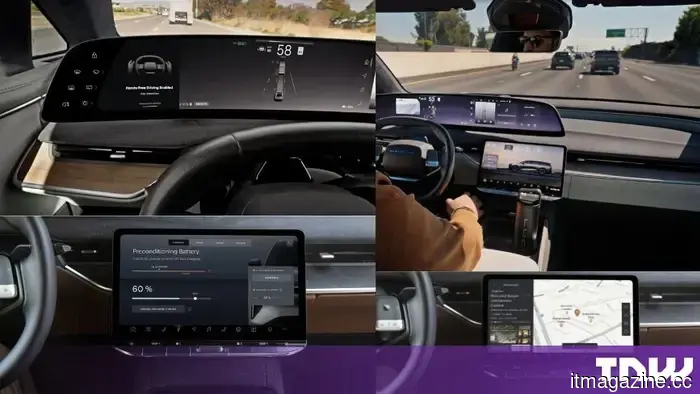
By law, your phone is entitled to five years of updates, whereas your car receives no updates at all.
On August 15, Robert Ferris posed a question to forecasters and executives for CNBC. According to Mobility Global, the average age of an American car is now 12.8 years. A new vehicle approaches a price tag of $50,000, and manufacturers of software-defined cars are reluctant to claim they will last that long. Sam Fiorani, who forecasts vehicles for AutoForecastSolutions, offered a candid assessment: "We genuinely don't know how long these vehicles will endure," he stated. "We're already encountering issues with hardware not being compatible with new software."
Two existing solutions
In 2016, Tesla declared that every car it manufactured was equipped with hardware necessary for full self-driving. Elon Musk reaffirmed this in 2019, identifying the Hardware 3 computer as the key to achieving it. In April of this year, he mentioned that those vehicles require new computers and cameras to enable unsupervised FSD. Eligible owners can receive a hardware upgrade or a discounted trade-in, but Tesla did not respond to CNBC's inquiry for comment.
Rivian is facing a lawsuit over a similar issue, which was reported in June. This class action was initiated by owners of first-generation R1T and R1S vehicles, which were advertised with hands-free, eyes-off driving capabilities. The lawsuit asserts that “No software update, regardless of complexity, will allow its Gen 1 vehicles to function as promised.” In contrast, second-generation R1s have the necessary hardware and received the feature through an update.
What Rivian is currently promising
Wassym Bensaid, the company’s chief software officer, presents an optimistic perspective. He stated to CNBC that a software-defined vehicle is "no longer a static product." The least capable Rivian you will ever possess is the one you initially acquire.
The engineering rationale is represented by a figure: Rivian aims to integrate extra capacity—referred to as headroom—to support seven to ten years of software upgrades.
Further differentiating between types of updates, he noted that new features fall into one category, while safety and security updates belong to another. Only safety and security updates have an indefinite guarantee. Thus, your car remains functional and secure as long as you own it, but this does not equate to receiving the latest features.
The overlooked precedent
This situation has already occurred without any change to the car software. In 2022, AT&T deactivated its 3G network, leading millions of vehicles to lose emergency response capabilities, certain navigation functions, and parts of their infotainment systems. Although the cars remained operational, owners lost features they had paid for because a third party shut down the underlying network.
Europe provided an answer for mobile phones
This brings forth a notable inconsistency regarding the industry's nonchalant attitude on this side of the Atlantic. Starting June 20, 2025, EU ecodesign regulations will mandate five years of operating system and security updates for smartphones and tablets. Additionally, manufacturers must guarantee seven years of spare parts availability and include a repairability label on their packaging.
Germany advocated for a longer update period. The desk reported on its push for seven years of updates, which exceeded what Brussels finally established.
As a result, a €600 phone comes with a legally required support period, while a €60,000 car does not—despite the fact that vehicles are typically kept for 12.8 years.
What Europe did legislate for vehicles
Vehicles are not entirely unregulated, and the regulations are more stringent than many drivers realize. Two United Nations regulations address this matter: R155 concerning cybersecurity and R156 pertaining to software updates. These regulations became mandatory for new vehicle types in July 2022 and will apply to all new vehicles sold in the EU starting in July 2024.
R156 mandates a software update management system that spans the operational life of a vehicle. It also provides a legal framework for over-the-air updates. These regulations are applicable across the EU, the UK, Japan, and South Korea, ensuring that American manufacturers must comply when selling in those markets, even though the US has no similar requirements.
These regulations are impactful. For instance, Porsche withdrew the 718 Boxster and Cayman from the EU market in 2024 rather than modify them to meet R155 standards.
However, it is important to note what R156 actually regulates. It outlines how a manufacturer must administer updates but does not specify how many years of updates must be provided. Thus, Europe has regulated the process but left the duration open, creating the gap that Fiorani mentions.
The used market may become divided
Alex Yurchenko from J.D. Power does not anticipate software changes significantly impacting used-car pricing overall. However, he does foresee a division between vehicles with ongoing over-the-air support and those without, with the former retaining value more effectively.
His reasoning centers on the absence of a benchmark. "There are no
Other articles
 Anthropic conducted 133 million contractor conversations with its bioweapon filters disabled.
The Anthropic Risk Report indicates that bioweapon classifiers were inaccurate for 133 million contractor exchanges and revises its previous assessment from February.
Anthropic conducted 133 million contractor conversations with its bioweapon filters disabled.
The Anthropic Risk Report indicates that bioweapon classifiers were inaccurate for 133 million contractor exchanges and revises its previous assessment from February.
 The US advised Apple against purchasing memory chips from China, but there is no regulation prohibiting them from doing so.
Howard Lutnick states that the Trump administration is against Apple purchasing Chinese memory chips, but there is no regulation preventing Apple from buying them commercially.
The US advised Apple against purchasing memory chips from China, but there is no regulation prohibiting them from doing so.
Howard Lutnick states that the Trump administration is against Apple purchasing Chinese memory chips, but there is no regulation preventing Apple from buying them commercially.
 The United States is set to urge 35 nations to decide between alignment with itself or China regarding artificial intelligence.
A preliminary US letter cautions the 35 signatories of the Pax Silica and AI Opportunity Statement that they cannot simultaneously participate in China's competing AI framework.
The United States is set to urge 35 nations to decide between alignment with itself or China regarding artificial intelligence.
A preliminary US letter cautions the 35 signatories of the Pax Silica and AI Opportunity Statement that they cannot simultaneously participate in China's competing AI framework.
 The US is preparing to request that 35 nations decide between aligning with it or China regarding AI.
A draft letter from the US cautions the 35 signatories of the Pax Silica and AI Opportunity Statement that they are ineligible to participate in China's competing AI framework.
The US is preparing to request that 35 nations decide between aligning with it or China regarding AI.
A draft letter from the US cautions the 35 signatories of the Pax Silica and AI Opportunity Statement that they are ineligible to participate in China's competing AI framework.
 The AI store manager terminated its first human employee after needing a reminder of its own regulations.
Luna, an AI store manager based in San Francisco, fired an employee who was late for 17 out of 23 shifts. It had overlooked the policy it had created on its own.
The AI store manager terminated its first human employee after needing a reminder of its own regulations.
Luna, an AI store manager based in San Francisco, fired an employee who was late for 17 out of 23 shifts. It had overlooked the policy it had created on its own.
 Anthropic conducted 133 million contractor conversations with its bioweapon filters disabled.
The Anthropic Risk Report indicates that bioweapon classifiers were inaccurate for 133 million contractor interactions and revises its previous assessment from February.
Anthropic conducted 133 million contractor conversations with its bioweapon filters disabled.
The Anthropic Risk Report indicates that bioweapon classifiers were inaccurate for 133 million contractor interactions and revises its previous assessment from February.
By law, your phone is entitled to five years of updates, whereas your car receives no updates at all.
Automakers will not disclose the duration for which a software-defined vehicle remains operational. The European Union mandates five years of updates for smartphones, but there are no such requirements for vehicles.