
The US advised Apple against purchasing memory chips from China, but there is no regulation prohibiting them from doing so.
The commerce secretary expressed these views to The Wall Street Journal on August 14, in an article by Rolfe Winkler, Raffaele Huang, and Amrith Ramkumar. “The Trump administration is not supportive of that,” Lutnick remarked. There must be “alternative solutions to the memory issue, but it’s not acceptable for great American companies to use Chinese memory.” When asked if he communicated this directly to Apple, he responded concisely, “Clearly.”
The second sentence from the Journal is particularly notable. However, Apple might proceed regardless.
The concern is more political than legal.
Two Chinese manufacturers are involved, and their situations differ. Yangtze Memory Technologies is on the Commerce Department’s Entity List, while CXMT is not. Both have been labeled as Chinese military companies by the Pentagon, but this classification indicates concern rather than banning commercial transactions.
The actual regulations stipulate that an American company must obtain a license before sharing product information with either manufacturer. A chipmaker needs this information to create a customized component. However, Apple can purchase standard memory from both companies and negotiate pricing, as there are currently no barriers to doing so.
Apple's executives have clarified the situation.
Sabih Khan, Apple’s chief operating officer, did not confirm the testing when approached by the Journal. He only mentioned that the scale of the shortage necessitates “exploring all options,” including urging current suppliers to increase production in the U.S. Then he pointed out an important fact: while Apple customizes many components within an iPhone, “there isn’t extensive customization” for memory.
Combine those two facts, and the potential for export-control issues diminishes. Generic parts do not require shared design information, so no license is necessary, nor is there a point where the Commerce Department could intervene. What Lutnick has is a strong viewpoint and a platform, but according to the existing rules, he lacks a method to enforce it.
This office raised the question back in June.
Apple approached the Commerce Department earlier this summer seeking assurance regarding CXMT. What it aimed for was a guarantee that the company would not be included on the Entity List. This request has now been addressed publicly, and the response is no. It has presented itself as a preference rather than a formal rule, which is significant.
Apple has been testing chips from CXMT and YMTC in preparation for usage in devices sold within China. Two competitors have already advanced, with HP and Acer shipping CXMT memory in products sold outside the U.S., as previously reported by the Journal, and they faced no restrictions.
A deadline that has gone unmentioned.
The Senate acted before the cabinet. Jim Banks and Chuck Schumer led a bipartisan letter to Tim Cook in late July, which this office reported as a warning to Apple and included a date. The senators requested Apple commit by August 21 to entirely exclude these components. That deadline is just six days away, Lutnick is now involved, and Apple has yet to disclose its plans.
Their discussion revolves around dependency instead of price. Apple would be relying on vital supplies from a company that the U.S. government has officially identified as a Chinese military entity. This poses a different kind of risk than just a costly quarter.
The other American company in this dispute.
Micron has been advocating against Apple’s access to Chinese memory, contending that such a move could jeopardize domestic production and undermine the reshoring effort. Micron's influence stems from its own financial contributions, having pledged approximately $250 billion across New York, Idaho, and Virginia. The senators who endorsed that letter represent two of those three states.
The shortage has greatly benefited Micron. In June, it briefly surpassed Meta and Tesla in market value, reaching $1.27 trillion with profits of $28.2 billion. Consequently, the president finds himself mediating between two of the largest companies in the nation—one seeking cheaper memory and the other preferring to maintain a higher-priced, American memory market.
The shortage is not solely an Apple issue.
Demand from AI data centers has depleted the supply of computer memory, causing prices to surge significantly. Manufacturers of consumer electronics have raised their prices to accommodate this, with Apple increasing the cost of certain Macs and iPads by $200 or more. It is neither the first company to do so, nor will it likely be the last.
Companies in medical devices and automotive manufacturing have also requested assistance, but there is little the administration can promptly do. Establishing new capacity takes over a year. This is the hard reality underpinning every position in this debate, including Lutnick’s.
Where the remarks were made.
Lutnick made these comments following a visit to Apple’s new Advanced Manufacturing Center in Houston, where he had cut the ribbon the day before alongside Cook and Senator Ted Cruz. Apple claims it has invested hundreds of millions of dollars in the site, which currently assembles AI servers and will begin producing Mac Minis later this year. Cook highlighted that Apple sourced more
Other articles
 PayPal is no longer rejecting sales. The current issue is whether regulators will permit it.
The Stripe PayPal agreement could be revealed within weeks. An antitrust evaluation indicates that approving it might be detrimental to Venmo or Braintree.
PayPal is no longer rejecting sales. The current issue is whether regulators will permit it.
The Stripe PayPal agreement could be revealed within weeks. An antitrust evaluation indicates that approving it might be detrimental to Venmo or Braintree.
 By law, your phone is entitled to five years of updates, whereas your car receives no updates at all.
Automakers will not disclose the duration for which a software-defined vehicle remains operational. The European Union mandates five years of updates for smartphones, but there are no such requirements for vehicles.
By law, your phone is entitled to five years of updates, whereas your car receives no updates at all.
Automakers will not disclose the duration for which a software-defined vehicle remains operational. The European Union mandates five years of updates for smartphones, but there are no such requirements for vehicles.
 Lutron has simplified the control of your smart home, allowing you to do so without using your phone.
Simply say "Hey Sonos," and your Lutron Caséta lights, shades, and music will respond immediately—no need for an app or remote, just voice commands through your current Sonos speaker.
Lutron has simplified the control of your smart home, allowing you to do so without using your phone.
Simply say "Hey Sonos," and your Lutron Caséta lights, shades, and music will respond immediately—no need for an app or remote, just voice commands through your current Sonos speaker.
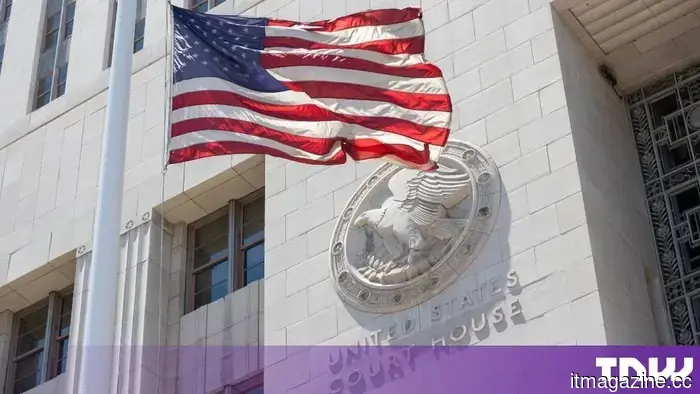 The United States is set to urge 35 nations to decide between alignment with itself or China regarding artificial intelligence.
A preliminary US letter cautions the 35 signatories of the Pax Silica and AI Opportunity Statement that they cannot simultaneously participate in China's competing AI framework.
The United States is set to urge 35 nations to decide between alignment with itself or China regarding artificial intelligence.
A preliminary US letter cautions the 35 signatories of the Pax Silica and AI Opportunity Statement that they cannot simultaneously participate in China's competing AI framework.
 A telecommunications company recently compromised 1.6 million records due to a phone call.
ShinyHunters exposed 1.6 million records of RingCentral customers, claiming they gained access by using voice phishing to obtain a password from an employee.
A telecommunications company recently compromised 1.6 million records due to a phone call.
ShinyHunters exposed 1.6 million records of RingCentral customers, claiming they gained access by using voice phishing to obtain a password from an employee.
 Lamborghini's newest Revuelto SV adds an element of enjoyment with a unique driving mode.
Lamborghini's latest Revuelto SV delivers 1,050 hp, enhanced handling, GT3-inspired technology, and a specialized Pilota driving mode in its V12 hybrid supercar.
Lamborghini's newest Revuelto SV adds an element of enjoyment with a unique driving mode.
Lamborghini's latest Revuelto SV delivers 1,050 hp, enhanced handling, GT3-inspired technology, and a specialized Pilota driving mode in its V12 hybrid supercar.
The US advised Apple against purchasing memory chips from China, but there is no regulation prohibiting them from doing so.
Howard Lutnick states that the Trump administration is against Apple purchasing Chinese memory chips, but there is no regulation preventing Apple from buying them commercially.